Back to home

Articles tagged with "Networking"

Broadcom to supply Meta with custom silicon through 2029 — Broadom CEO Hock Tan departs Meta's board

Broadcom to supply Meta with custom silicon through 2029 — Broadom CEO Hock Tan departs Meta's board

Broadcom and Meta have extended their partnership with a deal for Broadcom to supply Meta with custom-designed AI processors through 2029, including Meta Training and Inference Accelerator (MTIA) hardware. This agreement involves the supply of hundreds of thousands of AI processors and will consume multiple gigawatts of power. Broadcom will also provide Meta with Ethernet networking solutions. Broadcom CEO Hock Tan will step down from Meta's board to avoid a conflict of interest but will continue to guide Meta's custom silicon roadmap. The partnership aims to enhance Meta's computing capabilities for delivering personal superintelligence to billions of users.

Tom's Hardware
IPv6 usage reaches historic 50% across Google services, matching IPv4 — increased usage eases pressure on the IPv4 address market as 'new' protocol designed in 1998 finally hits its stride

IPv6 usage reaches historic 50% across Google services, matching IPv4 — increased usage eases pressure on the IPv4 address market as 'new' protocol designed in 1998 finally hits its stride

IPv6 usage has reached a historic 50% across Google services, matching IPv4, which eases pressure on the IPv4 address market. The IPv6 protocol, designed in 1998, has finally gained significant traction, with 43% of the world using it. The exhaustion of IPv4 addresses due to the rapid growth of internet-connected devices has led to increased adoption of IPv6. Despite some technical misconceptions, IPv6 offers benefits like faster connectivity and simplified networking.

Tom's Hardware
SemiEngineering

AI Workloads Are Turning The Data Center Network Into A Combined Memory And Storage Fabric

AI inference workloads are transforming data center architecture by integrating the network into a combined memory and storage fabric. This shift is driven by the increasing dominance of inference workloads over traditional microservices and client-server interactions. The classic data center design is evolving to accommodate the structured, server-server communication patterns of AI training and the sustained memory and storage traffic of inference workloads. As AI inference becomes the primary workload, network performance will be crucial for efficient access to distributed memory and storage resources. The data center network is no longer just a communication layer but a critical component defining AI performance.

SemiEngineering
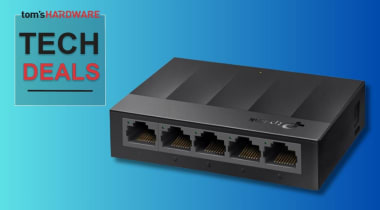
Grab this $8.98 TP-Link gigabit Ethernet switch for lag-free 4K streaming and gaming — save nearly 50% on silent unmanaged 5-port hub to instantly expand your LAN

Grab this $8.98 TP-Link gigabit Ethernet switch for lag-free 4K streaming and gaming — save nearly 50% on silent unmanaged 5-port hub to instantly expand your LAN

The TP-Link Lightwave 5-port unmanaged Ethernet switch is currently on sale for $8.98 on Amazon, offering gigabit speeds for lag-free 4K streaming and gaming. This switch provides four additional Ethernet ports, is compact in size, and operates silently. It is easy to set up and ideal for users seeking a plug-and-forget solution for expanding their LAN network. Additionally, an alternative option, the Ugreen 5-port switch, is available for $7.99 on Amazon. Both switches are recommended for those experiencing WiFi connectivity issues and are expected to sell out quickly during Amazon's Big Spring Sale event.

Tom's Hardware
Securing UALink in AI clusters with UALinkSec-compliant IP

Securing UALink in AI clusters with UALinkSec-compliant IP

The UALink Consortium, with Synopsys representation, has developed UALinkSec to secure connections in AI clusters. UALinkSec integrates encryption and authentication features to protect network traffic and switches. The UALinkSec_200 Security Module, compliant with the UALink 200G specification, supports encryption based on AES-GCM for security and speed. This module complements the UALink controller IP and 224G PHY, forming a complete UALink IP Solution. The UALinkSec_200 Security Module efficiently handles encryption and decryption functions at high speeds, addressing power efficiency concerns in AI data centers.

SemiWiki
Microsoft expects to commercialize MicroLED datacenter cables by late 2027 — expands Hollow Core Fiber deployment, promising 47% faster data transmission and approximately 33% lower latency

Microsoft expects to commercialize MicroLED datacenter cables by late 2027 — expands Hollow Core Fiber deployment, promising 47% faster data transmission and approximately 33% lower latency

Microsoft plans to commercialize MicroLED datacenter cables by late 2027, offering faster data transmission and lower latency. The technology, called MOSAIC, utilizes MicroLEDs instead of lasers and a unique architecture for data transmission. Additionally, Microsoft is expanding its deployment of Hollow Core Fiber (HCF) for improved data transmission speed and lower latency. These advancements aim to enhance datacenter connectivity and efficiency, with MOSAIC focusing on internal connections and HCF for longer distances between datacenters and Azure regions.

Tom's Hardware
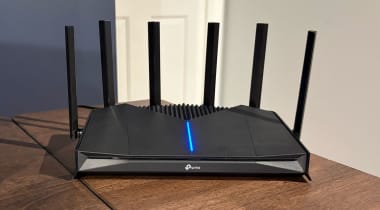
Grab this £59.99 TP-Link wireless router with Wi-Fi 7 support at its lowest ever price — 31% discount unlocks faster connections for lag-free streaming and gaming

Grab this £59.99 TP-Link wireless router with Wi-Fi 7 support at its lowest ever price — 31% discount unlocks faster connections for lag-free streaming and gaming

The TP-Link Archer BE3600 wireless router is currently on sale for £59.99, a 31% discount, making it the lowest price ever on Amazon. This budget-friendly router offers Wi-Fi 7 support and strong performance at 2.4 and 5 GHz at close range. It features a flat design with four antennas for maximum coverage, 2.5 Gbps WAN and LAN ports, three additional 1 Gbps LAN ports, and a USB 3.0 port for connecting peripherals. While it doesn't support the full Wi-Fi 7 spec, the TP-Link Archer BE3600 is a significant upgrade over older routers at a compelling price point. The sale ends on March 16th, so act fast to take advantage of this deal.

Tom's Hardware
Investing in Your Professional Community Yields Big Returns

Investing in Your Professional Community Yields Big Returns

Investing in your professional community through volunteering can lead to broadened perspectives and enhanced leadership skills. The article features Lokesh Lagudu, a senior engineering manager at Walmart Global Tech, who emphasizes the benefits of engaging with IEEE Member News and participating in activities like mentoring and networking for career development. By actively contributing to and being involved in professional communities, individuals can gain valuable insights and experiences that yield significant returns in their careers.

IEEE Spectrum
This £8.97 TP-Link Ethernet switch is a must-have for 4K streaming and lag-free gaming — compact 5-port unmanaged switch runs silent and unlocks gigabit speeds for less than a tenner

This £8.97 TP-Link Ethernet switch is a must-have for 4K streaming and lag-free gaming — compact 5-port unmanaged switch runs silent and unlocks gigabit speeds for less than a tenner

For under £10 during Amazon UK's Spring Sale Days event, the TP-Link Litewave 5-Port LS1005G Ethernet switch is a great option for expanding your wired network. This gigabit switch provides five extra Ethernet ports for a reliable, high-speed connection, perfect for streaming and gaming without Wi-Fi lag. The switch is compact, silent, and unmanaged, making it a plug-and-play solution that doesn't require complex setup. While it lacks advanced customization options of managed switches, it's a cost-effective way to enhance your network connectivity. Grab this deal before the price goes back up after March 16th.

Tom's Hardware
Asus ROG Rapture GT-BE19000Ai Wi-Fi 7 gaming router review – Bringing Edge AI to the consumer router market

Asus ROG Rapture GT-BE19000Ai Wi-Fi 7 gaming router review – Bringing Edge AI to the consumer router market

The Asus ROG Rapture GT-BE19000Ai is a Wi-Fi 7 gaming router that stands out with its onboard Neural Processing Unit (NPU) and Microcontroller Unit (MCU) for enhanced performance and AI features. Priced at $899, it boasts a tri-band setup, numerous LAN ports, USB connectivity, and RGB lighting. The router's setup is straightforward via the Asus Router app, and it offers extensive configuration options through the Web GUI. The NPU powers AI features like AiProtection suite, gaming device detection, and Game Boost, making it a compelling choice for those seeking advanced network control and security. Performance-wise, it excels in close-range tests but faces stiff competition from other routers like the TP-Link Archer GE800 in certain scenarios.

Tom's Hardware
Windows 11 KB5077241 adds Internet speed test, direct download links for offline installers (.msu)

Windows 11 KB5077241 adds Internet speed test, direct download links for offline installers (.msu)

Windows 11 KB5077241 introduces new features like Emoji 16 and a built-in network speed test tool on the taskbar. Microsoft has provided direct download links for offline installers of this update. The update is optional and labeled as a preview update, but it offers similar fixes to the upcoming Patch Tuesday update. The update includes improvements like Emoji 16 support, a network speed test tool, and the Sysmon tool for monitoring computer activities. The update also brings new features like pan/tilt controls for cameras, a full-page Widgets settings experience, and WebP support for desktop wallpapers.

Windows Latest
Optical device beams data at speeds up to 25 Gbps via light, up to 25 kilometer range with ultra-low latency — Taara Beam uses silicon photonics technology, device about as big as a shoebox

Optical device beams data at speeds up to 25 Gbps via light, up to 25 kilometer range with ultra-low latency — Taara Beam uses silicon photonics technology, device about as big as a shoebox

Taara has introduced the Beam, an optical device utilizing silicon photonics technology to transmit data at speeds up to 25 Gbps over a range of up to 25 kilometers with ultra-low latency. The device, about the size of a shoebox, employs an optical phased array with miniature emitters to track and steer beams without moving parts. Taara has previously deployed its Lightbridge device in over 20 countries, catering to carriers like T-Mobile and Vodafone. While the technology is susceptible to weather conditions, Taara offers the Lightbridge Pro with automatic backup to ensure seamless communication in adverse situations.

Tom's Hardware
Grab this $8.99 TP-Link gigabit Ethernet switch before it sells out — compact 5-port unmanaged switch offers instant wired LAN expansion and silent operation for 4K streaming and gaming

Grab this $8.99 TP-Link gigabit Ethernet switch before it sells out — compact 5-port unmanaged switch offers instant wired LAN expansion and silent operation for 4K streaming and gaming

A TP-Link gigabit Ethernet switch is on sale for $8.98 on Amazon, providing 5 extra ports for wired LAN expansion without the need for complex setup. This switch offers gigabit speeds for stable connections ideal for streaming and gaming, and its compact design and silent operation make it a convenient addition to any setup. While it lacks advanced customization options of managed switches, it is a cost-effective solution for connecting various Ethernet-capable devices. With limited stock available, a similar Ugreen model is also available for $8.99, offering comparable functionality for expanding wired LAN connectivity.

Tom's Hardware
UALink roadmap plots course to optimized AI data center interconnects — examining the open standard designed to combat vendor lock-in while offering cost and performance optimization

UALink roadmap plots course to optimized AI data center interconnects — examining the open standard designed to combat vendor lock-in while offering cost and performance optimization

UALink, an open standard interconnect technology for AI data centers, aims to combat vendor lock-in and optimize cost and performance. The UALink Consortium released the UALink 200G 1.0 specification, supporting up to 1,024 accelerators per domain with high-speed communication. UALink offers low latency, deterministic latency below 1 µs, and up to 93% effective bandwidth utilization. While companies like AMD and Marvell are developing UALink-based processors, full-scale adoption may be delayed due to the need for UALink-compliant switches and pending features like In-Network Collectives. Astera Labs anticipates UALink products to enter the market this year, but broader adoption will require time for integration and switch availability.

Tom's Hardware
Microsoft's new Windows 11 speed test is just a link to Ookla's Speedtest via Bing —  button housed in the taskbar in latest Insider Preview build

Microsoft's new Windows 11 speed test is just a link to Ookla's Speedtest via Bing — button housed in the taskbar in latest Insider Preview build

Microsoft has introduced a new speed test feature in Windows 11 Insider Preview builds, accessible via a link to Ookla's Speedtest through Bing. This feature allows users to quickly check their internet speed without leaving the taskbar. While it's not a native feature but rather a web link, it offers convenience for users experiencing network issues. The update also includes enhancements like new emojis, backup & restore capabilities, camera controls, and native implementation of System Monitor for improved threat detection.

Tom's Hardware
Quantum teleportation demonstrated over existing fiber networks — Deutsche Telekom’s T‑Labs used commercially available Qunnect hardware for the demo, claims 90% average accuracy

Quantum teleportation demonstrated over existing fiber networks — Deutsche Telekom’s T‑Labs used commercially available Qunnect hardware for the demo, claims 90% average accuracy

Deutsche Telekom's T-Labs successfully demonstrated quantum teleportation over 30km of existing fiber networks in Berlin using Qunnect hardware, achieving 90% average accuracy. The experiment showcased the potential for a future quantum internet without the need for new infrastructure. Cisco also replicated the demo in NYC, signaling progress in quantum communication deployment. This milestone paves the way for applications in distributed quantum computing, secure communication, sensor networks, and cloud-based quantum services. Experts will discuss these advancements at MWC Barcelona, with Deutsche Telekom showcasing 'Quantum Teleportation' at its booth.

Tom's Hardware
SemiEngineering

Wi-Fi 7 Moves To The IoT

Wi-Fi 7, also known as IEEE 802.11be or Extremely High Throughput Wi-Fi, has been primarily used in high-end applications like notebook computers and AR/VR glasses due to its high-speed connectivity and low latency. However, it is now making its way into IoT devices such as smart door locks, thermostats, and robotic vacuum cleaners. The focus is not just on individual device speed but on enabling multiple devices to connect simultaneously. Infineon's Sivaram Trikutam discusses how Wi-Fi 7 can manage different bands, share capacity among multiple devices, and how vendors are leveraging its various features.

SemiEngineering
7x increase in memory costs fueling price increases in ISP-provided routers, gateways, and set-top boxes — home fiber rollouts may slow, and installations could become more expensive

7x increase in memory costs fueling price increases in ISP-provided routers, gateways, and set-top boxes — home fiber rollouts may slow, and installations could become more expensive

The surge in DRAM pricing is impacting the production costs of ISP-provided routers, gateways, and set-top boxes, potentially leading to price increases for consumers. Memory costs have risen sevenfold, making up a significant portion of the equipment's bill of materials. This trend is expected to continue due to ongoing supply chain issues, potentially affecting the rollout of home fiber connections and increasing installation expenses. Major tech companies are acknowledging the memory shortage's impact on pricing and supply chain management, with adjustments expected to reflect rising costs.

Tom's Hardware
Wi-Fi 7 promises made, but not kept — the mysteries of MLO and AFC, and looking toward Wi-Fi 8

Wi-Fi 7 promises made, but not kept — the mysteries of MLO and AFC, and looking toward Wi-Fi 8

Wi-Fi 7's promises of enhanced performance and reliability compared to its predecessors have not been fully realized in consumer routers due to limited support for its advanced features like Multi-Link Operation (MLO) and Automated Frequency Coordination (AFC). MLO aims to optimize connection speeds by allowing devices to switch between different bands seamlessly, while AFC boosts performance on the 6 GHz band. However, the implementation of these features in routers is inconsistent, and compatibility with older devices is limited. Wi-Fi 8, set to launch in late 2027, offers incremental improvements over Wi-Fi 7, focusing on Ultra High Reliability (UHR) and features like Coordinated Spatial Reuse and Enhanced Modulation Coding Scheme to enhance network efficiency and reduce latency.

Tom's Hardware
Nvidia DGX Spark update cuts idle power by 32% or more — hot-plug detection on ConnectX NIC makes for a more efficient AI workstation

Nvidia DGX Spark update cuts idle power by 32% or more — hot-plug detection on ConnectX NIC makes for a more efficient AI workstation

Nvidia's DGX Spark received a software update that enables hot-plug detection on its ConnectX 7 NIC, reducing idle power draw by up to 32.4%. The update significantly improved power efficiency, with idle power dropping from 37W to 22W when the display was disconnected. While not all systems may see the same power reduction, Nvidia is highlighting the Spark's usage in educational institutions for various AI projects. The Spark's low power requirements make it suitable for deployments in remote locations like the South Pole, where power and network bandwidth are limited. Users are encouraged to update their Spark systems for improved efficiency.

Tom's Hardware
Ultra Ethernet: The data-center interconnection of tomorrow detailed

Ultra Ethernet: The data-center interconnection of tomorrow detailed

A new data-center connectivity standard, Ultra Ethernet 1.0.1, has been developed by the Ultra Ethernet Consortium, including Meta, Microsoft, and Oracle, to address the limitations of traditional Ethernet in hyperscale and exascale clusters. This next-generation standard aims to provide low latency, high bandwidth networking over standard Ethernet and IP infrastructure. Ultra Ethernet introduces a new architecture for connectionless communication, improving scalability and performance for AI and HPC workloads. The technology features layers such as Physical, Link, Transport, Storage, Management, and Software, enhancing data transfer efficiency and network orchestration. While still in early stages, Ultra Ethernet is set to revolutionize networking for large-scale data centers.

Tom's Hardware
MSI Roamii BE Pro Wi-Fi 7 mesh router review: Attractive pricing and strong tri-band performance

MSI Roamii BE Pro Wi-Fi 7 mesh router review: Attractive pricing and strong tri-band performance

MSI has released the Roamii BE Pro Wi-Fi 7 mesh router, a tri-band system with strong performance and an attractive design. Priced competitively, it includes features like RGB lighting, 2.5 GbE WAN/LAN ports, and USB 3.0 ports for network storage. The setup process involves two identical nodes, with the primary router determining the network configuration. Despite some initial setup challenges with the satellite node, the Roamii BE Pro excelled in performance tests, particularly on the 5 GHz band. With an MSRP of $349 for a two-pack, it currently retails for $299 on Amazon, making it a compelling option in the Wi-Fi router market.

Tom's Hardware
Asus RT-BE58 Go Wi-Fi 7 travel router review: A versatile, dual-band Wi-Fi 7 travel companion

Asus RT-BE58 Go Wi-Fi 7 travel router review: A versatile, dual-band Wi-Fi 7 travel companion

The Asus RT-BE58 Go is a dual-band Wi-Fi 7 travel router designed for sharing Wi-Fi connections with multiple devices in a compact form factor, priced around $120. It features a similar design to the TP-Link TL-WR3602BE with dual antennas and programmable toggle switch. The router supports various modes of connection including public Wi-Fi, Ethernet cable, USB tethering, and USB modem. The Asus Router app allows for easy setup and customization of settings, including parental controls and security features. In performance tests, the RT-BE58 Go outperformed the TP-Link on the 5 GHz band and performed similarly on the 2.4 GHz band. Despite the price difference, both routers offer similar features and performance.

Tom's Hardware
Asus ROG Strix GS-BE18000 Wi-Fi 7 gaming router — Good overall performance and a wealth of LAN ports

Asus ROG Strix GS-BE18000 Wi-Fi 7 gaming router — Good overall performance and a wealth of LAN ports

The Asus ROG Strix GS-BE18000 is a tri-band Wi-Fi 7 gaming router with a sleek design and a plethora of features, including seven 2.5 GbE LAN ports, USB 3.0 port, configurable RGB lighting, and a compact form factor. Priced around $450, it offers good overall performance but lacks a 10 GbE LAN port and falls short in 2.4 GHz performance compared to its competitors. Setting up the router is straightforward using either the web interface or Asus' smartphone app, and it supports Automated Frequency Coordination for enhanced 6 GHz band performance. The router's software includes gaming-oriented features, parental controls, AiProtection security tools, and versatile USB port functionality. Despite its solid performance, the TP-Link Archer GE800 outperforms the Asus in various aspects, making it a more compelling choice unless the extra LAN ports are a critical requirement.

Tom's Hardware
U.K. internet provider's bailout cancelled because rats chewed through its fiber optic cables — biodegradable cable jackets use soy- or corn-based materials, attracting hungry rats

U.K. internet provider's bailout cancelled because rats chewed through its fiber optic cables — biodegradable cable jackets use soy- or corn-based materials, attracting hungry rats

U.K. internet provider G.Network, specializing in fiber optic lines, faces administration due to rats chewing through its cables, causing a potential acquisition deal to collapse. The company's biodegradable cable jackets, made from soy- or corn-based materials, attract rodents due to their scent resembling food. Repairing the damaged fiber optic network, mainly located under roads in London, proves costly and disruptive, dissuading potential buyers. Competitors, like Community Fibre, opt out of acquiring G.Network, leaving the future of the company uncertain amidst its financial distress and rodent-inflicted cable damage.

Tom's Hardware
Clever Brit successfully repurposes telephone wiring for gigabit internet throughout his vintage home — Lad converts "incomprehensible mess of wires" into high-speed ethernet links

Clever Brit successfully repurposes telephone wiring for gigabit internet throughout his vintage home — Lad converts "incomprehensible mess of wires" into high-speed ethernet links

A British individual successfully repurposed telephone wiring in his vintage home to achieve gigabit internet speeds throughout the house, documented on his blog "The HFT Guy." By converting the telephone lines to high-speed ethernet links, he eliminated the signal degradation and latency issues experienced with powerline adapters. Using a GIGA Copper device, he was able to convert the RJ11 telephone connectors to RJ45 ethernet connectors, enabling a stable and fast connection. The project was a success, with near-gigabit speeds achieved, showcasing the potential for utilizing existing telephone infrastructure for high-speed networking.

Tom's Hardware
ASUS announces its first WiFi 8 router coming this year, the stylish ROG NeoCore

ASUS announces its first WiFi 8 router coming this year, the stylish ROG NeoCore

ASUS has revealed its first WiFi 8 router, the ROG NeoCore, set to launch this year. The router boasts a stylish design and advanced features to enhance connectivity and performance. With WiFi 8 technology, users can expect faster speeds and improved network efficiency. ASUS aims to cater to gamers and tech enthusiasts with this new addition to their router lineup.

TweakTown
CEO Interview with Moshe Tanach of NeuReality

CEO Interview with Moshe Tanach of NeuReality

Moshe Tanach, CEO of NeuReality, discusses the company's mission to revolutionize datacenter infrastructure for the AI era by addressing bottlenecks in legacy CPU and NIC architectures. Their NR1 product integrates AI-NIC and software stacks for optimal GPU utilization, with a focus on reducing inefficiencies in AI datacenters. The upcoming NR2 AI-SuperNIC aims to provide high bandwidth, low latency networking solutions for scale-out AI systems, distinguishing itself from competitors like Nvidia and Broadcom. NeuReality engages directly with hyperscalers and enterprises, offering tailored solutions and collaborating closely with customers to maximize GPU investments. Tanach predicts a future trend towards intelligent orchestration platforms and a focus on sustainability in large-scale AI infrastructure.

SemiWiki
Cudy WR3600E Wi-Fi 7 router review: Dual-band wireless for less than $70

Cudy WR3600E Wi-Fi 7 router review: Dual-band wireless for less than $70

The Cudy WR3600E Wi-Fi 7 router offers dual-band wireless at an affordable price of under $70, making it one of the cheapest options in the market. However, its performance and features may not match up to slightly more expensive models. The router has a compact design with fixed antennas and basic connectivity options, lacking a USB 3.0 port. Setting up the router is straightforward, either through a web browser or the Cudy app, which also supports remote management. In performance tests, the WR3600E showed lower transmission power and throughput compared to other dual-band Wi-Fi 7 routers, covering a smaller area and delivering weaker performance. Overall, while the WR3600E is budget-friendly, it may not offer the best value compared to slightly pricier alternatives like the TP-Link Archer BE3600.

Tom's Hardware
Nvidia’s New Rubin Architecture Thrives on Networking

Nvidia’s New Rubin Architecture Thrives on Networking

Nvidia has introduced the Rubin architecture, which focuses on networking capabilities to enhance computing performance. This architecture allows computations to take place while data is in transit, optimizing efficiency. Dina Genkina, the computing and hardware editor at IEEE Spectrum, highlights the significance of this new architecture for data centers and AI applications. The Rubin architecture is featured in Nvidia's DGX Vera Rubin system, showcasing the company's commitment to advancing networking technologies in the computing industry.

IEEE Spectrum
Broadcom announces two dual-band Wi-Fi 8 chips — performance bifurcation introduced with Wi-Fi 7 lives on with the next gen

Broadcom announces two dual-band Wi-Fi 8 chips — performance bifurcation introduced with Wi-Fi 7 lives on with the next gen

Broadcom has unveiled two new dual-band Wi-Fi 8 chips, the BCM6714 and BCM6719, combining 2.4 GHz and 5 GHz radios into a single chip. The BCM6714 supports three spatial streams on 2.4 GHz and four on 5 GHz, while the BCM6719 offers four spatial streams across both bands. These chips continue the performance bifurcation trend from Wi-Fi 7, where some devices only supported 2.4 GHz and 5 GHz bands, causing confusion in the market. Additionally, Broadcom introduced the BCM4918 Wi-Fi 8 APU, designed for high-performance computing and AI acceleration, compatible with the new chips. The company plans to make these chips available in consumer-grade networking products by the end of 2026.

Tom's Hardware
MediaTek unveils Filogic 8000 Wi-Fi 8 family at CES 2026 – new chipsets expected to arrive later this year

MediaTek unveils Filogic 8000 Wi-Fi 8 family at CES 2026 – new chipsets expected to arrive later this year

MediaTek has unveiled the Filogic 8000 family at CES 2026, focusing on the upcoming Wi-Fi 8 ecosystem with an emphasis on reliability and low latency over peak speeds. The chipsets are designed to enhance stability, responsiveness, and connectivity in crowded environments. Features like Coordinated Beamforming and Multi-AP Scheduling aim to improve performance and quality of service, crucial for applications like AR/VR and cloud gaming. The Filogic 8000 family is positioned as a foundational platform for various devices, from gateways to IoT gadgets. While Wi-Fi 8 is not yet ratified, early silicon like the Filogic 8000 is expected to be available later this year, promising smoother connections and better performance in real-world scenarios.

Tom's Hardware
ARPANET standardized TCP/IP on this day in 1983 — 43-year-old standard set the foundations for today’s Internet

ARPANET standardized TCP/IP on this day in 1983 — 43-year-old standard set the foundations for today’s Internet

In 1983, ARPANET switched from the Network Control Program (NCP) to the Transmission Control Protocol/Internet Protocol (TCP/IP), setting the stage for the modern Internet. TCP/IP's open, vendor-neutral, and extensible nature led to its widespread adoption, connecting over 100 institutions by 1984. Designed by Dr. Vinton Cerf and Dr. Robert Kahn, TCP/IP introduced key features like congestion control and end-to-end reliability, laying the groundwork for protocols like HTTP and SMTP. Despite competing proprietary protocols like IBM's SNA and Xerox's XNS, TCP/IP's versatility and compatibility across devices propelled its success as the standard for global networking.

Tom's Hardware
CISCO ASIC Success with Synopsys SLM IPs

CISCO ASIC Success with Synopsys SLM IPs

Cisco has been facing challenges in ensuring reliability, performance, and power efficiency in its high-performance networking silicon due to increasing transistor densities. To address this, Cisco has adopted Synopsys Silicon Lifecycle Management (SLM) IPs in its latest Silicon One ASICs, incorporating embedded monitors and analytics capabilities for real-time observability. The deployment of Synopsys SLM IPs, including the Process, Voltage, and Temperature Monitor subsystem, has enabled Cisco to optimize power and performance dynamically based on immediate conditions. By leveraging these IPs, Cisco has achieved enhanced observability, proactive reliability management, and improved lifecycle optimization for its ASIC designs, setting a new benchmark in the networking domain.

SemiWiki
TP-Link's five-port Ethernet switch is only $8.99 — Litewave 5-port is 50% off, lets you connect up to four devices to the internet

TP-Link's five-port Ethernet switch is only $8.99 — Litewave 5-port is 50% off, lets you connect up to four devices to the internet

The TP-Link Litewave 5-port Ethernet switch is currently on sale for $8.99 on Amazon, offering gigabit speeds and four additional ports for connecting multiple devices to the internet. It's easy to set up with no complex configurations required, making it a convenient solution for households with limited Ethernet ports. The compact and fanless design allows for flexible placement without adding noise to your setup. While it may lack advanced customization options, it is a reliable and affordable choice for expanding your home network, especially for online gaming or 4K streaming enthusiasts.

Tom's Hardware
China's new nation-spanning network eclipses 100 Gbps transferring 72 terabytes across 1,000km — experimental research network designed to connect thousands of virtualized networks across the country

China's new nation-spanning network eclipses 100 Gbps transferring 72 terabytes across 1,000km — experimental research network designed to connect thousands of virtualized networks across the country

China has launched a new experimental research network, CENI, capable of transferring 72 terabytes over 1,000 kilometers at close to 100 Gbps throughput. The network spans over 40 cities with more than 55,000 kilometers of optical fiber, supporting thousands of virtual networks for isolated experiments. CENI focuses on deterministic networking to ensure latency, jitter, and packet delivery characteristics over long distances, a challenge on the public Internet. This project aims to explore how future networks can handle data-intensive science and AI workloads at a national level, with comparisons drawn to early U.S. research networks like ARPANET.

Tom's Hardware
TP-Link Archer GE400 Wi-Fi 7 gaming router review: Excellent gaming features, mixed bag on performance

TP-Link Archer GE400 Wi-Fi 7 gaming router review: Excellent gaming features, mixed bag on performance

The TP-Link Archer GE400 is a new dual-band gaming router with an eye-catching design and gaming-specific features like a 2.5 GbE WAN port and RGB lighting. However, performance tests revealed mixed results, with the router falling short in wireless performance compared to its cheaper counterpart, the Archer BE3600. The Archer GE400 offers a range of gaming enhancements that can be managed through the Tether app or web GUI, but its pricing at $219.99 (currently discounted to $169.99) may not justify its performance drawbacks when compared to more affordable options in the market.

Tom's Hardware
Intel drops plans to sell networking and communication division — says keeping NEX in-house will strengthen integration and customer offerings

Intel drops plans to sell networking and communication division — says keeping NEX in-house will strengthen integration and customer offerings

Intel has decided to keep its networking and communications (NEX) unit in-house instead of selling it, believing that retaining it will enhance integration and customer offerings. NEX develops processors for networking, edge, and infrastructure, along with software for traffic scheduling and security. Despite potential financial gains from selling NEX, Intel concluded that keeping it aligns better with its current strategy, especially after securing significant financing. The decision to keep NEX within Intel's structure was made after integrating it into the Client Computing Group and Data Center and AI segments.

Tom's Hardware
MSI MAG X870E Tomahawk MAX Wifi PZ Review: Project Zero cleans up the cables

MSI MAG X870E Tomahawk MAX Wifi PZ Review: Project Zero cleans up the cables

MSI's MAG X870E Tomahawk MAX Wifi PZ, part of the Project Zero lineup, focuses on back-connect features for cleaner cable management. Priced at $319.99, it offers ample storage, fast networking, USB 4 ports, robust power delivery, and EZ DIY functionality. The board includes four M.2 sockets, 5 GbE and Wi-Fi 7 networking, and multiple USB ports. The PZ design minimizes visible wires and pairs well with PZ graphics cards. While performance is average, the board's aesthetics and functionality make it a solid mid-range option.

Tom's Hardware
Simplify Industrial Control with Time-Sensitive Networking

Simplify Industrial Control with Time-Sensitive Networking

Time-sensitive networking (TSN) is discussed in the context of industrial automation, focusing on its role in simplifying and enhancing industrial-control systems. Christian Bornschein from Port Industrial Automation shares insights on TSN's application in industrial automation and its benefits for product development. The article also highlights real-world examples and the significance of TSN in industrial networking and communication protocols.

ElectronicDesign
TP-Link slashes $200 off its three-pack Deco BE65 Pro mesh router system — 33% discount brings price down from $599 to $399

TP-Link slashes $200 off its three-pack Deco BE65 Pro mesh router system — 33% discount brings price down from $599 to $399

TP-Link's Deco BE65 Pro mesh router system is currently discounted by 33% on Best Buy, bringing the price down from $599 to $399 for a three-pack. This system offers Wi-Fi coverage for up to 7,600 square feet, utilizes tri-band technology, and includes multiple Ethernet ports for physical connections. The router supports the latest Wi-Fi 7 standard and has received positive reviews for its performance and affordability. The deal makes it an attractive option for those seeking a reliable and fast wireless internet solution.

Tom's Hardware
A Tale of Four Fuzzers

A Tale of Four Fuzzers

The article discusses the implementation of four different fuzzers for the Adaptive Replication Routing (ARR) system. The first fuzzer focuses on positive space, ensuring the route is optimal in a stable network environment. The second fuzzer explores negative space, testing for invalid encodings and boundary cases. The third fuzzer simulates the entire cluster to verify the optimal route in a controlled environment. The fourth fuzzer hammers a single replica to test the system's resilience. Additionally, the article emphasizes the importance of fuzzing for both positive and negative scenarios, interface design, and the value of whole system and subsystem fuzzers.

Hacker News
Amazon unveils Starlink rival capable of up to 1 Gbps satellite internet — Leo Ultra is an enterprise-grade terminal with 400 Mbps upload speeds

Amazon unveils Starlink rival capable of up to 1 Gbps satellite internet — Leo Ultra is an enterprise-grade terminal with 400 Mbps upload speeds

Amazon has introduced Leo Ultra, a high-throughput terminal for its satellite internet service, now named Amazon Leo. Leo Ultra offers download speeds of up to 1 Gbps and upload speeds of up to 400 Mbps, with a full-duplex phased-array system. The device is part of Amazon's enterprise-grade hardware lineup, with plans for initial customer deployments in 2025 and broader availability in 2026. Amazon also showcased two other terminals, Leo Pro and Leo Nano, all running on custom Amazon silicon. The Leo network aims to integrate with AWS infrastructure, offering Direct to AWS links for cloud workloads.

Tom's Hardware
IBM and Cisco agree to lay the foundations for a quantum internet —  companies announce plans to build a distributed quantum computing network, linking fault-tolerant systems over long distances

IBM and Cisco agree to lay the foundations for a quantum internet — companies announce plans to build a distributed quantum computing network, linking fault-tolerant systems over long distances

IBM and Cisco have announced plans to collaborate on building a distributed quantum computing network that can link fault-tolerant systems over long distances. The companies aim to demonstrate a two-machine entanglement proof-of-concept by 2030, with the ultimate goal of enabling scalable quantum workloads across multiple sites and processors. This initiative would mark a shift towards a federated architecture capable of trillions of quantum operations, combining IBM's superconducting qubit hardware with new networking infrastructure from Cisco. The proposed architecture includes a Quantum Networking Unit (QNU) to interface with IBM's quantum processors and enable transmission via photonic links. The long-term vision involves creating a quantum internet where quantum processors and entangled photonic links form a planetary-scale network of distributed resources, allowing for new applications like supply chain modeling and real-time climate simulation.

Tom's Hardware
3DPrint.com

Smiles, Selfies, and Super-Sized Prints: Formnext on Social Media

The article discusses the impact of social media on the Formnext event, highlighting the use of smiles, selfies, and super-sized prints to engage attendees. It emphasizes the role of social media in showcasing the latest technologies and innovations in the 3D printing industry. The article also touches on the importance of networking and building connections through social media platforms during such events. Additionally, it mentions the significance of user-generated content in promoting the event and attracting a wider audience.

3DPrint.com
The industry skipped from IPv4 to IPv6, leaving IPv5 and the Internet Stream Protocol to the annals of history — a data streaming experiment rendered unnecessary by broadband

The industry skipped from IPv4 to IPv6, leaving IPv5 and the Internet Stream Protocol to the annals of history — a data streaming experiment rendered unnecessary by broadband

The tech industry bypassed IPv5 and the Internet Stream Protocol, moving directly from IPv4 to IPv6 due to the explosive growth of the Internet and the need for more IP addresses. IPv6, introduced in 1989, offers significantly more addresses and enhanced features like IPsec security and mobile device support. Despite the advantages of IPv6, some companies still cling to IPv4, leading to a high demand for IPv4 addresses. IPv5 was an experimental protocol designed for real-time streaming but became obsolete with the advent of broadband technology, making IPv6 the logical successor to IPv4.

Tom's Hardware
Cloudflare's CTO apologizes after error takes huge chunk of the internet offline — 'we failed our customers and the broader internet'

Cloudflare's CTO apologizes after error takes huge chunk of the internet offline — 'we failed our customers and the broader internet'

Cloudflare's CTO issued a public apology after a bug in their core services caused a significant internet outage affecting various services. The incident was traced back to a routine configuration change that led to a crash in Cloudflare's bot mitigation layer. The outage impacted users globally, prompting Cloudflare to deploy a fix and restore affected components within hours. This marks the third major outage in recent weeks among key cloud service providers, raising concerns about handling internal service faults at scale.

Tom's Hardware
Networking for AI: Building the foundation for real-time intelligence

Networking for AI: Building the foundation for real-time intelligence

The article discusses the importance of networking infrastructure for real-time AI applications, using the example of the Ryder Cup event. It highlights the need for AI inference-ready networks to handle the massive data volumes required for AI workloads. The piece emphasizes the shift towards distributed, real-time AI applications and the challenges traditional enterprise networks face in supporting AI requirements. It also explores the concept of physical AI and the trend of deploying edge-based AI clusters for faster processing. The article concludes by discussing the evolving relationship between networking and AI, envisioning a future of self-driving networks that leverage AI for efficient management.

MIT Technology Review
Cloudflare outage under investigation as widespread internet outages spread — Twitter, Downdetector go down, company confirms Global Network issue

Cloudflare outage under investigation as widespread internet outages spread — Twitter, Downdetector go down, company confirms Global Network issue

Cloudflare is investigating a significant issue impacting its Global Network, leading to outages on platforms like Twitter (formerly known as X) and Downdetector. The company has acknowledged the problem, which has caused widespread internet disruptions.

Tom's Hardware
Hacker News

Cloudflare Global Network experiencing issues

Cloudflare's global network is experiencing issues, leading to widespread 500 errors, dashboard failures, and API issues. The company is actively investigating the problem and working on solutions. Updates indicate ongoing recovery efforts, but customers may still encounter higher error rates. The incident affects Cloudflare Sites and Services.

Hacker News

We use cookies

We use cookies to ensure you get the best experience on our website. For more information on how we use cookies, please see our cookie policy.