Back to home
Technology

$142 upgrade kit and spare modules turn Nvidia RTX 4090 24GB to 48GB AI card — technician explains how Chinese factories turn gaming flagships into highly desirable AI GPUs

Source

Tom's Hardware

Published

TL;DR

AI Generated

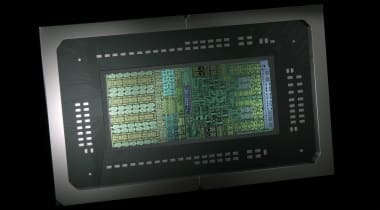
Chinese factories are upgrading Nvidia's GeForce RTX 4090 24GB graphics card to 48GB for AI workloads using a $142 "upgrade kit" with a custom PCB and additional memory chips. A technician demonstrated the process of doubling the memory capacity by soldering components onto the PCB. Modified firmware is also uploaded to enable the expanded memory. The total cost for the upgrade is around $430, offering a 39% savings compared to buying a pre-upgraded card. With RTX 4090 supply decreasing, factories may soon turn to upgrading the RTX 5090, potentially leading to even higher memory configurations like the rumored 128GB RTX 5090.

Read Full Article

Similar Articles

Ingenious modder turns Lego Game Boy into an actual Game Boy that can run real cartridges — new Lego set gets outfitted with custom PCB in less than a day, 3D printing required for future button support

Ingenious modder turns Lego Game Boy into an actual Game Boy that can run real cartridges — new Lego set gets outfitted with custom PCB in less than a day, 3D printing required for future button support

A modder, @natalie_thenerd, quickly transformed the Lego Game Boy into a functional Game Boy that can run real cartridges, not just emulators, using a custom PCB with original Game Boy chips. The project involved replacing Lego components with a smaller screen kit and figuring out how to make the buttons work, which will require a 3D-printed Lego piece. While the Game Boy can accept real Nintendo cartridges, further improvements are planned, with the intention to release files for others to convert their Lego Game Boys. Natalie has a track record of creating innovative tech projects, including a transparent Game Boy.

Tom's Hardware
Nvidia CEO Huang says upcoming DGX Spark systems are powered by N1 silicon — confirms GB10 Superchip and N1/N1X SoCs are identical

Nvidia CEO Huang says upcoming DGX Spark systems are powered by N1 silicon — confirms GB10 Superchip and N1/N1X SoCs are identical

Nvidia CEO Jensen Huang confirmed that the upcoming N1 SoC is essentially the same as the existing GB10 Superchip, part of the DGX Spark lineup, designed for AI workloads. The N1/N1X SoCs were speculated upon following Nvidia's Project DIGITS announcement in collaboration with MediaTek. The N1 SoC is expected to feature 6,144 CUDA cores for its GPU and a 20-core CPU built using Nvidia's Grace architecture. Huang's statement suggests that the N1 and GB10 are closely linked, with the N1 possibly being a lower-binned version of the GB10. The N1's development is part of Nvidia's move towards mainstream CPU cores following Tegra, and its collaboration with Intel for ARM-based products is not expected to impact its roadmap.

Tom's Hardware
Chip Industry Technical Paper Roundup: August 26

Chip Industry Technical Paper Roundup: August 26

New technical papers added to Semiconductor Engineering's library cover topics like Ultra Ethernet design principles, wire-friendly processors, thermal-aware scheduling for AI workloads, chip-to-chip photonic fabrics, photolithography for 2D materials, LLM acceleration architecture, and carbon nanotube transistors. These papers involve collaborations between various research organizations and universities like ETH Zurich, Intel, University of Wisconsin–Madison, Cornell University, and more. The papers aim to explore innovative solutions for improving performance and efficiency in semiconductor technologies. You can find more semiconductor research papers on Semiconductor Engineering's website.

SemiEngineering
Dr. L.C. Lu on TSMC Advanced Technology Design Solutions

Dr. L.C. Lu on TSMC Advanced Technology Design Solutions

Dr. L.C. Lu, a key figure at TSMC, focuses on design-technology co-optimization, packaging innovations, and AI-driven methodologies for next-gen semiconductor systems. TSMC emphasizes DTCO and DDCL innovations for scaling from N5 to A14 nodes, with NanoFlex and NanoFlex Pro architectures offering efficiency gains. N2P and N2U nodes incorporate advanced DTCO and power delivery optimizations, with hybrid dual-rail architectures achieving significant energy savings. TSMC collaborates with EDA partners for AI integration, enhancing productivity and design quality. Advanced packaging technologies like CoWoS and SoIC play a crucial role in enabling AI scaling, with memory bandwidth and interconnect performance scaling aggressively. TSMC addresses power delivery and thermal management challenges in AI systems through advanced solutions. TSMC's advancements in design methodologies and AI-driven automation promise improved productivity and scalability in chip-package co-design.

SemiWiki

We use cookies

We use cookies to ensure you get the best experience on our website. For more information on how we use cookies, please see our cookie policy.