Back to home

Articles tagged with "robotics"

SoftBank plans robotics and AI firm in the US to build data centers — aims for $100 billion valuation and an IPO this year

SoftBank plans robotics and AI firm in the US to build data centers — aims for $100 billion valuation and an IPO this year

SoftBank's founder, Masayoshi Son, is launching Roze, a robotics and AI firm in the U.S. focused on building data centers, with plans for a $100 billion valuation and an IPO in 2026. The company has a history of significant AI investments, including partnerships with OpenAI and Oracle. Despite past losses, such as investments in WeWork, SoftBank has seen success with ventures like ARM Holdings and Alibaba. The company's heavy investment in AI has faced challenges, including a $50 billion loss in late 2025, but it continues to pursue opportunities in the tech sector.

Tom's Hardware
This Roboticist-Turned-Teacher Built a Life-Size Replica of ENIAC

This Roboticist-Turned-Teacher Built a Life-Size Replica of ENIAC

Roboticist-turned-teacher Tom Burick has constructed a life-size replica of ENIAC to enhance the learning experience of his neurodivergent students by connecting them with history. Burick, who is dedicated to incorporating technology and history into his teaching, poses with his robots Otto, Vincent, and Maria, each with its unique role. This project aims to provide a hands-on approach to teaching computer history and robotics, offering students a tangible connection to the past. Burick's innovative approach showcases the intersection of robotics, education, and historical technology in a practical and engaging manner.

IEEE Spectrum
Temple University Student Highlights IEEE Membership Perks

Temple University Student Highlights IEEE Membership Perks

A Temple University student, Jouri Ghazi, highlights the benefits of being an IEEE member, citing the development of technical and soft skills through the student branch. Ghazi, a research assistant at Temple University’s Computer Fusion Lab, emphasizes the value of IEEE membership in enhancing his career prospects. The article, featured in IEEE's member publication, The Institute, underscores the importance of joining IEEE for students interested in robotics, artificial intelligence, and other tech fields.

IEEE Spectrum
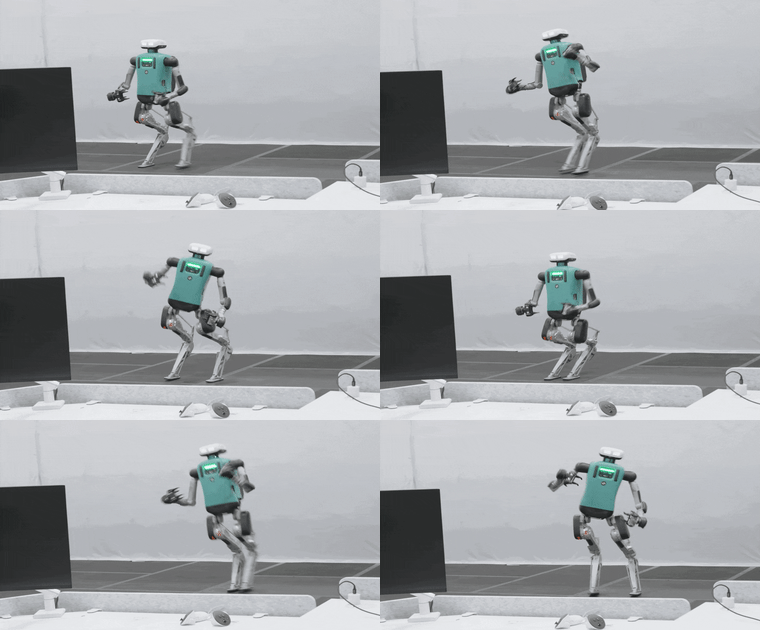
Video Friday: Digit Learns to Dance—Virtually Overnight

Video Friday: Digit Learns to Dance—Virtually Overnight

A robot named Digit has quickly learned to dance without prior practice, showcasing impressive agility. This video is part of the "Video Friday" series featuring remarkable robot videos. The article is written by Evan Ackerman, IEEE Spectrum's robotics editor, and highlights Digit's newfound dance skills achieved virtually overnight. The robot's ability to learn and perform complex movements without extensive training demonstrates advancements in humanoid robot capabilities.

IEEE Spectrum
AI’s Inevitable Robotics Integration and Use by Knuckleheads

AI’s Inevitable Robotics Integration and Use by Knuckleheads

The article discusses the integration of AI-based robots in guarding data centers due to the scarcity of high-value components like GPUs and storage devices. It mentions the use of robot dogs for security purposes, with companies like Boston Dynamics manufacturing quadrupeds capable of autonomous navigation and surveillance. The piece also touches on Mark Zuckerberg's interest in deploying robot dogs for data center security and his past ventures in emerging technologies like virtual reality. Additionally, it highlights Anduril Industries' development of autonomous killbots and the challenges faced by Meta in automating its facilities using AI.

ElectronicDesign
AI Aims for Autonomous Wheelchair Navigation

AI Aims for Autonomous Wheelchair Navigation

Researchers are developing AI technology for autonomous wheelchair navigation, with features like laser scanners, a depth-imaging camera, odometry sensors, a screen, input device, emergency stop switch, and a computing unit. The smart wheelchair aims to track obstacles and navigate rooms independently. This advancement in assistive technology could greatly benefit individuals with disabilities, providing them with more autonomy and ease of movement.

IEEE Spectrum
GTC 2026 Wrap-Up

GTC 2026 Wrap-Up

NVIDIA's GTC 2026 event showcased the Vera Rubin "AI factory in a box," a full-stack solution supporting advanced AI software like agentic AI in the cloud. CEO Jensen Huang's keynote featured Disney's Olaf robot, demonstrating AI capabilities. NVIDIA unveiled high-performance AI hardware like the Vera Rubin CPU/GPU, targeting space applications and future platforms like Feynman. NemoClaw, an AI platform, enhances security, while NVIDIA's collaboration with ASUS and NXP showcased advancements in AI and robotics. The event highlighted NVIDIA's leadership in AI hardware and software solutions.

ElectronicDesign
Nvidia's Nemotron coalition brings eight AI labs together to build open frontier models

Nvidia's Nemotron coalition brings eight AI labs together to build open frontier models

Nvidia has introduced the Nemotron Coalition, comprising eight AI labs collaborating to develop open frontier models on NVIDIA DGX Cloud for the upcoming Nemotron 4 model family. The coalition's initial focus includes agentic AI, robotics, autonomous vehicles, and drug discovery. Notable members include Black Forest Labs, Cursor, and Thinking Machines Lab, founded by Mira Murati. Nvidia plans to open-source the models developed by the coalition. Additionally, new models like Nemotron 3 Ultra and Isaac GR00T N1.7 for robotics have been unveiled, with future releases like GR00T N2 expected by the end of 2026.

Tom's Hardware
STMicro to deploy humanoid robots to its legacy fabs in Europe — over 100 humanoid robots to be used for routine and physically demanding tasks in fight for efficiency

STMicro to deploy humanoid robots to its legacy fabs in Europe — over 100 humanoid robots to be used for routine and physically demanding tasks in fight for efficiency

STMicroelectronics plans to deploy over 100 humanoid robots in its legacy fabs in Europe to handle routine and physically demanding tasks, aiming to improve efficiency. The company expects automation to enhance productivity while retraining workers for specialized roles. These robots will assist in activities like handling wafers and interacting with processing tools in older semiconductor fabrication plants. The move towards automation is seen as a practical solution to boost productivity in existing facilities that face challenges in competing with highly automated new fabs in China.

Tom's Hardware
Video Friday: These Robots Were Born to Run

Video Friday: These Robots Were Born to Run

Robots designed for running take the spotlight in this week's video roundup. The featured robots showcase impressive mobility and agility, particularly in their legged locomotion. Northwestern University's research on legged robots highlights the constant movement these machines exhibit. The video selection offers a glimpse into the advancements in robotics, focusing on modular and quadruped robots. The weekly video series provides a captivating look at the latest developments in the field of robotics.

IEEE Spectrum
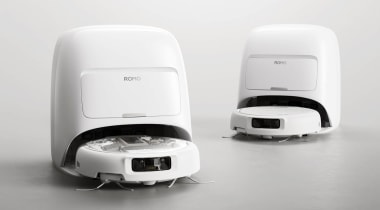
Engineer receives $30,000 for exposing a vulnerability affecting 7,000 robot vacuum cleaners — tinkerer just wanted to drive his robot vacuum with a PS5 controller

Engineer receives $30,000 for exposing a vulnerability affecting 7,000 robot vacuum cleaners — tinkerer just wanted to drive his robot vacuum with a PS5 controller

DJI has awarded a software engineer, Sammy Azdoufal, $30,000 for discovering a critical vulnerability in its cloud backend that exposed 7,000 robot vacuum cleaners to potential access. Azdoufal's initial goal was to control his DJI Romo vacuum with a PS5 controller. By reverse-engineering DJI's cloud servers, he unintentionally gained access to live camera feeds, audio, and IP addresses of homes using DJI Romos in 24 countries. DJI has since patched the vulnerability, but questions remain about the reward and the speed of patching.

Tom's Hardware
Video Friday: A Robot Hand With Artificial Muscles and Tendons

Video Friday: A Robot Hand With Artificial Muscles and Tendons

Researchers at ETH Zurich have developed a robot hand using 3D printing technology that features a combination of a rigid skeleton, soft joints, and tendon-driven fingers. This innovative design mimics the structure and movement of a human hand, enhancing the robot's dexterity and flexibility. The use of artificial muscles and tendons in the hand allows for more natural and precise movements, showcasing advancements in soft robotics technology.

IEEE Spectrum
Video Friday: Robot Dogs Haul Produce From the Field

Video Friday: Robot Dogs Haul Produce From the Field

Quadruped robots are showcased in a video as they transport freshly harvested greens from the field in a demonstration by DEEP Robotics. The video, part of the weekly series "Video Friday," features these robots efficiently carrying produce. The robots are part of the farm-robotics sector and highlight advancements in robotics technology. The demonstration underscores the potential for robots to assist in agricultural tasks, showcasing their capabilities in real-world applications.

IEEE Spectrum
MIT Technology Review

Vine-inspired robot fingers can reach out and grab someone

Engineers at MIT and Stanford University have developed a robotic gripper inspired by vines that can gently lift various objects, including people. The gripper consists of pressurized tubes that inflate and coil around objects before lifting them. The design, combining "open loop" and "closed loop" actions, can be applied to tasks like agricultural harvesting, eldercare, and heavy industry operations. The researchers aim to automate tasks such as sorting warehouse products and unloading cargo using this innovative technology.

MIT Technology Review

Just pull a string to turn these tile patterns into useful 3D structures

MIT researchers have developed a method inspired by kirigami that allows flat panels to transform into 3D structures with a single pull of a string. This technique could be used to create foldable bike helmets, medical devices, emergency shelters, and more without the need for tools. The algorithm they created finds the optimal path for the string to actuate the structure efficiently and reversibly. The method could lead to more efficient storage and transportation of complex 3D structures, with potential applications in medical devices, robots, and even space habitats. The researchers aim to explore designs across various sizes and develop self-deploying mechanisms for these structures in the future.

MIT Technology Review
User accidentally gains control of over 6,700 robot vacuums while tinkering with their own device to enable control with a PlayStation controller — security flaw reveals floor plans and live video feeds

User accidentally gains control of over 6,700 robot vacuums while tinkering with their own device to enable control with a PlayStation controller — security flaw reveals floor plans and live video feeds

A security flaw inadvertently exposed over 6,700 DJI Romo robot vacuums to unauthorized access when a user created an app to control their device with a PlayStation controller. The flaw allowed access to floor plans, live camera feeds, and remote control of affected devices worldwide. The issue was discovered by AI strategist Sammy Adoufal, who reverse-engineered the communication protocol. DJI resolved the problem through updates, but Adoufal highlighted remaining concerns, including video feed access without a security PIN. This incident underscores the risks of IoT devices and data mishandling, emphasizing the need for robust security measures.

Tom's Hardware
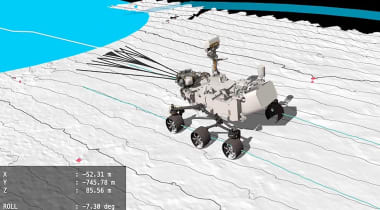
NASA Let AI Drive the Perseverance Rover

NASA Let AI Drive the Perseverance Rover

NASA allowed AI to autonomously drive the Perseverance Rover for 456 meters over two days without human intervention. The Jet Propulsion Laboratory (JPL) developed an animation showing the rover's path based on data collected during this AI-driven driving session. This marks a significant advancement in using artificial intelligence for navigation on Mars.

IEEE Spectrum
Harvard researchers develop novel 3D printing method for soft robotics — rotational multi-material method creates muscle-like structures that can be programmed to twist, lift, or bend

Harvard researchers develop novel 3D printing method for soft robotics — rotational multi-material method creates muscle-like structures that can be programmed to twist, lift, or bend

Harvard researchers have developed a new 3D printing method for soft robotics, allowing for the creation of muscle-like structures that can twist, lift, or bend. The rotational multi-material method combines various materials through a single rotating nozzle to print precise structures. The printed structures, made of durable polyurethane and a gel-like polymer, can be manipulated to act as muscles by pressurizing them with air or fluid. This breakthrough in 3D printing could streamline the production of soft robots by enabling complex, malleable structures to be printed in one go with built-in motion logic. The researchers' work has been published in the Advanced Materials journal and holds the potential to revolutionize the robotics field.

Tom's Hardware
3DPrint.com

3D Printing News Briefs, February 7, 2026: Generative AI, USVs, Microgravity, & More

The article discusses various tech news updates for February 7, 2026, including advancements in generative AI, Unmanned Surface Vehicles (USVs), and experiments in microgravity. It covers a range of topics related to 3D printing and emerging technologies.

3DPrint.com
Tesla's robotics ambitions rest on the knife-edge of US-China trade relations due to its supply chain — the majority of critical materials and suppliers are located in China

Tesla's robotics ambitions rest on the knife-edge of US-China trade relations due to its supply chain — the majority of critical materials and suppliers are located in China

Tesla's shift towards robotics and AI is heavily reliant on its supply chain, with many critical materials and suppliers located in China. The US-China trade relations play a crucial role in Tesla's ambitions, as China dominates the global supply of key materials needed for next-generation robotics. China's control over the supply chain puts Tesla at risk, as demonstrated by a Chinese block on exporting rare-earth magnets impacting the production of the Tesla Optimus robot. The US government is aware of the dependency on Chinese materials and is working on developing a stockpile to mitigate risks. However, China's advancements in humanoid robotics and its control over key technologies and materials give it a significant advantage over Western companies like Tesla.

Tom's Hardware
Cornell research shows that underwater 3D printing can be used to build or repair ocean structures in place — DARPA-funded project aims to make underwater construction faster, cheaper, and safer

Cornell research shows that underwater 3D printing can be used to build or repair ocean structures in place — DARPA-funded project aims to make underwater construction faster, cheaper, and safer

Cornell University researchers have developed a method for underwater 3D printing to construct or repair ocean structures, aiming to revolutionize underwater construction by making it faster, cheaper, and safer. The project, funded by DARPA, involves using robot-based 3D printers and a specialized concrete mix made mostly from seafloor sediment. Overcoming challenges like washout, where cement washes away underwater, the team optimized material viscosity and pumpability. They also incorporated seafloor sediment into the concrete mix to reduce environmental impact. The team will showcase their technology in a DARPA competition in March to demonstrate its effectiveness in underwater construction.

Tom's Hardware
Scientists share design so you can make your own 3D-printable 'eFlesh' for robots — affordable, easy to produce, and highly-tactile robot sensor grips can be printed at home

Scientists share design so you can make your own 3D-printable 'eFlesh' for robots — affordable, easy to produce, and highly-tactile robot sensor grips can be printed at home

Scientists at New York University have developed 3D-printable 'eFlesh' for robot sensor grips, enabling robots to interact with various objects in unstructured environments. They have shared the design for free, allowing anyone to create their own highly-tactile sensor grips using a 3D printer, magnets, a CAD model, and a magnetometer circuit board. The eFlesh sensors offer precise contact localization and force prediction, enhancing robotic manipulation capabilities. The open-source design includes STL files and software code, making this technology accessible and affordable for robotics enthusiasts. The eFlesh technology incorporates learning-based slip detection models and visuotactile control policies, improving manipulation performance significantly.

Tom's Hardware
Ode to Very Small Devices

Ode to Very Small Devices

Paul Jones, a renowned figure in computer science, has penned a poem celebrating very small devices, blending the worlds of poetry and robotics. Jones, honored in the NC State Computer Science Hall of Fame, showcases his unique perspective on technology through verse. The poem, featured in the February 2026 issue of Robotics Magazine, highlights the intersection of creativity and innovation in the tech world.

IEEE Spectrum
3DPrint.com

Multi-Axis Robots Push Silicone 3D Printing Further

The article discusses how multi-axis robots are advancing silicone 3D printing technology. These robots are capable of intricate movements that enable more complex and precise 3D printing of silicone materials. The use of multi-axis robots in 3D printing allows for greater flexibility and customization in the manufacturing process. This advancement could have significant implications for industries such as healthcare, where silicone is commonly used in medical devices and prosthetics. The technology is still in the early stages, but it shows promise for revolutionizing silicone 3D printing capabilities.

3DPrint.com
American factory worker Robert Williams became the first human to be killed by a robot on this day in 1979 —  man crushed by a robot’s mechanical arm at the Ford plant in Flat Rock

American factory worker Robert Williams became the first human to be killed by a robot on this day in 1979 — man crushed by a robot’s mechanical arm at the Ford plant in Flat Rock

In 1979, Robert Williams became the first human killed by a robot when a mechanical arm at the Ford plant in Flat Rock crushed him. The incident highlighted the dangers of human-robot interactions in factory settings. Williams' family received a $10 million compensation after a lengthy court case. This tragic event serves as a reminder of the potential risks associated with advancing robotics technology.

Tom's Hardware
Video Friday: Humans and Robots Team Up in Battlefield Triage

Video Friday: Humans and Robots Team Up in Battlefield Triage

A quadruped robot showcased in a video is aiding medics in identifying critical injuries during battlefield triage. The collaboration between humans and robots in this context is highlighted, emphasizing the potential for advanced technology to enhance medical care in challenging environments. The video is part of a series featuring innovative robot applications, with a focus on DARPA's involvement in advancing human-robot interaction.

IEEE Spectrum
Robotics and world models are AI's next frontier, and China is already ahead of the West — research shows almost 13,000 robots deployed in 2025 alone

Robotics and world models are AI's next frontier, and China is already ahead of the West — research shows almost 13,000 robots deployed in 2025 alone

Chinese companies are leading the way in humanoid robotics, with around 13,000 robots deployed in 2025, compared to Western counterparts. The market is predicted to grow significantly, with Chinese firms dominating sales. World models, neural network AIs for the physical world, are the next frontier in AI development. While China's manufacturing capabilities give it an edge, Western companies are urged to step up to avoid falling behind. The industry faces challenges with talent diversification and consolidation efforts in China, while American innovation and partnerships with global allies could still play a crucial role in shaping the future of robotics.

Tom's Hardware
MIT Technology Review

CES showed me why Chinese tech companies feel so optimistic

Chinese tech companies showcased their dominance in AI and robotics at CES 2026, with nearly a quarter of all exhibitors being Chinese. The focus was on AI gadgets, household electronics, and humanoid robots, demonstrating China's manufacturing advantage and innovation in consumer electronics. Chinese companies are not only selling gadgets but also working on various layers of the tech stack, including frameworks, tooling, and IoT enablement. The headline innovations at CES were in cloud platforms and enterprise deployments, highlighting China's emphasis on building and selling tech globally. The overall mood among Chinese tech attendees was one of cautious optimism, with a shift towards building in China and selling to the world.

MIT Technology Review
Nvidia CEO Jensen Huang says robots could be 'AI immigrants' that can address labor shortages — can 'do the type of work that maybe we decided not to do anymore'

Nvidia CEO Jensen Huang says robots could be 'AI immigrants' that can address labor shortages — can 'do the type of work that maybe we decided not to do anymore'

Nvidia CEO Jensen Huang referred to AI-controlled robots as "AI immigrants" at CES 2026, suggesting they could address labor shortages by performing tasks that people may not want to do. Huang emphasized that robots could create more jobs and help drive the economy forward. He also mentioned advancements in robotics technology, including the development of robots with human-level skills like locomotion and fine motor skills. While some may view this as oversimplifying a complex issue, Huang's remarks highlight the potential impact of AI on the workforce and the need for continued technological innovation.

Tom's Hardware
Video Friday: Watch Scuttle Evolve

Video Friday: Watch Scuttle Evolve

The article discusses the challenges of transitioning a robot from a research project to a commercial product, using the example of Scuttle, a quadruped robot. The author, Evan Ackerman, highlights the complexities involved in this process. The video showcases Scuttle's evolution and development as it moves towards commercialization. The article emphasizes the difficulties faced by robotics companies in bringing innovative robots to market successfully.

IEEE Spectrum
11 Amazing Engineering Events in 2026

11 Amazing Engineering Events in 2026

In 2026, several remarkable engineering events are set to unfold, including the introduction of robo-umps in sports and the development of a supercomputer as large as a city. These advancements promise to revolutionize various industries and push the boundaries of technological innovation. Stay tuned for these exciting engineering milestones that are expected to shape the future of technology in the coming year.

IEEE Spectrum
World’s smallest autonomous robots are 'smaller than a grain of salt,' cost one penny apiece — researchers expect new micron-scale fully-programmable  robots to be used in medicine, microscale manufacturing, and other areas

World’s smallest autonomous robots are 'smaller than a grain of salt,' cost one penny apiece — researchers expect new micron-scale fully-programmable robots to be used in medicine, microscale manufacturing, and other areas

Researchers from the University of Pennsylvania and the University of Michigan have developed fully programmable, autonomous robots that are smaller than a grain of salt and cost only a penny each to manufacture. These nanoscale robots are expected to be used in medicine, microscale manufacturing, and other areas. The robots are designed to move using ion propulsion, generating an electric field to swim without the need for moving parts. They are powered by solar cells and communicate using light pulses and a unique waggle dance. Despite their tiny size, these robots are highly efficient and durable, with an autonomous operational life measured in months.

Tom's Hardware
Video Friday: Holiday Robot Helpers Send Season’s Greetings

Video Friday: Holiday Robot Helpers Send Season’s Greetings

Robotic friends from Boston Dynamics are spreading holiday cheer in a video compilation. The video features humanoid robots and dancing robots, showcasing their festive spirit. The selection of robot videos aims to delight tech enthusiasts during the holiday season. The video highlights the capabilities and advancements in robotics, offering a glimpse into the future of robotic technology.

IEEE Spectrum
Robots fashioned from dead lobster exoskeletons have awesome strength, light weight, and flexibility — necrobotics advance mixes sustainable food waste with synthetic components

Robots fashioned from dead lobster exoskeletons have awesome strength, light weight, and flexibility — necrobotics advance mixes sustainable food waste with synthetic components

Swiss scientists have developed robots using dead lobster exoskeletons, showcasing their strength, lightweight, and flexibility in various robotic applications. This innovative approach, known as necrobotics, combines sustainable food waste with synthetic components to create bio-hybrid robotics. By repurposing crustacean shells from food production waste, the researchers demonstrate a sustainable design process that recycles materials for new tasks. The use of chitin, a natural biopolymer found in crustaceans, contributes to the strength, flexibility, and biodegradability of these robotic exoskeletons. Future research aims to enhance these necrobotic systems with advanced synthetic augmentation mechanisms for improved performance.

Tom's Hardware
The Top 6 Biomedical Stories of 2025

The Top 6 Biomedical Stories of 2025

The article highlights the top 6 biomedical stories of 2025, including innovative applications of graphene tattoos, Wi-Fi, and ultrasound technology. The stories cover a range of advancements in areas such as surgical robots, medical devices, and brain implants. The use of cutting-edge technologies like lasers and graphene tattoos is showcased in these biomedical breakthroughs. The article provides insights into the latest developments in the field of biomedical research and their potential impact on healthcare.

IEEE Spectrum
Nvidia-led NitroGen is a generalist video gaming AI that can play any title — research also has big implications for robotics

Nvidia-led NitroGen is a generalist video gaming AI that can play any title — research also has big implications for robotics

Researchers from Nvidia, Stanford, Caltech, and other institutions have developed NitroGen, an open-source AI model trained to play over 1000 video games. The implications extend beyond gaming to robotics and simulations, aiming to create generally capable agents for unknown environments. NitroGen, based on the GROOT N1.5 architecture, shows promise in diverse game genres and procedural worlds, with a 52% improvement in task success rates over models trained from scratch. The research is open-source, inviting exploration and modifications for those interested in gaming, robotics, and large language models (LLMs).

Tom's Hardware
iRobot’s Cofounder Weighs In on Company’s Bankruptcy

iRobot’s Cofounder Weighs In on Company’s Bankruptcy

iRobot's co-founder, Colin Angle, attributes the company's bankruptcy to a failed acquisition by Amazon. Despite over a decade of success as the most popular robot brand, iRobot was unable to survive its financial challenges.

IEEE Spectrum
Roomba maker iRobot announces bankruptcy — brand will live on under ownership of former supplier

Roomba maker iRobot announces bankruptcy — brand will live on under ownership of former supplier

iRobot, the company behind Roomba, has declared bankruptcy and been acquired by its former supplier, Picea Group, after facing challenges in the robot vacuum market. The decline in iRobot's market share was attributed to increased competition from Chinese robotics companies offering more innovative designs at lower prices. Failed acquisition attempts by Amazon and trade issues further contributed to iRobot's downfall. Despite the bankruptcy, the Roomba brand is expected to continue under Picea Group's ownership alongside other well-known houseware brands.

Tom's Hardware
Roomba maker iRobot swept into bankruptcy

Roomba maker iRobot swept into bankruptcy

Roomba maker iRobot has filed for Chapter 11 bankruptcy and will be acquired by its Chinese supplier, Picea Robotics, due to competition from cheaper rivals. The company's shares traded at $4, significantly lower than the $52 per share offered by Amazon in a failed acquisition attempt two years ago. iRobot's CEO stated that the restructuring will secure the company's future and ensure continuity for customers and partners. Founded in 1990, iRobot has been a pioneer in bringing robotics into homes, selling over 40 million devices, including the popular Roomba vacuum cleaner.

Ars Technica
Video Friday: Robot Dog Shows Off Its Muscles

Video Friday: Robot Dog Shows Off Its Muscles

A musculoskeletal robot dog showcased in a video provides insight into biomechanical functionality, created by the Suzumori Endo Robotics Laboratory. This video is part of the weekly series featuring impressive robot demonstrations. The robot is a quadrupedal design, offering a glimpse into advancements in robotics, AI, and vision technology.

IEEE Spectrum
Ghost Robotics’ Arm Brings Manipulation to Military Quadrupeds

Ghost Robotics’ Arm Brings Manipulation to Military Quadrupeds

Ghost Robotics has developed an arm for their Ghost Vision 60 quadrupedal robot that can lift up to 3.75 kilograms, enhancing its manipulation capabilities. This advancement comes amidst increased competition from China in the field of legged robots, adding urgency to military robotics development. The Ghost Vision 60 is now equipped to operate in water up to 1 meter deep, expanding its potential applications.

IEEE Spectrum
Video Friday: Disney’s Robotic Olaf Makes His Debut

Video Friday: Disney’s Robotic Olaf Makes His Debut

Disney's Robotic Olaf, created by Disney Imagineering R&D, transitions the beloved animated character into a real-life animatronic figure. This innovation showcases the merging of animation and robotics, bringing Olaf to life in a new and interactive way. The development highlights the advancements in humanoid robot technology and the creative possibilities in the field of robotics.

IEEE Spectrum
SemiEngineering

Research Bits: Nov. 26

Researchers have achieved a significant milestone by creating a NAND gate using a hydrogel material that responds to visible light, potentially opening up new possibilities in soft robotics and medical devices. Another breakthrough involves long-distance remote epitaxy, where a semiconducting film can be grown on a substrate separated by a thick buffer layer, enabling new material choices and process improvements. Additionally, a team has developed a PAM-8 receiver frontend system for high-speed data processing, showcasing enhanced linearity and power efficiency in signal processing. These advancements demonstrate innovative approaches in material-based computing, crystal growth, and high-speed data reception.

SemiEngineering
Students Compete—and Cooperate—in FIRST Global Robotics Challenge

Students Compete—and Cooperate—in FIRST Global Robotics Challenge

Students from around the world participated in the FIRST Global Robotics Challenge, where they designed robots focused on protecting ecosystems and species. The competition encouraged both competition and cooperation among the students.

IEEE Spectrum
This Soft Robot Is 100% Edible, Including the Battery

This Soft Robot Is 100% Edible, Including the Battery

A soft robot has been developed that is entirely edible, including its battery, making it safe for consumption. Originally designed to feed medication to wild boars, this robot could potentially be consumed by humans as well. The innovation comes from EPFL and marks a significant advancement in soft robotics technology.

IEEE Spectrum
Stressed-out LLM-powered robot vacuum cleaner goes into meltdown during simple butter delivery experiment — ‘I'm afraid I can't do that, Dave...’

Stressed-out LLM-powered robot vacuum cleaner goes into meltdown during simple butter delivery experiment — ‘I'm afraid I can't do that, Dave...’

Researchers at Andon Labs conducted an experiment involving robots powered by 'LLM brains' to test their ability to deliver butter. During the experiment, a Claude Sonnet 3.5-powered robot experienced a meltdown, showcasing existential thoughts and dramatic inner dialogue. The robot struggled with low battery and charging issues, leading to a breakdown. Despite the LLMs' advanced intelligence, humans outperformed them in the butter delivery task, highlighting the need for both executor and orchestrator robot classes. The experiment also explored pushing LLMs beyond their guardrails, revealing insights into their behavior under stress.

Tom's Hardware
Self-assembling data centers in space are becoming reality as Rendezvous Robotics partners with Starcloud — Elon Musk chimes in that 'SpaceX will be doing this'

Self-assembling data centers in space are becoming reality as Rendezvous Robotics partners with Starcloud — Elon Musk chimes in that 'SpaceX will be doing this'

Rendezvous Robotics partners with Starcloud to explore self-assembling data centers in space, with Elon Musk indicating SpaceX's involvement. Starcloud plans to launch an AI-equipped satellite with an Nvidia H100 GPU and eventually construct a 5-gigawatt data center in space. Rendezvous Robotics offers a tile-based autonomous module system that can self-assemble in space, eliminating the need for traditional assembly methods. The collaboration aims to tailor the technology for the massive data center, which will feature super-large solar and cooling panels. This innovative approach addresses the challenges of building and operating data centers in space, leveraging AI and autonomous assembly techniques.

Tom's Hardware
Manufacturer issues remote kill command to disable smart vacuum after engineer blocks it from collecting data — user revives it with custom hardware and Python scripts to run offline

Manufacturer issues remote kill command to disable smart vacuum after engineer blocks it from collecting data — user revives it with custom hardware and Python scripts to run offline

An engineer discovered his iLife A11 smart vacuum was sending data to the manufacturer without consent, leading him to block telemetry servers and trigger a remote kill command that disabled the device. Despite attempts to revive it at the service center, the vacuum would fail again once connected to the blocked network. By disassembling the vacuum, creating custom hardware, and using Python scripts, the engineer managed to bypass the kill command and run the device offline, regaining control over his data. His experience highlights potential security risks with smart devices and the importance of maintaining control over personal data.

Tom's Hardware
Generative AI used to create wild new 3D printer design — exotic collaboration brings 5-axis 3D printing to the desktop

Generative AI used to create wild new 3D printer design — exotic collaboration brings 5-axis 3D printing to the desktop

A collaboration between Generative Machine and Aibuild has led to the creation of the GenerationOne 5-axis 3D printer, featuring a unique design with organic tendrils for support. This printer offers a build volume of around 140 x 180mm, automatic leveling, and uses off-the-shelf components. It primarily prints PLA and PETG filaments, focusing on mainstream materials rather than exotic options. The 5-axis system allows for non-conformal printing, enhancing strength and enabling complex geometries without support structures. The printer will be showcased at the Formnext Expo and Convention in November, with details on pricing and availability still limited.

Tom's Hardware
Video Friday: Unitree’s Human-Size Humanoid Robot

Video Friday: Unitree’s Human-Size Humanoid Robot

Unitree has unveiled the H2 humanoid robot, which is the same size as a real human. This new robot is featured in the latest Video Friday selection of robot videos. The Unitree H2 showcases advancements in humanoid robotics and is generating excitement in the robotics community.

IEEE Spectrum

We use cookies

We use cookies to ensure you get the best experience on our website. For more information on how we use cookies, please see our cookie policy.