Back to home
Technology

PC vendor warns of upcoming price hikes due to SSD and memory volatility — PowerGPU to pass costs to customers once existing inventory depletes

Source

Tom's Hardware

Published

TL;DR

AI Generated

PowerGPU, a system integrator, has warned of impending price hikes for its gaming PCs due to increased costs of SSDs and other components. The company plans to raise prices once current inventory is depleted. The rise in prices is attributed to high demand for memory and storage chips, particularly from AI data centers. Despite some stabilization in memory chip pricing trends, the overall outlook suggests continued increases in memory and storage prices through 2026 and possibly into 2027. This situation is exacerbated by a recent chip shortage affecting components like memory modules and GPUs.
Read Full Article

Similar Articles

Newegg finally has a worthwhile Intel combo that includes memory, saving almost $240 — snag an Intel Core Ultra 7 270K Plus, ASRock Z890 motherboard, and 32GB of GSkill Trident Z5 DDR5 RAM for only $768.34

Newegg finally has a worthwhile Intel combo that includes memory, saving almost $240 — snag an Intel Core Ultra 7 270K Plus, ASRock Z890 motherboard, and 32GB of GSkill Trident Z5 DDR5 RAM for only $768.34

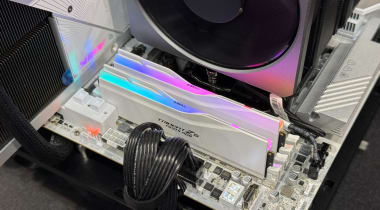
Newegg is offering a compelling combo deal including an Intel Core Ultra 7 270K Plus processor, ASRock Z890 Pro RS motherboard, and 32GB of G.Skill Trident Z5 RGB RAM for $768.34, saving buyers almost $240. The Intel Core Ultra 270K Plus processor, despite facing tough competition from AMD, offers excellent productivity performance at a lower price point of $328.34. The GSkill Trident Z5 RGB RAM, paired with the ASRock motherboard, provides good performance and overclocking potential. This combo deal on Newegg is a rare find and a solid option for those looking to upgrade their PC amidst high component prices.

Tom's Hardware
Framework's new RTX 5070 12GB graphics module costs a whopping $1,199 — 72% more expensive than $699 8GB version, says pricing is beyond its control

Framework's new RTX 5070 12GB graphics module costs a whopping $1,199 — 72% more expensive than $699 8GB version, says pricing is beyond its control

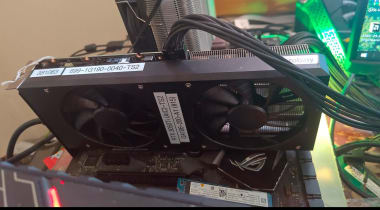
Nvidia released a new 12GB version of the RTX 5070 mobile GPU with upgraded memory chips, increasing memory throughput. Framework introduced a new graphics module for its Framework Laptop 16 featuring this GPU, priced at $1,199, a significant increase from the $699 8GB version. The high cost is attributed to the expensive GDDR7 memory and the ongoing global memory shortage. Framework clarified that the pricing is influenced by external factors and not within its control, highlighting the challenges faced by consumers due to the current market conditions.

Tom's Hardware
Commodore backs down over FPGA firmware lockdown — it won’t now try and block third-party firmware installs but will stand firm against bricked modded units

Commodore backs down over FPGA firmware lockdown — it won’t now try and block third-party firmware installs but will stand firm against bricked modded units

Commodore has reversed its decision to block third-party firmware installs on the C64 Ultimate computer, allowing users to experiment freely. However, the company will not provide support or replacements for modded units that become bricked. The initial plan to restrict non-Commodore FPGA firmware caused a divide among fans, leading to heated discussions on social media and forums. Commodore now emphasizes user freedom but warns that using community-installed firmware is at the owner's risk, with no free support or warranty service provided for damaged units.

Tom's Hardware
CEO Interview with Xianxin Guo of Lumai

CEO Interview with Xianxin Guo of Lumai

Xianxin Guo, CEO of Lumai, discusses the company's optical computing technology for AI and data center acceleration, aiming to address power efficiency and scalability limitations of traditional silicon-based approaches. Lumai's hybrid optical-electronic design enhances compute efficiency by leveraging light for key operations, reducing energy consumption and breaking through AI system bottlenecks. The technology is well-suited for high-throughput AI inference workloads in data centers, offering a more cost-effective and scalable solution. By focusing on optical compute, Lumai differentiates itself from competitors and aims to redefine AI compute efficiency for long-term scalability and performance gains. The company engages with customers through collaborative discussions and partnership-driven approaches to integrate optical computing seamlessly into existing AI infrastructure.

SemiWiki

We use cookies

We use cookies to ensure you get the best experience on our website. For more information on how we use cookies, please see our cookie policy.