Back to home
Technology

On-Current Performance of Ultra-Scaled NSFETs With Source/Drain Underlap Doping (Global TCAD Solutions, TU Wien)

Source

SemiEngineering

Published

TL;DR

AI Generated

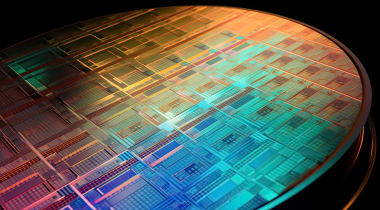
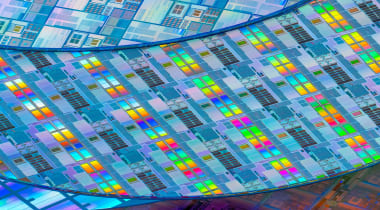
Researchers from Global TCAD Solutions GmbH and TU Wien published a technical paper on the on-current performance of ultra-scaled nanosheet FETs with source/drain underlap doping. The study explores the impact of underlap doping on device performance, specifically addressing anomalous saturation behavior observed in such devices. By simulating the transport physics in nanosheet FETs, the researchers found that secondary barriers in underdoped source/drain extensions enhance transport, even in the linear regime, explaining the observed saturation behavior. The insights from this study provide guidance for optimizing source/drain underlap doping profiles to prevent on-current degradation.
Read Full Article

Similar Articles

Researchers find a way to heat 3D printer filament using microwaves, enabling fusing circuits inside printed objects — tech supports precise heating down to the width of a human hair

Researchers find a way to heat 3D printer filament using microwaves, enabling fusing circuits inside printed objects — tech supports precise heating down to the width of a human hair

Researchers at Rice University have developed a new 3D printing process using microwaves, called Meta-NFS, that can heat nanoparticle ink with extreme precision. This technology allows for the fusing of circuits inside 3D printed objects, a capability previously unattainable with traditional manufacturing methods. Meta-NFS enables the use of a wider range of materials and improves production efficiency by adjusting microwave power in real-time. The applications of this technology include integrating electronics into soft materials like robots, implants, and plants, showcasing its potential for groundbreaking advancements in electronic manufacturing.

Tom's Hardware
SemiEngineering

Automate And Speed Up TCAD Calibration With Expert Modules And ML Calibration Accelerator

The article discusses the importance of automating and speeding up TCAD calibration in semiconductor manufacturing using expert modules and machine learning (ML) calibration accelerators. It highlights the challenges in semiconductor development due to increased complexity and the need for efficiency. TCAD calibration involves tuning physical model parameters to match simulated results with real device data. Synopsys offers solutions like Sentaurus Calibration Workbench (SCW) with expert calibration modules and the Sentaurus ML Calibration Accelerator to accelerate the calibration workflow by over 5X. ML enhancements in SCW allow users to create their own modules and workflows, improving TCAD accuracy and reducing calibration time.

SemiEngineering
Chip Can Project Video the Size of a Grain of Sand

Chip Can Project Video the Size of a Grain of Sand

A chip has been developed that can project video on a scale as small as a grain of sand. Originally designed for steering lasers in quantum computers, this MEMS array technology has found new applications in image projection. Researchers have demonstrated its capabilities by projecting the Mona Lisa using a long split-electrode device. This innovation could have implications for various fields, including semiconductors, biomedical imaging, and consumer electronics.

IEEE Spectrum
SemiEngineering

Research Bits: Apr. 6

Researchers from various universities have made significant advancements in memristor technology. At Loughborough University, a memristor reservoir computing chip was developed, showing improved energy efficiency compared to software-based solutions. At the University of Michigan, a memristor made from 2D bismuth selenide demonstrated long-term data retention and analog tuning capabilities. Additionally, researchers from the University of Cambridge, Beijing Institute of Technology, and Lund University created a highly stable, low-energy hafnium oxide memristor. These developments pave the way for more efficient and versatile AI applications in the future.

SemiEngineering

We use cookies

We use cookies to ensure you get the best experience on our website. For more information on how we use cookies, please see our cookie policy.