Back to home
Technology

Newegg bundle puts a bow on a Core Ultra 7 265K, 32GB of DDR5, and more for $610 — get most of a PC build for the price of 64GB of RAM

Source

Tom's Hardware

Published

TL;DR

AI Generated

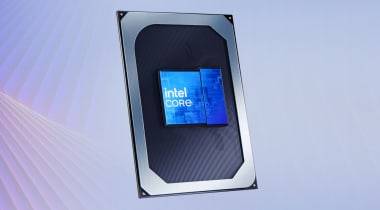
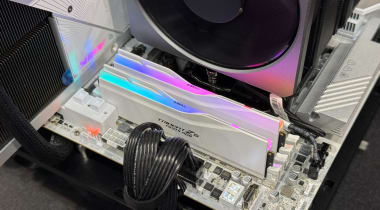
Newegg is offering a bundle deal for $610 that includes a Core Ultra 7 265K CPU, ASRock Z890 Taichi motherboard, G.Skill Flare X5 32GB DDR5 RAM, and a Montech X3 case, totaling around $1,200 worth of gear. The highlight is the inclusion of the 32GB RAM kit, which is typically expensive due to volatile prices. Despite being $200 cheaper than the flagship Core Ultra 9 295K, the Core Ultra 7 265K performs well in games and competes with Intel's Arrow Lake and AMD's X3D offerings. The bundle also comes with free gifts like a copy of Battlefield 6 and a liquid cooler, making it a compelling deal for PC builders.
Read Full Article

Similar Articles

Newegg finally has a worthwhile Intel combo that includes memory, saving almost $240 — snag an Intel Core Ultra 7 270K Plus, ASRock Z890 motherboard, and 32GB of GSkill Trident Z5 DDR5 RAM for only $768.34

Newegg finally has a worthwhile Intel combo that includes memory, saving almost $240 — snag an Intel Core Ultra 7 270K Plus, ASRock Z890 motherboard, and 32GB of GSkill Trident Z5 DDR5 RAM for only $768.34

Newegg is offering a compelling combo deal including an Intel Core Ultra 7 270K Plus processor, ASRock Z890 Pro RS motherboard, and 32GB of G.Skill Trident Z5 RGB RAM for $768.34, saving buyers almost $240. The Intel Core Ultra 270K Plus processor, despite facing tough competition from AMD, offers excellent productivity performance at a lower price point of $328.34. The GSkill Trident Z5 RGB RAM, paired with the ASRock motherboard, provides good performance and overclocking potential. This combo deal on Newegg is a rare find and a solid option for those looking to upgrade their PC amidst high component prices.

Tom's Hardware
Commodore backs down over FPGA firmware lockdown — it won’t now try and block third-party firmware installs but will stand firm against bricked modded units

Commodore backs down over FPGA firmware lockdown — it won’t now try and block third-party firmware installs but will stand firm against bricked modded units

Commodore has reversed its decision to block third-party firmware installs on the C64 Ultimate computer, allowing users to experiment freely. However, the company will not provide support or replacements for modded units that become bricked. The initial plan to restrict non-Commodore FPGA firmware caused a divide among fans, leading to heated discussions on social media and forums. Commodore now emphasizes user freedom but warns that using community-installed firmware is at the owner's risk, with no free support or warranty service provided for damaged units.

Tom's Hardware
Enthusiast builds 3D-printed retro PC case and shares the files so you can print it yourself — design fits ITX mobo and ATX PSU, comes with front 3.5-inch bay for USB ports

Enthusiast builds 3D-printed retro PC case and shares the files so you can print it yourself — design fits ITX mobo and ATX PSU, comes with front 3.5-inch bay for USB ports

An enthusiast has designed and shared the 3D-printed files for a retro PC case inspired by the Silverstone FLP01, fitting a mini-ITX motherboard and ATX power supply, with a front 3.5-inch bay for USB ports. The case is smaller than the FLP01 and lacks space for a discrete GPU or a dedicated 2.5-inch drive slot. The project involves 17 3D files, totaling 20 parts, and took about 85 hours to print, requiring additional components like screws, inserts, and wiring materials. While the build may seem complex, a PDF guide with images is included for assistance, resulting in a compact and aesthetically pleasing case suitable for lighter gaming setups or office PCs.

Tom's Hardware
CEO Interview with Xianxin Guo of Lumai

CEO Interview with Xianxin Guo of Lumai

Xianxin Guo, CEO of Lumai, discusses the company's optical computing technology for AI and data center acceleration, aiming to address power efficiency and scalability limitations of traditional silicon-based approaches. Lumai's hybrid optical-electronic design enhances compute efficiency by leveraging light for key operations, reducing energy consumption and breaking through AI system bottlenecks. The technology is well-suited for high-throughput AI inference workloads in data centers, offering a more cost-effective and scalable solution. By focusing on optical compute, Lumai differentiates itself from competitors and aims to redefine AI compute efficiency for long-term scalability and performance gains. The company engages with customers through collaborative discussions and partnership-driven approaches to integrate optical computing seamlessly into existing AI infrastructure.

SemiWiki

We use cookies

We use cookies to ensure you get the best experience on our website. For more information on how we use cookies, please see our cookie policy.