Back to home
Technology

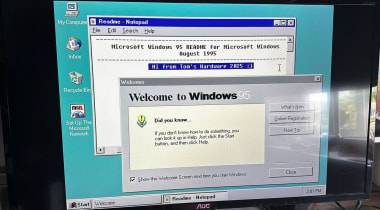
Microsoft’s pivotal Windows NT 3.5 release made it a serious contender, 31 years ago today

Source

Tom's Hardware

Published

TL;DR

AI Generated

Microsoft's Windows NT 3.5 release, 31 years ago, marked a pivotal moment in the evolution of the Windows operating system, shifting focus to enterprise needs with features like preemptive multitasking and protected memory. The release, codenamed "Daytona," significantly improved performance and networking capabilities, positioning Windows NT as a serious competitor in the market. The operating system's portability across different processor architectures showcased its forward-thinking design. Windows NT 3.5 laid the foundation for future iterations like Windows 2000 and Windows XP, solidifying the NT codebase as the future of Microsoft's operating systems.
Read Full Article

Similar Articles

You can now run Linux on your ancient Windows 95 desktop with a new tool — very old Windows PCs, back to Intel 486, can cooperatively run very modern Linux kernels with WSL9x

You can now run Linux on your ancient Windows 95 desktop with a new tool — very old Windows PCs, back to Intel 486, can cooperatively run very modern Linux kernels with WSL9x

A new tool called WSL9x allows ancient Windows 95 desktops, even those with Intel 486 CPUs, to run modern Linux kernels cooperatively with Windows. The tool, shared by a computer tinkerer on Codeberg, enables users to run Windows and Linux apps side-by-side with a modern Linux kernel within early Windows versions. WSL9x consists of a patched Linux kernel, a VxD driver, and wsl.com, and does not require hardware virtualization. Users can enjoy the capabilities of both operating systems simultaneously without the need for reboots. In contrast, Linux is phasing out support for the 37-year-old Intel 486 CPU, with a patch expected to be merged into Linux 7.1, signaling the end of i486 kernel image builds.

Tom's Hardware
Enthusiast ‘lands’ on the moon using hardware from the 1980s — ZX Spectrum home computer with 3.5 MHz CPU and 48KB of memory power Kerbal space flight

Enthusiast ‘lands’ on the moon using hardware from the 1980s — ZX Spectrum home computer with 3.5 MHz CPU and 48KB of memory power Kerbal space flight

Space enthusiast and YouTuber Scott Manley used a ZX Spectrum, a home computer from the 1980s, to successfully "land" on the moon in the Kerbal Space Program simulator. The ZX Spectrum, with a 3.5 MHz CPU and 48KB of memory, controlled the virtual spacecraft in the simulation. Despite its limitations compared to modern computers, the ZX Spectrum's capabilities were highlighted in this feat. Manley had to creatively program the device to operate the virtual spacecraft and connect it to the simulator using a proprietary storage system with an RS232 Serial port. This achievement showcases the ingenuity of past engineers who landed on the moon with less powerful computers than what we have today.

Tom's Hardware
Microsoft confirms Windows 11 will run faster under heavy load, reduce RAM usage, and feel more responsive

Microsoft confirms Windows 11 will run faster under heavy load, reduce RAM usage, and feel more responsive

Microsoft has announced significant performance improvements for Windows 11 in 2026, aiming to reduce RAM usage, latency, and improve responsiveness. The company plans to optimize RAM usage to free up resources for better app performance, reduce latency by shifting to WinUI 3, and enhance File Explorer speed and reliability. Additionally, improvements in Windows Search accuracy, driver quality, and OS stability are in the works to provide a smoother user experience. These enhancements align with hardware advancements, including Qualcomm and Intel's upcoming chips, indicating a potential turning point for Windows 11 in 2026.

Windows Latest
Build Your Own Commodore 64 Cartridge

Build Your Own Commodore 64 Cartridge

In a recent article by Stephen Cass, special projects editor at IEEE Spectrum, he details how to create your own Commodore 64 cartridge using free software and inexpensive parts. The article discusses the process of manufacturing cartridges to bring a Commodore 64 to life for an exhibit. The DIY project involves assembly programming and is a nod to vintage computers. The article was published on October 28, 2025, and provides a step-by-step guide for enthusiasts interested in retro tech projects.

IEEE Spectrum

We use cookies

We use cookies to ensure you get the best experience on our website. For more information on how we use cookies, please see our cookie policy.