Back to home
Technology

Build Your Own Commodore 64 Cartridge

Source

IEEE Spectrum

Published

TL;DR

AI Generated

In a recent article by Stephen Cass, special projects editor at IEEE Spectrum, he details how to create your own Commodore 64 cartridge using free software and inexpensive parts. The article discusses the process of manufacturing cartridges to bring a Commodore 64 to life for an exhibit. The DIY project involves assembly programming and is a nod to vintage computers. The article was published on October 28, 2025, and provides a step-by-step guide for enthusiasts interested in retro tech projects.
Read Full Article

Similar Articles

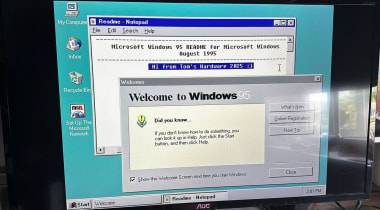
You can now run Linux on your ancient Windows 95 desktop with a new tool — very old Windows PCs, back to Intel 486, can cooperatively run very modern Linux kernels with WSL9x

You can now run Linux on your ancient Windows 95 desktop with a new tool — very old Windows PCs, back to Intel 486, can cooperatively run very modern Linux kernels with WSL9x

A new tool called WSL9x allows ancient Windows 95 desktops, even those with Intel 486 CPUs, to run modern Linux kernels cooperatively with Windows. The tool, shared by a computer tinkerer on Codeberg, enables users to run Windows and Linux apps side-by-side with a modern Linux kernel within early Windows versions. WSL9x consists of a patched Linux kernel, a VxD driver, and wsl.com, and does not require hardware virtualization. Users can enjoy the capabilities of both operating systems simultaneously without the need for reboots. In contrast, Linux is phasing out support for the 37-year-old Intel 486 CPU, with a patch expected to be merged into Linux 7.1, signaling the end of i486 kernel image builds.

Tom's Hardware
PC enthusiast finds relic Nvidia 3D Vision 2 glasses for $2.99 — PC gaming artifact from 2011 cost $149 new, was once Nvidia's 'vision' for the future of gaming

PC enthusiast finds relic Nvidia 3D Vision 2 glasses for $2.99 — PC gaming artifact from 2011 cost $149 new, was once Nvidia's 'vision' for the future of gaming

A PC enthusiast stumbled upon Nvidia 3D Vision 2 glasses at a thrift store for $2.99, a significant discount from the original $149 price tag. These glasses were part of Nvidia's push for 3D gaming back in 2011, alongside compatible GPUs and monitors. While the 3D gaming trend faded quickly, there are still opportunities to enjoy classic 3D gaming experiences with these artifacts. Nvidia removed 3D Vision support from its drivers in 2019, but there are options like keeping the glasses as a tech relic or exploring vintage 3D gaming experiences if the necessary components are available.

Tom's Hardware
Enthusiast ‘lands’ on the moon using hardware from the 1980s — ZX Spectrum home computer with 3.5 MHz CPU and 48KB of memory power Kerbal space flight

Enthusiast ‘lands’ on the moon using hardware from the 1980s — ZX Spectrum home computer with 3.5 MHz CPU and 48KB of memory power Kerbal space flight

Space enthusiast and YouTuber Scott Manley used a ZX Spectrum, a home computer from the 1980s, to successfully "land" on the moon in the Kerbal Space Program simulator. The ZX Spectrum, with a 3.5 MHz CPU and 48KB of memory, controlled the virtual spacecraft in the simulation. Despite its limitations compared to modern computers, the ZX Spectrum's capabilities were highlighted in this feat. Manley had to creatively program the device to operate the virtual spacecraft and connect it to the simulator using a proprietary storage system with an RS232 Serial port. This achievement showcases the ingenuity of past engineers who landed on the moon with less powerful computers than what we have today.

Tom's Hardware
Ingenious modder turns Lego Game Boy into an actual Game Boy that can run real cartridges — new Lego set gets outfitted with custom PCB in less than a day, 3D printing required for future button support

Ingenious modder turns Lego Game Boy into an actual Game Boy that can run real cartridges — new Lego set gets outfitted with custom PCB in less than a day, 3D printing required for future button support

A modder, @natalie_thenerd, quickly transformed the Lego Game Boy into a functional Game Boy that can run real cartridges, not just emulators, using a custom PCB with original Game Boy chips. The project involved replacing Lego components with a smaller screen kit and figuring out how to make the buttons work, which will require a 3D-printed Lego piece. While the Game Boy can accept real Nintendo cartridges, further improvements are planned, with the intention to release files for others to convert their Lego Game Boys. Natalie has a track record of creating innovative tech projects, including a transparent Game Boy.

Tom's Hardware

We use cookies

We use cookies to ensure you get the best experience on our website. For more information on how we use cookies, please see our cookie policy.