Back to home
Technology

In defense of air-conditioning

Source

MIT Technology Review

Published

TL;DR

AI Generated

The article defends the use of air-conditioning as a life-saving technology, especially in the face of climate change-induced heat waves. It highlights the growing importance of AC for safety, particularly in regions where temperatures are becoming dangerously high. While acknowledging the energy-intensive nature of air-conditioning, the article argues that heating homes also consumes significant energy but is not criticized to the same extent. The piece emphasizes the need to view air-conditioning as a safety measure in certain conditions and stresses the importance of responsible usage and grid planning to accommodate increasing demand worldwide.
Read Full Article

Similar Articles

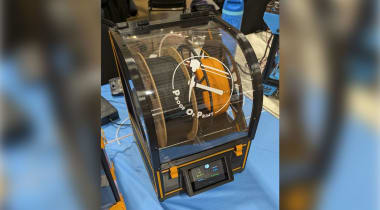
Inventor showcases 3D printer filament dryer that mines Bitcoins and dries filament with waste heat, capable of 6 TH/s at 140W — joins Bitcoin-mining 3D printer in hobbyist-focused miner lineup

Inventor showcases 3D printer filament dryer that mines Bitcoins and dries filament with waste heat, capable of 6 TH/s at 140W — joins Bitcoin-mining 3D printer in hobbyist-focused miner lineup

An inventor has created a filament dryer that not only dries filament for 3D printing but also mines Bitcoins, utilizing waste heat from the process. This new prototype is capable of 6 TH/s at 140W and is part of a lineup of hobbyist-focused mining devices. The filament dryer helps prevent common printing issues caused by moisture absorption and offers a proactive solution for maintaining filament quality. It is likely that this new device shares underlying technology with the inventor's previous 3D printer that also doubled as a Bitcoin miner, hinting at further scalability and innovation in this unique niche market.

Tom's Hardware
Nvidia-backed trial shows AI data centers can flexibly adjust power use in near real time, with global implications for energy consumption — suggests hyperscalers can reduce consumption as necessary, ensuring grid isn’t overloaded during peak demand

Nvidia-backed trial shows AI data centers can flexibly adjust power use in near real time, with global implications for energy consumption — suggests hyperscalers can reduce consumption as necessary, ensuring grid isn’t overloaded during peak demand

A recent U.K. study involving Nvidia and other partners demonstrated that AI data centers can dynamically adjust power consumption, potentially reducing strain on the grid during peak demand. The trial showed that hyperscalers could swiftly modify power usage, tapping into renewable energy surplus during low demand periods. While this flexibility may not align with the need for maximum power utilization by hyperscalers, it could expedite data center deployment by relieving grid pressure. If data centers and grid operators collaborate on such adaptive systems, it could optimize power usage and facilitate quicker infrastructure connectivity.

Tom's Hardware
Enthusiast runs desktop PC off 56 AA batteries — Intel computer lasts less than 5 minutes while playing Minesweeper

Enthusiast runs desktop PC off 56 AA batteries — Intel computer lasts less than 5 minutes while playing Minesweeper

A YouTube creator experimented with running a desktop PC off 56 AA batteries, replacing the power supply with an ATX plug. Despite various attempts, including using alkaline batteries and wiring tweaks, the system only lasted a few seconds before shutting down. The creator managed to play Minesweeper for 4 minutes and 35 seconds on battery power alone but aimed to beat the game entirely on AA power. Adding a GPU allowed the PC to run for around nine seconds, showcasing advancements in battery technology. Suggestions were made to try the experiment with laptop components for lower power draws.

Tom's Hardware
TSMC reduces peak power consumption of EUV tools by 44% — company to save 190 million kilowatt-hours of electricity by 2030

TSMC reduces peak power consumption of EUV tools by 44% — company to save 190 million kilowatt-hours of electricity by 2030

TSMC has launched the EUV Dynamic Energy Saving Program to reduce the power consumption of its EUV lithography tools, aiming to save 190 million kilowatt-hours of electricity and cut carbon emissions by 101 kilotons by 2030. The program, which involves adaptive power scaling based on real-time operational status, has already reduced peak power consumption by 44%. TSMC plans to implement this program across all its EUV tools globally and in future fab installations. Despite the significant energy savings, it represents only a small portion of TSMC's overall power consumption, with most power being consumed by supporting systems.

Tom's Hardware

We use cookies

We use cookies to ensure you get the best experience on our website. For more information on how we use cookies, please see our cookie policy.