Back to home
Technology

Challenges In Moving Data In Chips

Source

SemiEngineering

Published

TL;DR

AI Generated

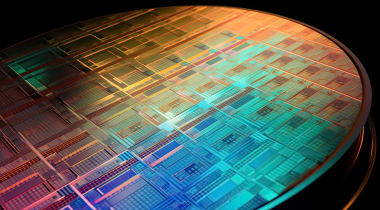
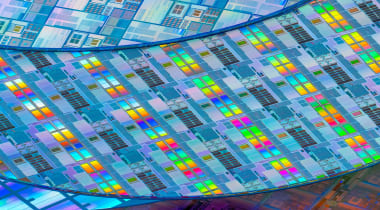
The article discusses the challenges of moving data within chips, especially in multi-die assemblies, due to the increasing number of processes and data volumes from AI and sensors. Andy Nightingale from Arteris explains the need to prioritize signal routing, manage quality of service for IP blocks, and consider coherent versus non-coherent approaches. The focus is on ensuring the right data reaches shared memories at the right time to scale up and out designs efficiently.
Read Full Article

Similar Articles

The USC Professor Who Pioneered Socially Assistive Robotics

The USC Professor Who Pioneered Socially Assistive Robotics

Maja Matarić, a USC professor, is at the forefront of socially assistive robotics, with her latest creation aiding students' mental health. Bandit, the robot, engages in games with children on the autism spectrum and provides them with positive affirmations. Matarić's work showcases the potential for robots to support individuals in various aspects of their lives, highlighting the intersection of technology and human well-being.

IEEE Spectrum
Emulation-based SoC Security Verification (U. of Florida)

Emulation-based SoC Security Verification (U. of Florida)

Researchers at the University of Florida have published a technical paper titled "Emulation-based System-on-Chip Security Verification: Challenges and Opportunities," focusing on the importance of security validation in semiconductor design due to increasing system-on-chip (SoC) complexity. The paper highlights hardware emulation as a crucial pre-silicon verification technology that allows for high-throughput execution of designs under realistic conditions for security analysis. It covers various aspects of emulation-based security verification workflows, including instrumentation, stimulus generation, and runtime monitoring. The paper also discusses emerging trends like AI-assisted emulation and automated vulnerability assessment, positioning emulation as a key element in ensuring hardware security.

SemiEngineering
SemiEngineering

Silicon Photonics Lights The Way To More Efficient Data Centers

Silicon photonics is paving the way for more efficient data centers by potentially increasing bandwidth density and reducing power consumption, particularly driven by AI workloads. However, challenges such as process compatibility, thermal issues, and mechanical stress arise due to the use of various materials in photonic interconnects. Integrated electro-optical I/O modules are the desired outcome, but design and process complexities need to be addressed. The article delves into the technical aspects of silicon photonics, including the components involved, such as light sources, modulators, waveguides, and photodetectors, as well as the challenges of integrating optical and electronic components for efficient data transmission.

SemiEngineering
NoC Matters: Designing the Backbone of Next-Gen AI SoCs

NoC Matters: Designing the Backbone of Next-Gen AI SoCs

The role of the network-on-chip (NoC) in modern AI SoC design has become crucial for system performance, power efficiency, and scalability, with data movement being a key factor. NoC architecture must be a primary design consideration due to the increasing complexity of AI-centric SoCs with diverse accelerators. Coherency models, specialized NoC hardware units, and physical floorplanning are essential aspects that impact system performance and efficiency. A structured methodology for NoC development, including traffic modeling, topology exploration, and physical partitioning, is crucial for successful implementation. Treating the NoC as a fundamental system-level design element is essential for achieving scalable performance and efficient power usage in complex AI SoCs.

SemiWiki

We use cookies

We use cookies to ensure you get the best experience on our website. For more information on how we use cookies, please see our cookie policy.