Technology
What It Will Really Take to Electrify All of Africa
Source
IEEE Spectrum
Published
Source
Published

Researchers at EPFL in Switzerland have developed a nanoscale device that generates continuous electricity from evaporating water, aided by heat and sunlight. This technology, known as a hydrovoltaic device, can work with ordinary ion-containing water like tap water or seawater. The device consists of three layers that harness evaporation, heat, and sunlight to produce stable electrical output. While the power output is small compared to commercial solar panels, the device shows promise for battery-free sensors, wearable electronics, and IoT devices in environments with natural water, warmth, and sunlight. The design allows for independent optimization of each stage and potential scalability in the future.

The U.S. grid-scale battery manufacturing industry can now fully support the storage needs of wind and solar electricity generation, with battery storage expected to make up 28% of new U.S. power-plant capacity. By the end of 2025, U.S. factories had the capacity to produce about 70 GWh of finished grid storage systems annually, with projections to reach 145 GWh/year by the end of 2026. Despite challenges like limited domestic supplies of battery materials, the industry is advancing rapidly with battery recycling technologies and North American mining operations. Grid-scale storage systems are significantly enhancing the economics of renewable energy by storing excess power and ensuring a steady supply.
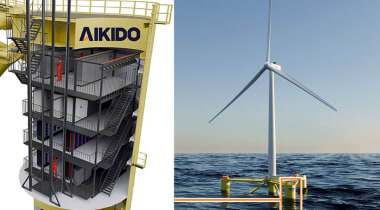
Startup Aikido is planning to launch a prototype in the North Sea that combines an offshore wind turbine with a data center housed underwater. The floating wind turbine platform will have three ballast tanks, each capable of hosting a 4-megawatt, liquid-cooled data hall. This innovative project aims to leverage renewable energy sources for sustainable data center operations in the future.
Electric vehicles (EVs) are gaining traction in Africa, with countries like Ethiopia implementing pro-EV policies such as banning non-electric private vehicles and investing in hydropower for clean electricity. Rwanda has also banned new gas-powered motorbike registrations, encouraging the adoption of EVs. Local assembly of electric two-wheelers is increasing in countries like Morocco, Kenya, and Rwanda, with companies like Spiro expanding operations in Africa. Chinese companies are investing in the African EV market, with Gotion High-Tech building Africa's first battery gigafactory and BYD planning to expand across South Africa. The affordability and quality of EVs from China are seen as a game changer for Africa's transportation sector.
We use cookies to ensure you get the best experience on our website. For more information on how we use cookies, please see our cookie policy.