Back to home
Technology

Two Open RISC-V Projects Chart Divergent Paths to High Performance

Source

SemiWiki

Published

TL;DR

AI Generated

Two significant RISC-V projects, Ara and XiangShan, showcase different approaches to scaling performance. Ara focuses on explicit vector processing without speculation, prioritizing efficiency for parallel workloads. Its memory system lacks private L1 caches and emphasizes software-managed memory. XiangShan, on the other hand, follows a traditional high-performance CPU path with deep pipelines and speculation. While Ara serves as a reference platform, XiangShan has progressed to multiple tape-outs and commercialization without traditional IP licensing. Both projects demonstrate the diversity of architectural exploration within the RISC-V ecosystem.
Read Full Article

Similar Articles

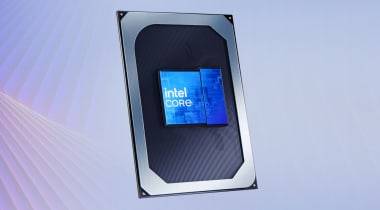
Intel reportedly says it boosted yields by selling what would normally be 'scrap' or 'low-expectation' CPUs — customers more willing to accept lesser chips due to overwhelming CPU demand

Intel reportedly says it boosted yields by selling what would normally be 'scrap' or 'low-expectation' CPUs — customers more willing to accept lesser chips due to overwhelming CPU demand

Intel has seen an unexpected increase in profit margins by selling CPUs that would typically be considered scrap or low-quality due to overwhelming demand for CPUs. The company's first-quarter earnings surpassed expectations, with revenue hitting $13.6 billion and gross margins reaching 41%. Intel has been able to sell chips that would normally be discarded as lower-tier SKUs at usable prices, contributing to the revenue boost. The high demand for CPUs, particularly for AI-driven infrastructure, has led customers to purchase even lower-quality chips, providing Intel with additional revenue.

Tom's Hardware
Intel's upcoming Xeon 7 "Diamond Rapids" server CPUs reportedly delayed to 2027 — Next-gen Coral Rapids lineup lands 2028 but can be accelerated, according to new leak

Intel's upcoming Xeon 7 "Diamond Rapids" server CPUs reportedly delayed to 2027 — Next-gen Coral Rapids lineup lands 2028 but can be accelerated, according to new leak

Intel's Xeon 7 "Diamond Rapids" server CPUs have been delayed to 2027, with the 8-channel variant canceled in favor of focusing on 16-channel SKUs. The lineup will feature up to 256 cores initially, with a 512-core version to follow shortly after. Diamond Rapids will lack hyperthreading support, unlike the next-gen Coral Rapids lineup, which is expected to launch in mid-2028 with 8-channel variants. Intel may accelerate the rollout of Coral Rapids based on market demand. AMD's EPYC Venice CPUs are still on track for a 2026 release.

Tom's Hardware
Intel Core Ultra 7 270K Plus vs AMD Ryzen 7 7800X3D — Can Intel finally beat X3D?

Intel Core Ultra 7 270K Plus vs AMD Ryzen 7 7800X3D — Can Intel finally beat X3D?

Intel's Arrow Lake Refresh CPUs, the Core Ultra 7 270K Plus and Ryzen 7 7800X3D, are compared for gaming and productivity. The 270K Plus, with 24 cores and 24 threads, offers better gaming performance, but the 7800X3D leads in gaming benchmarks by 10.4%. In productivity tests, the 270K Plus excels with a 29% lead in single-threaded performance and a significant advantage in multi-threaded tasks. Intel's CPU also wins in overclocking capabilities, offering more performance-enhancing features. However, the 7800X3D is more power-efficient and costs less, making it a strong competitor.

Tom's Hardware
Intel VP claims up to 30% of CPU performance is untapped by modern games — software optimization is critical to unlocking full potential of hybrid CPUs

Intel VP claims up to 30% of CPU performance is untapped by modern games — software optimization is critical to unlocking full potential of hybrid CPUs

Intel's VP Robert Hallock emphasizes that up to 30% of CPU performance in modern games remains untapped due to software optimization issues with hybrid CPUs. Hallock discusses the impact of disabling E-cores on Intel CPUs for better performance, noting that both E-cores and P-cores contribute equally to overall operation. He highlights the importance of software optimization in maximizing CPU performance, mentioning Intel's binary optimization feature in Arrow Lake chips as an example. Hallock suggests that software optimization is crucial for extracting more performance from existing silicon, with potential for significant gains in efficiency.

Tom's Hardware

We use cookies

We use cookies to ensure you get the best experience on our website. For more information on how we use cookies, please see our cookie policy.