Back to home
Technology

Trump's cryptic remark states Apple has invested in Intel — tells press 'Apple went in, Nvidia went in, a lot of smart people went in'

Source

Tom's Hardware

Published

TL;DR

AI Generated

President Trump suggested that Apple may have invested in Intel, following Nvidia's lead after the White House took a stake in the company. Analysts speculate on the nature of this potential involvement, with hints from job listings and reports suggesting Apple's interest in Intel's technology. However, without official confirmation, it remains uncertain if this was an actual investment or a misunderstanding by the President. The possibility of Apple signing a contract with Intel for chip production is also considered. Clarification from Apple or Intel is awaited to shed light on the situation.
Read Full Article

Similar Articles

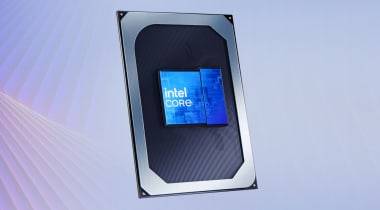
Intel details 18A-P process node, touts higher performance, lower power, and better thermals — 9% more performance, thermal conductivity improved by 50%

Intel details 18A-P process node, touts higher performance, lower power, and better thermals — 9% more performance, thermal conductivity improved by 50%

Intel is progressing with its 18A-P process node technology, boasting higher performance, lower power consumption, and improved thermals compared to its baseline 18A technology. The 18A-P process introduces new transistors, tighter process variability control, and enhanced thermals, potentially attracting interest from companies like Apple. This enhanced technology offers a 9% performance boost or an 18% power reduction compared to the base 18A process. Additionally, improvements in skew corner tightening, threshold voltage options, and metal stack resistance and capacitance contribute to better performance efficiency and yield. The 18A-P process also focuses on enhancing thermals, reliability, and voltage behavior critical for both client and data center applications.

Tom's Hardware
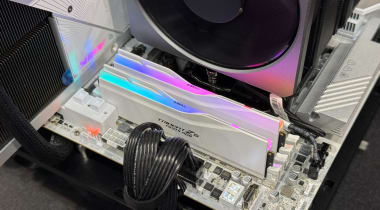
Newegg finally has a worthwhile Intel combo that includes memory, saving almost $240 — snag an Intel Core Ultra 7 270K Plus, ASRock Z890 motherboard, and 32GB of GSkill Trident Z5 DDR5 RAM for only $768.34

Newegg finally has a worthwhile Intel combo that includes memory, saving almost $240 — snag an Intel Core Ultra 7 270K Plus, ASRock Z890 motherboard, and 32GB of GSkill Trident Z5 DDR5 RAM for only $768.34

Newegg is offering a compelling combo deal including an Intel Core Ultra 7 270K Plus processor, ASRock Z890 Pro RS motherboard, and 32GB of G.Skill Trident Z5 RGB RAM for $768.34, saving buyers almost $240. The Intel Core Ultra 270K Plus processor, despite facing tough competition from AMD, offers excellent productivity performance at a lower price point of $328.34. The GSkill Trident Z5 RGB RAM, paired with the ASRock motherboard, provides good performance and overclocking potential. This combo deal on Newegg is a rare find and a solid option for those looking to upgrade their PC amidst high component prices.

Tom's Hardware
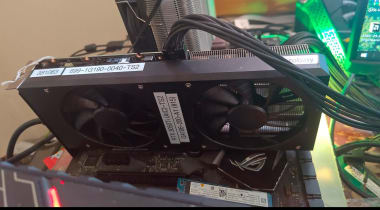
Framework's new RTX 5070 12GB graphics module costs a whopping $1,199 — 72% more expensive than $699 8GB version, says pricing is beyond its control

Framework's new RTX 5070 12GB graphics module costs a whopping $1,199 — 72% more expensive than $699 8GB version, says pricing is beyond its control

Nvidia released a new 12GB version of the RTX 5070 mobile GPU with upgraded memory chips, increasing memory throughput. Framework introduced a new graphics module for its Framework Laptop 16 featuring this GPU, priced at $1,199, a significant increase from the $699 8GB version. The high cost is attributed to the expensive GDDR7 memory and the ongoing global memory shortage. Framework clarified that the pricing is influenced by external factors and not within its control, highlighting the challenges faced by consumers due to the current market conditions.

Tom's Hardware
More details emerge about how Intel now earns more revenue from each wafer by looking to the edges — analyst reports say reduced yield variability across each wafer leads to more sellable CPUs

More details emerge about how Intel now earns more revenue from each wafer by looking to the edges — analyst reports say reduced yield variability across each wafer leads to more sellable CPUs

Intel has seen improved revenue per wafer by reducing yield variability across each wafer, resulting in more sellable CPUs. The company's focus on tightening yield distribution across the wafer edges has led to increased margins and productivity. By implementing edge-specific process correction methods, Intel can extract more high-quality and sellable dies from a single wafer. These improvements are node-independent and have been attributed to disciplined execution improvements under new manufacturing leadership. Intel's efforts have led to better output and demand for CPUs, with even lower-quality chips now being sold as viable products.

Tom's Hardware

We use cookies

We use cookies to ensure you get the best experience on our website. For more information on how we use cookies, please see our cookie policy.