Technology
Trump announces 100% semiconductor tariffs — 'There's no charge' for chips built in the U.S
Source
Tom's Hardware
Published
Source
Published
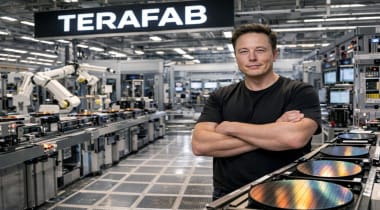
TSMC's CEO CC Wei reported strong earnings driven by demand and execution, highlighting the company's trusted relationships with partners and customers. The focus remains on N3 and N5 nodes, with plans for new 3-nanometer fabs in Taiwan, Arizona, and Japan. TSMC aims to prioritize N2 expansion and maintain dominance in the semiconductor industry. The company's A14 technology promises performance and power benefits, with volume production scheduled for 2028. CC Wei emphasized the importance of avoiding shortcuts in fab construction, addressing Elon Musk directly. TSMC's increased CapEX reflects the company's commitment to growth and innovation.

Nexperia's Chinese subsidiary has achieved small-batch production of chips using 12-inch wafers, marking a significant milestone in its independent R&D and mass production capabilities. The subsidiary is producing commodity power semiconductors similar to those made by its Dutch parent company. The Chinese unit's move towards self-sufficiency comes amid a split with the Dutch parent, which halted wafer shipments to China in late 2025. The dispute has led to disruptions in chip supply, impacting companies like Honda. Legal battles over control of Nexperia are ongoing, with no resolution announced yet.

The semiconductor industry is facing a significant supply challenge due to high demand for advanced chips, particularly in AI, HPC, and next-gen devices. TSMC leads in 2nm technology with strong yield and capacity, attracting major customers like Apple and Nvidia. Intel's 18A process offers competition but struggles to match TSMC's yields and customer base. Samsung's 2nm efforts face yield and adoption challenges, while Rapidus aims to carve a niche in 2nm production with tailored services. The global capacity crunch highlights the importance of securing wafer slots early in the evolving semiconductor landscape.

Intel's CEO, Lip-Bu Tan, initially hesitated to promote the company's 18A fabrication technology to external customers due to low yields and unpredictability. However, with increasing interest in the enhanced 18A-P version, Intel is now considering offering it to external clients. Despite ongoing process variability, Intel has made progress in improving 18A yields and has started production of Core Ultra 300-series CPUs. While Intel aims to reach industry-standard yields by 2027, challenges remain with process variability affecting capacity planning. Although big chip designers have evaluated Intel's 18A technology, no commitments have been publicly announced yet.
We use cookies to ensure you get the best experience on our website. For more information on how we use cookies, please see our cookie policy.