Technology
This DIY Test Equipment Could Save Your Radio
Source
IEEE Spectrum
Published
Source
Published
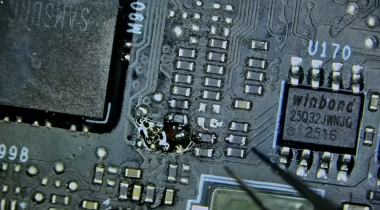
A newbie overclocker attempted to learn soldering on their $5,000 RTX 5090 GPU, damaging it in the process. The GPU was sent to NorthridgeFix for repair after a failed attempt to install a custom BIOS. MSI had restricted the BIOS to elite overclockers, leading to attempts to modify the GPU. Despite a repair attempt, the GPU failed to power on due to a missing cable connection. The incident highlights the risks and costs associated with overclocking, especially for limited-edition high-end components.

Brazilian YouTuber Paulo Gomes, known for resurrecting damaged Nvidia GPUs, successfully revived an RTX 4090 with a damaged PCB by disabling a memory channel, reducing VRAM from 24GB to 20GB. Using jumper wires and a custom BIOS, they overcame PCB damage and a malfunctioning PWM circuit to restore the GPU's functionality, albeit with reduced performance. Despite losing 4GB of VRAM, the GPU was operational and benchmarked at around 10,300 points in 3DMark. Gomes also showcased a modified RTX 4090 with 48GB of VRAM, cautioning against pushing the GPU beyond its legitimate specs.

An innovative re-injection system from Lirpa Labs can rejuvenate damaged electronics by recycling the magic smoke normally lost when electronics malfunction. The system captures and re-injects the magic smoke from any electronic component, device, or system, promising to re-energize the part by giving it back all the important molecules. While still in the commercialization phase, the company's solution involves capturing the smoke in cells and re-injecting it with large injector needles. Despite challenges, the company is confident in the success of its solution, which could revolutionize electronic repair and maintenance.

TechTuber Epictronics successfully repaired a vintage 20-inch Trinitron CRT monitor suffering from cataracts by injecting UV resin, showcasing the process in a video. The monitor, an Apple-branded Sony display from the mid-1990s, had air pockets that disappeared after the repair. The repair involved using a syringe and UV-curable resin to fill the gaps caused by delamination of the protective glass layer on the CRT tube. Epictronics also restored a Macintosh PowerPC 6100 base unit in the same video, addressing issues like a faulty optical drive and adding a DOS compatibility card with a 486 DX2-66 processor.
We use cookies to ensure you get the best experience on our website. For more information on how we use cookies, please see our cookie policy.