Back to home
Technology

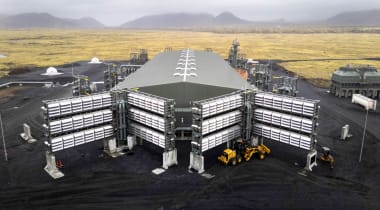
The Trump administration may cut funding for two major direct-air capture plants

Source

MIT Technology Review

Published

TL;DR

AI Generated

The Trump administration is considering cutting funding for two major direct-air capture plants in Texas and Louisiana, potentially impacting projects that were set to receive over $1 billion in government grants. The Department of Energy has a list indicating termination of roughly $50 million in initial funding for each project, raising uncertainty about the future of the full funding. These projects were part of the DOE’s Regional Direct Air Capture Hubs program funded through the Bipartisan Infrastructure Law. The decision could have implications for the nascent carbon removal sector and the US's climate goals.

Read Full Article

Similar Articles

Engineering on Friday ‘toon: The Meowplifier v1.0

Engineering on Friday ‘toon: The Meowplifier v1.0

The article discusses a project called the Meowplifier v1.0, a visual representation of a cat sound amplification collar. The project was born out of the idea to amplify a cat's meows to be super loud. The creator, an engineer, faced "project paralysis" due to too many ideas and limited resources. The cartoon was hand-drawn, taking about 4 hours without the use of AI. The creator experimented with coloring techniques and expressed a desire to see the project come to life through a crowdfunding approach.

ElectronicDesign
Carbon in the Age of AI Chips: What the Semiconductor Industry Needs to Know This Earth Day

Carbon in the Age of AI Chips: What the Semiconductor Industry Needs to Know This Earth Day

The semiconductor industry is facing increasing pressure to address carbon emissions, with a new report from TechInsights highlighting the impact of AI chips on the environment. The report projects a significant rise in fabrication emissions, particularly from advanced technologies and AI accelerators. It emphasizes the importance of considering manufacturing carbon as a strategic variable in decision-making processes. The study also examines the carbon footprint of consumer and enterprise devices, revealing that memory and storage components contribute significantly to embodied carbon. To mitigate emissions, the report suggests actions such as pursuing cleaner electricity sources and optimizing platform configurations.

SemiWiki
MIT Technology Review

The Download: cyberscammers’ banking bypasses, and carbon removal troubles

Cyberscammers are using illicit tools sold on Telegram to bypass banks' security measures, exploiting weaknesses in facial recognition scans to gain unauthorized access. Meanwhile, concerns arise about the future of carbon removal efforts as Microsoft pauses its purchases, impacting around 80% of contracted carbon removal. These developments highlight ongoing challenges in cybersecurity and environmental sustainability within the tech industry.

MIT Technology Review
Is carbon removal in trouble?

Is carbon removal in trouble?

Microsoft, a major player in the carbon removal market, has reportedly paused its carbon removal purchases, causing concern in the industry. Carbon removal technologies aim to extract carbon dioxide from the atmosphere for permanent storage. Microsoft, which aims to become carbon-negative by 2030, has been a significant buyer of carbon removal contracts. The company's decision to pause purchases may impact the industry's growth and reliance on corporate support. Industry experts suggest that government mandates and policies are needed to ensure the scalability of carbon removal efforts.

MIT Technology Review

We use cookies

We use cookies to ensure you get the best experience on our website. For more information on how we use cookies, please see our cookie policy.