Back to home
Technology

The Download: RIP EV tax credits, and OpenAI’s new valuation

Source

MIT Technology Review

Published

TL;DR

AI Generated

The article discusses the end of federal EV tax credits in the US, which provided up to $7,500 towards the purchase of electric vehicles, impacting the EV market. OpenAI has become the world's most valuable startup, valued at $500 billion after workers sold around $6.6 billion in shares. Other tech news includes music labels negotiating AI licensing deals, concerns about AI integration in children's lives in China, and advancements in AI-powered technologies like machine guns and identifying historical figures.
Read Full Article

Similar Articles

More Extended-Range EVs Soon to Hit the Road

More Extended-Range EVs Soon to Hit the Road

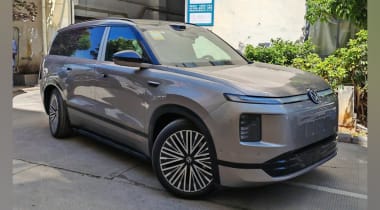
Renault and Volkswagen are collaborating with Chinese firms to introduce Extended-Range Electric Vehicles (EREVs) that combine EV batteries with gas-powered generators to address range anxiety. EREVs use a small internal combustion engine to generate electricity for the battery, offering high-range capability without the need for large batteries. Renault's RGEV medium 2.0 platform and VW's ID. Era 9X SUV with range-extending gasoline engine are part of this initiative, aiming to enhance electric mobility markets globally. These EREVs are expected to hit the market by 2028-2030, with up to 15 models anticipated in the U.S. by 2028.

ElectronicDesign
MIT Technology Review

EV tax credits are dead in the US. Now what?

Federal EV tax credits in the US have ended, impacting the affordability and demand for electric vehicles. The credits, which provided up to $7,500 towards EV purchases, were crucial in reducing upfront costs and driving adoption. With transportation contributing significantly to US climate pollution, the end of these credits could slow progress in cutting emissions. While some US states still offer incentives, the lack of federal support may hinder the country's EV market growth compared to global leaders like China. The article highlights the potential long-term effects of ending EV tax credits on emissions reduction and EV adoption rates.

MIT Technology Review
Tesla coast-to-coast FSD crashes after 60 miles

Tesla coast-to-coast FSD crashes after 60 miles

Two Tesla shareholders attempted a coast-to-coast self-driving trip, inspired by Elon Musk's 2016 claim that Tesla would achieve this by 2017, but the journey ended in a crash after only 60 miles. Despite Tesla's missed autonomous driving goals, shareholders remain hopeful about unsupervised self-driving, especially with the rollout of the 'Robotaxi' fleet in Austin. The crash occurred in a Tesla Model Y equipped with the latest Full Self-Driving (FSD) software update, highlighting challenges in achieving true autonomy. The incident underscores the gap between Tesla's self-driving ambitions and the current reality, with competition like Waymo being years ahead in the autonomous driving race.

Hacker News
Dr. L.C. Lu on TSMC Advanced Technology Design Solutions

Dr. L.C. Lu on TSMC Advanced Technology Design Solutions

Dr. L.C. Lu, a key figure at TSMC, focuses on design-technology co-optimization, packaging innovations, and AI-driven methodologies for next-gen semiconductor systems. TSMC emphasizes DTCO and DDCL innovations for scaling from N5 to A14 nodes, with NanoFlex and NanoFlex Pro architectures offering efficiency gains. N2P and N2U nodes incorporate advanced DTCO and power delivery optimizations, with hybrid dual-rail architectures achieving significant energy savings. TSMC collaborates with EDA partners for AI integration, enhancing productivity and design quality. Advanced packaging technologies like CoWoS and SoIC play a crucial role in enabling AI scaling, with memory bandwidth and interconnect performance scaling aggressively. TSMC addresses power delivery and thermal management challenges in AI systems through advanced solutions. TSMC's advancements in design methodologies and AI-driven automation promise improved productivity and scalability in chip-package co-design.

SemiWiki

We use cookies

We use cookies to ensure you get the best experience on our website. For more information on how we use cookies, please see our cookie policy.