Technology
Startup Claims up to 100x Better Embedded Computing Efficiency
Source
IEEE Spectrum
Published
Source
Published
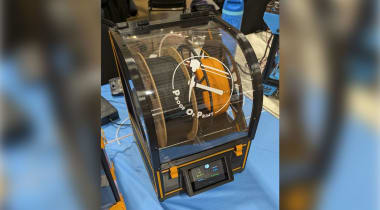
An inventor has created a filament dryer that not only dries filament for 3D printing but also mines Bitcoins, utilizing waste heat from the process. This new prototype is capable of 6 TH/s at 140W and is part of a lineup of hobbyist-focused mining devices. The filament dryer helps prevent common printing issues caused by moisture absorption and offers a proactive solution for maintaining filament quality. It is likely that this new device shares underlying technology with the inventor's previous 3D printer that also doubled as a Bitcoin miner, hinting at further scalability and innovation in this unique niche market.

The article discusses the evolution of embedded computing modules from COM to SMARC to OSM, offering a wide range of high-performance, power-efficient options for developers. It emphasizes the benefits of open standards over proprietary offerings, allowing for flexibility in size, cost, and performance. The COM architecture, particularly COM Express, is highlighted for its convenience and flexibility in customizing I/O configurations. The article also delves into the rise of SMARC and OSM standards, catering to IoT and ultra-compact embedded systems with energy-efficient processors and compact form factors. The importance of selecting the right standard based on application-specific requirements is emphasized, with insights on processor architectures, form factors, and I/O constraints provided.

A recent U.K. study involving Nvidia and other partners demonstrated that AI data centers can dynamically adjust power consumption, potentially reducing strain on the grid during peak demand. The trial showed that hyperscalers could swiftly modify power usage, tapping into renewable energy surplus during low demand periods. While this flexibility may not align with the need for maximum power utilization by hyperscalers, it could expedite data center deployment by relieving grid pressure. If data centers and grid operators collaborate on such adaptive systems, it could optimize power usage and facilitate quicker infrastructure connectivity.

A YouTube creator experimented with running a desktop PC off 56 AA batteries, replacing the power supply with an ATX plug. Despite various attempts, including using alkaline batteries and wiring tweaks, the system only lasted a few seconds before shutting down. The creator managed to play Minesweeper for 4 minutes and 35 seconds on battery power alone but aimed to beat the game entirely on AA power. Adding a GPU allowed the PC to run for around nine seconds, showcasing advancements in battery technology. Suggestions were made to try the experiment with laptop components for lower power draws.
We use cookies to ensure you get the best experience on our website. For more information on how we use cookies, please see our cookie policy.