Technology
Retailers quietly slash prices of AMD's and Intel's latest EPYC and Xeon CPUs by up to 50% — inexplicable price drops left unexplained
Source
Tom's Hardware
Published
Source
Published
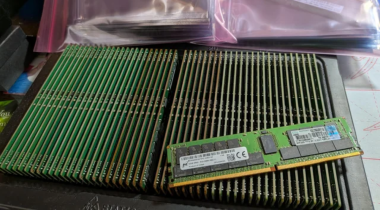
An employee rescued 72 DDR4-2666 ECC RDIMMs from being discarded after their company upgraded servers in 2024, valued at over $20,000 now. These RAM sticks were about to become e-waste before being saved. The Reddit poster's father salvaged the components, which are not supported by consumer-grade hardware but require server and HEDT motherboards and specific CPUs. Despite not being usable for personal upgrades, the RAM sticks could fetch a significant sum on the used market due to their high value.

Zhaoxin has unveiled its next-generation Kaisheng KH-50000 processors, featuring a chiplet design with up to 96 cores, rivaling AMD and Intel server chips. The KH-50000 supports 12 channels of DDR5-5200 RAM, 128 PCIe 5.0 lanes, and 16 PCIe 4.0 lanes. It also includes support for x86 instructions, virtualization, and China's encryption standards. The processor's power consumption and TDP remain undisclosed, but its design allows for efficient utilization of older process nodes. Despite potential challenges, Zhaoxin aims to make significant strides in the domestic market with its latest server chip.

Intel has taken significant steps to establish itself as a contract chip designer by appointing an executive to lead its custom silicon business and securing a multi-year contract with Nvidia to build custom Xeon CPUs for AI platforms. The company has a history of offering semi-custom Xeon processors to hyperscalers and large AI/data center customers. Intel aims to expand its custom CPU offerings with customizable cores and IP. Srini Iyengar, a company veteran, will lead Intel's Central Engineering Group to drive its custom silicon business. The move reflects the growing demand for bespoke application-specific processors across various industries, with companies like Apple, Google, and automotive manufacturers investing in custom chips.

Ronak Singhal, Intel's chief architect of Xeon products, is set to leave the company after just 8 months in the role, marking the second departure of a Xeon chief architect in less than a year. His exit underscores the ongoing restructuring efforts led by CEO Lip-Bu Tan, with uncertainties about who will shape the future of Xeon CPUs. Singhal, who joined Intel in 1997, played a crucial role in defining the strategy and execution of Xeon CPUs, including areas like chip design, memory systems, platform security, and AI acceleration. His departure comes amidst a series of leadership changes within Intel's Data Center Group, reflecting the company's broader transformation efforts under Tan's leadership.
We use cookies to ensure you get the best experience on our website. For more information on how we use cookies, please see our cookie policy.