Back to home
Technology

Researchers achieve breakthrough integration of 2D materials on standard silicon chips

Source

Tom's Hardware

Published

TL;DR

AI Generated

Researchers at Fudan University have achieved a significant breakthrough by integrating 2D materials onto standard silicon chips, creating a fully functional memory chip. The process, known as ATOM2CHIP, involved growing a layer of molybdenum disulfide on a conventional silicon chip, resulting in a hybrid chip with impressive performance metrics. Overcoming challenges like surface roughness and ensuring seamless communication between the 2D layer and CMOS control logic were key to this achievement. The implications of this research extend beyond flash storage, potentially leading to more efficient and dense next-generation processors and AI processors. While mass production is still in the future, this advancement brings 2D materials closer to commercial viability.

Read Full Article

Similar Articles

Apple completes its transition to Apple Silicon by dropping support for Intel-based Macs

Apple completes its transition to Apple Silicon by dropping support for Intel-based Macs

Apple is finalizing its transition to Apple Silicon by discontinuing support for Intel-based Macs in the upcoming macOS release. The last macOS version to support Intel-based Macs will be macOS 26 "Tahoe." Products like the 16-inch MacBook Pro 2019 and 27-inch iMac 2020 will not receive support for macOS 27 but will continue to get security updates for the next 3 years. Apple's move away from Intel marks a significant shift in its hardware strategy, with the M-series SoCs now powering its Mac lineup. Rosetta, a program aiding the transition to Apple Silicon, will be available for the next two major macOS releases to assist developers.

TweakTown
Researchers find a way to heat 3D printer filament using microwaves, enabling fusing circuits inside printed objects — tech supports precise heating down to the width of a human hair

Researchers find a way to heat 3D printer filament using microwaves, enabling fusing circuits inside printed objects — tech supports precise heating down to the width of a human hair

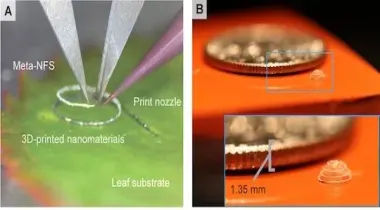
Researchers at Rice University have developed a new 3D printing process using microwaves, called Meta-NFS, that can heat nanoparticle ink with extreme precision. This technology allows for the fusing of circuits inside 3D printed objects, a capability previously unattainable with traditional manufacturing methods. Meta-NFS enables the use of a wider range of materials and improves production efficiency by adjusting microwave power in real-time. The applications of this technology include integrating electronics into soft materials like robots, implants, and plants, showcasing its potential for groundbreaking advancements in electronic manufacturing.

Tom's Hardware
SemiEngineering

Silicon Photonics Lights The Way To More Efficient Data Centers

Silicon photonics is paving the way for more efficient data centers by potentially increasing bandwidth density and reducing power consumption, particularly driven by AI workloads. However, challenges such as process compatibility, thermal issues, and mechanical stress arise due to the use of various materials in photonic interconnects. Integrated electro-optical I/O modules are the desired outcome, but design and process complexities need to be addressed. The article delves into the technical aspects of silicon photonics, including the components involved, such as light sources, modulators, waveguides, and photodetectors, as well as the challenges of integrating optical and electronic components for efficient data transmission.

SemiEngineering
Chip Can Project Video the Size of a Grain of Sand

Chip Can Project Video the Size of a Grain of Sand

A chip has been developed that can project video on a scale as small as a grain of sand. Originally designed for steering lasers in quantum computers, this MEMS array technology has found new applications in image projection. Researchers have demonstrated its capabilities by projecting the Mona Lisa using a long split-electrode device. This innovation could have implications for various fields, including semiconductors, biomedical imaging, and consumer electronics.

IEEE Spectrum

We use cookies

We use cookies to ensure you get the best experience on our website. For more information on how we use cookies, please see our cookie policy.