Back to home
Technology

Research Bits: Oct. 13

Source

SemiEngineering

Published

TL;DR

AI Generated

Researchers have made advancements in neuromorphic computing, creating a device that mimics neural plasticity by adjusting signal frequency autonomously. Another study focused on protein nanowires that can interface with living cells, potentially improving wearable electronic sensing systems. Additionally, researchers developed organic semiconductors for neuromorphic computing to enhance artificial synapses, enabling more efficient ion transport and supporting applications in wearables, cameras, and IoT nodes. These innovations aim to enhance energy efficiency, stability, and performance in AI hardware, edge computing, and autonomous driving systems.

Read Full Article

Similar Articles

MIT Technology Review

Exclusive eBook: Inside the stealthy startup that pitched brainless human clones

The exclusive eBook delves into R3 Bio, a startup proposing brainless human clones as backup bodies for longevity. The startup's ethically charged vision raises concerns about cloning ethics. The eBook, available only to subscribers, explores the controversial pursuit of human longevity through cloning. Antonio Regalado's work sheds light on the startup's startling concept and its potential implications.

MIT Technology Review

The Download: murderous ‘mirror’ bacteria, and Chinese workers fighting AI doubles

Scientists initially proposed creating mirror bacteria with reversed proteins and sugars for research purposes, but now fear these organisms could pose a catastrophic threat to life on Earth. In China, tech workers are concerned about AI replication of their skills and personalities, leading to fears of losing professional identity. Meanwhile, the White House and Anthropic are working on a compromise, and other tech news includes Palantir's manifesto, Germany's push for looser AI rules, and Nvidia's shift towards AI over gaming.

MIT Technology Review
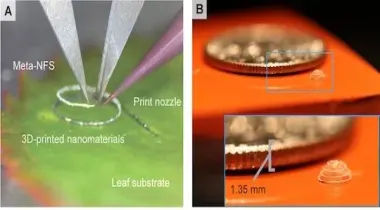
Researchers find a way to heat 3D printer filament using microwaves, enabling fusing circuits inside printed objects — tech supports precise heating down to the width of a human hair

Researchers find a way to heat 3D printer filament using microwaves, enabling fusing circuits inside printed objects — tech supports precise heating down to the width of a human hair

Researchers at Rice University have developed a new 3D printing process using microwaves, called Meta-NFS, that can heat nanoparticle ink with extreme precision. This technology allows for the fusing of circuits inside 3D printed objects, a capability previously unattainable with traditional manufacturing methods. Meta-NFS enables the use of a wider range of materials and improves production efficiency by adjusting microwave power in real-time. The applications of this technology include integrating electronics into soft materials like robots, implants, and plants, showcasing its potential for groundbreaking advancements in electronic manufacturing.

Tom's Hardware
Effective Defense Against Hacks at the Edge

Effective Defense Against Hacks at the Edge

To effectively defend against hacks at the edge in IoT systems, a multi-dimensional post-quantum approach is necessary, including secure boot, secure TLS, and protection against physical attacks through side-channels. PQShield has introduced MicroCore IP to address IoT security challenges with minimal resources, offering PQC in under 5KB of SRAM. Post-quantum cryptography is crucial as quantum computers could potentially break classical encryption within the next 10 years, posing challenges for long-term product security. Additionally, ensuring secure communication through TLS and defending against side-channel attacks are essential for protecting edge devices in industrial IoT applications. PQShield provides solutions for seamless migration to PQC secure systems and defense against side-channel attacks.

SemiWiki

We use cookies

We use cookies to ensure you get the best experience on our website. For more information on how we use cookies, please see our cookie policy.