Back to home
Technology

Overview of ALD-Driven Oxide Semiconductors for High Density, Low Power Memory Architectures (imec, Hanyang Univ.)

Source

SemiEngineering

Published

TL;DR

AI Generated

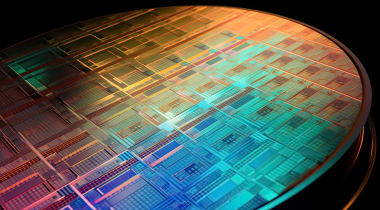
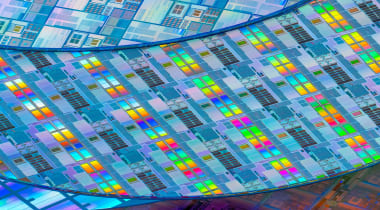
Researchers from imec and Hanyang University published a technical paper titled "Oxide Semiconductor for Advanced Memory Architectures: Atomic Layer Deposition, Key Requirement and Challenges." The paper explores the evolution of oxide semiconductors (OSs) from display backplane materials to potential candidates for advanced memory and logic devices. It highlights the low leakage current and compatibility with three-dimensional (3D) architectures of OSs, sparking interest in their use in semiconductor applications. The review delves into atomic layer deposition (ALD) as a core technique for growing high-quality OS films, covering basic and advanced processes compatible with 3D scaling. Challenges in memory applications, such as contact resistance and lack of p-type materials, are discussed, along with the feasibility of ALD-grown OSs as solutions. The paper provides an outlook on the role of ALD-grown OSs in next-generation semiconductor memory technologies.
Read Full Article

Similar Articles

US stops exports of tools to China’s number two chip maker — Hua Hong and Huali Microelectronics reportedly on the cusp of starting a 7-nm fab in Shanghai

US stops exports of tools to China’s number two chip maker — Hua Hong and Huali Microelectronics reportedly on the cusp of starting a 7-nm fab in Shanghai

The US Department of Commerce has instructed toolmakers to cease exports to Hua Hong, China's second-largest chipmaker, which is gearing up to establish a 7-nm production line in Shanghai. This move is part of the US strategy to impede China's semiconductor self-sufficiency efforts. Companies like TSMC and ASML have also faced restrictions in providing advanced services to Chinese tech firms. The ban on exports could strain US-China relations, impacting both Chinese companies' progress and potential losses for American toolmakers.

Tom's Hardware
Taiwan's stock market surpasses the UK's despite having less than a quarter of the UK's economy — AI boom propels Taiwan forward, TSMC alone accounts for more than 40% of Taiwan's total market value

Taiwan's stock market surpasses the UK's despite having less than a quarter of the UK's economy — AI boom propels Taiwan forward, TSMC alone accounts for more than 40% of Taiwan's total market value

Taiwan's stock market has surpassed the UK's in value, driven by the global demand for AI chips. TSMC alone accounts for over 40% of Taiwan's total market value, with a market cap of around $1.98 trillion. Taiwan's Financial Supervisory Commission has raised the single-stock investment cap for local equity funds, benefiting companies like TSMC. TSMC reported record earnings and plans to expand to meet AI demand. South Korea's market is also thriving, with Samsung and SK hynix leading the charge in the semiconductor industry.

Tom's Hardware
Intel posts very strong Q1 2026 earnings as the AI boom starts to focus on CPUs

Intel posts very strong Q1 2026 earnings as the AI boom starts to focus on CPUs

Intel's Q1 2026 earnings exceeded expectations, with $13.58 billion in revenue, up 7.2% year over year. The data center and AI divisions contributed significantly to this success, generating $5.1 billion in revenue. Intel's foundry business is gaining momentum, with $5.4 billion in revenue, positioning itself as a strong competitor to TSMC. Recent partnerships with Tesla and Google, along with new hardware releases, have further boosted Intel's performance. The increasing demand for AI-focused CPUs is driving growth for companies like Intel, prompting them to raise chip prices and forecast Q2 revenue of $13.8 to $14.8 billion.

TweakTown
Two Paths for AI in Semiconductor Manufacturing: Platform Integration vs. Point Solutions

Two Paths for AI in Semiconductor Manufacturing: Platform Integration vs. Point Solutions

Semiconductor manufacturing is increasingly reliant on AI for optimization, with two distinct paths emerging: platform integration and point solutions. Platform integration in North America and Europe emphasizes scalability and long-term value, while China leans towards quick, targeted solutions due to smaller vendors and a need for rapid monetization. These approaches are influenced by market conditions and organizational context, with platform-based models offering structured foundations but requiring upfront investment, while point solutions deliver rapid impact but may lead to fragmentation. A strategic hybrid approach combining both models is being considered for the future of semiconductor AI.

SemiWiki

We use cookies

We use cookies to ensure you get the best experience on our website. For more information on how we use cookies, please see our cookie policy.