Back to home
Technology

Overcoming BEOL Patterning Challenges At The 3nm Node

Source

SemiEngineering

Published

TL;DR

AI Generated

The article discusses the challenges in Back-End-of-Line (BEOL) patterning at the 3nm node in semiconductor manufacturing. As CMOS technology continues to shrink, achieving critical dimensions and pitch requirements becomes more demanding. At the 3nm node, securing process margins for critical dimensions and edge placement error (EPE) is crucial. The article highlights the use of virtual fabrication to assess EPE and successfully pattern an 18- and 16-nm metal pitch BEOL. Through simulations, significant process parameters impacting EPE and line dimensions were identified, emphasizing the importance of process control for successful patterning at advanced nodes.
Read Full Article

Similar Articles

Dr. L.C. Lu on TSMC Advanced Technology Design Solutions

Dr. L.C. Lu on TSMC Advanced Technology Design Solutions

Dr. L.C. Lu, a key figure at TSMC, focuses on design-technology co-optimization, packaging innovations, and AI-driven methodologies for next-gen semiconductor systems. TSMC emphasizes DTCO and DDCL innovations for scaling from N5 to A14 nodes, with NanoFlex and NanoFlex Pro architectures offering efficiency gains. N2P and N2U nodes incorporate advanced DTCO and power delivery optimizations, with hybrid dual-rail architectures achieving significant energy savings. TSMC collaborates with EDA partners for AI integration, enhancing productivity and design quality. Advanced packaging technologies like CoWoS and SoIC play a crucial role in enabling AI scaling, with memory bandwidth and interconnect performance scaling aggressively. TSMC addresses power delivery and thermal management challenges in AI systems through advanced solutions. TSMC's advancements in design methodologies and AI-driven automation promise improved productivity and scalability in chip-package co-design.

SemiWiki
Intel details 18A-P process node, touts higher performance, lower power, and better thermals — 9% more performance, thermal conductivity improved by 50%

Intel details 18A-P process node, touts higher performance, lower power, and better thermals — 9% more performance, thermal conductivity improved by 50%

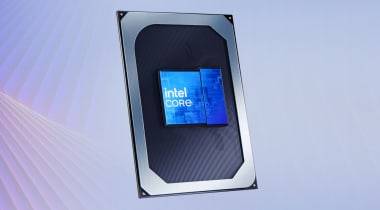
Intel is progressing with its 18A-P process node technology, boasting higher performance, lower power consumption, and improved thermals compared to its baseline 18A technology. The 18A-P process introduces new transistors, tighter process variability control, and enhanced thermals, potentially attracting interest from companies like Apple. This enhanced technology offers a 9% performance boost or an 18% power reduction compared to the base 18A process. Additionally, improvements in skew corner tightening, threshold voltage options, and metal stack resistance and capacitance contribute to better performance efficiency and yield. The 18A-P process also focuses on enhancing thermals, reliability, and voltage behavior critical for both client and data center applications.

Tom's Hardware
Chinese GPU maker Cambricon's Q1 revenue hits $423 million as country's homegrown AI chip market accelerates — Chinese chipmakers continue to leech market share from Nvidia

Chinese GPU maker Cambricon's Q1 revenue hits $423 million as country's homegrown AI chip market accelerates — Chinese chipmakers continue to leech market share from Nvidia

Chinese GPU maker Cambricon Technologies reported a Q1 revenue of $423 million, marking a significant increase over the previous year. The company's net profit also rose by 185%, reflecting its growth in the AI chip market. Cambricon's success comes as Chinese chipmakers, including MetaX Integrated Circuits, are gaining market share from Nvidia in China. Despite facing challenges, such as losing Huawei as a major customer, Cambricon has shown substantial growth and profitability. The company aims to increase its AI accelerator shipments in 2026 and is positioned as a key player in China's AI hardware supply chain.

Tom's Hardware
US stops exports of tools to China’s number two chip maker — Hua Hong and Huali Microelectronics reportedly on the cusp of starting a 7-nm fab in Shanghai

US stops exports of tools to China’s number two chip maker — Hua Hong and Huali Microelectronics reportedly on the cusp of starting a 7-nm fab in Shanghai

The US Department of Commerce has instructed toolmakers to cease exports to Hua Hong, China's second-largest chipmaker, which is gearing up to establish a 7-nm production line in Shanghai. This move is part of the US strategy to impede China's semiconductor self-sufficiency efforts. Companies like TSMC and ASML have also faced restrictions in providing advanced services to Chinese tech firms. The ban on exports could strain US-China relations, impacting both Chinese companies' progress and potential losses for American toolmakers.

Tom's Hardware

We use cookies

We use cookies to ensure you get the best experience on our website. For more information on how we use cookies, please see our cookie policy.