Back to home
Technology

Natron’s Failure May Not Spell Doom for Sodium-Ion Batteries

Source

IEEE Spectrum

Published

TL;DR

AI Generated

Despite the failure of Natron Energy, a U.S.-based company working on sodium-ion batteries, the overall development of sodium-ion battery technology is still progressing, particularly in China. The setback with Natron does not necessarily indicate a downfall for sodium-ion batteries as a whole. China remains a key player in advancing this technology, showing promise for the future of sodium-ion batteries.

Read Full Article

Similar Articles

6 New Battery Innovations Divulged at CATL “Super Technology” Day

6 New Battery Innovations Divulged at CATL “Super Technology” Day

CATL recently unveiled six new battery innovations at their "Super Technology Day" event in Beijing, China. These innovations include the third-generation Shenxing Superfast Charging Battery, the Qilin Condensed Battery, the Freevoy Super Hybrid Battery, the Naxtra Sodium-ion Battery, and an integrated supercharging and battery-swapping network. The company is focusing on extremely fast charging technologies, leveraging materials like sodium ion as lithium iron phosphate (LFP) nears its energy density limit. CATL's advancements aim to achieve an optimal balance between fast charging and long service life, with features like high energy density, reduced weight, and extended range for electric vehicles.

ElectronicDesign
Zuckerberg's Meta will beam sunlight from space to power AI data centers, solar-collecting satellites will orbit 22,000 miles above Earth — firm reserves 1 Gigawatt of orbital solar energy and 100 Gigawatt-hours of long-duration storage

Zuckerberg's Meta will beam sunlight from space to power AI data centers, solar-collecting satellites will orbit 22,000 miles above Earth — firm reserves 1 Gigawatt of orbital solar energy and 100 Gigawatt-hours of long-duration storage

Meta, led by Zuckerberg, plans to power its AI data centers with sunlight beamed from space using solar-collecting satellites in geosynchronous orbit 22,000 miles above Earth. The company has reserved 1 Gigawatt of orbital solar energy and 100 Gigawatt-hours of long-duration storage to address the increasing energy demands of its AI infrastructure. This move is part of Meta's strategy to secure long-term energy supplies for its expanding AI operations, with a first orbital demonstration planned for 2028 and potential commercial delivery by 2030. The partnerships with Overview Energy and Noon Energy aim to tackle the challenges of intermittency and long-duration energy storage in renewable energy systems.

Tom's Hardware
Nanoscale device generates continuous electricity from evaporating water and some sunlight — paves the path for battery-free sensors, wearable electronics, and more

Nanoscale device generates continuous electricity from evaporating water and some sunlight — paves the path for battery-free sensors, wearable electronics, and more

Researchers at EPFL in Switzerland have developed a nanoscale device that generates continuous electricity from evaporating water, aided by heat and sunlight. This technology, known as a hydrovoltaic device, can work with ordinary ion-containing water like tap water or seawater. The device consists of three layers that harness evaporation, heat, and sunlight to produce stable electrical output. While the power output is small compared to commercial solar panels, the device shows promise for battery-free sensors, wearable electronics, and IoT devices in environments with natural water, warmth, and sunlight. The design allows for independent optimization of each stage and potential scalability in the future.

Tom's Hardware
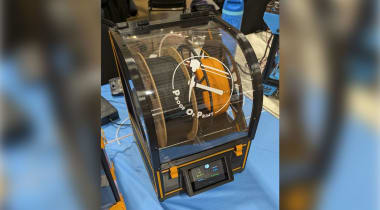
Inventor showcases 3D printer filament dryer that mines Bitcoins and dries filament with waste heat, capable of 6 TH/s at 140W — joins Bitcoin-mining 3D printer in hobbyist-focused miner lineup

Inventor showcases 3D printer filament dryer that mines Bitcoins and dries filament with waste heat, capable of 6 TH/s at 140W — joins Bitcoin-mining 3D printer in hobbyist-focused miner lineup

An inventor has created a filament dryer that not only dries filament for 3D printing but also mines Bitcoins, utilizing waste heat from the process. This new prototype is capable of 6 TH/s at 140W and is part of a lineup of hobbyist-focused mining devices. The filament dryer helps prevent common printing issues caused by moisture absorption and offers a proactive solution for maintaining filament quality. It is likely that this new device shares underlying technology with the inventor's previous 3D printer that also doubled as a Bitcoin miner, hinting at further scalability and innovation in this unique niche market.

Tom's Hardware

We use cookies

We use cookies to ensure you get the best experience on our website. For more information on how we use cookies, please see our cookie policy.