Back to home
Technology

Natcast to Lay Off Majority of Its Staff

Source

IEEE Spectrum

Published

TL;DR

AI Generated

Natcast, the non-profit operator of the CHIPS Act R&D program, is set to lay off the majority of its staff due to government withdrawal. This move comes as a blow to the semiconductor industry, impacting research and development efforts. The decision is expected to have significant implications for the CHIPS Act and its initiatives.

Read Full Article

Similar Articles

Mark Zuckerberg says Meta is cutting 8,000 jobs to pay for AI infrastructure — insatiable compute demand means the company can't rule out further headcount reductions

Mark Zuckerberg says Meta is cutting 8,000 jobs to pay for AI infrastructure — insatiable compute demand means the company can't rule out further headcount reductions

Meta CEO Mark Zuckerberg announced at a town hall that the company plans to cut 8,000 jobs due to the increasing costs of AI infrastructure. These layoffs will affect about 10% of Meta's workforce and are linked to the company's expanding AI budget. Zuckerberg mentioned that the focus on AI hardware is diverting funds from employee-related expenses, hinting at possible future reductions. Despite the layoffs, Meta reported strong Q1 earnings, raising questions about the necessity of the job cuts. The move highlights a broader debate about the role of AI in driving layoffs in the tech industry.

Tom's Hardware
Chinese GPU maker Cambricon's Q1 revenue hits $423 million as country's homegrown AI chip market accelerates — Chinese chipmakers continue to leech market share from Nvidia

Chinese GPU maker Cambricon's Q1 revenue hits $423 million as country's homegrown AI chip market accelerates — Chinese chipmakers continue to leech market share from Nvidia

Chinese GPU maker Cambricon Technologies reported a Q1 revenue of $423 million, marking a significant increase over the previous year. The company's net profit also rose by 185%, reflecting its growth in the AI chip market. Cambricon's success comes as Chinese chipmakers, including MetaX Integrated Circuits, are gaining market share from Nvidia in China. Despite facing challenges, such as losing Huawei as a major customer, Cambricon has shown substantial growth and profitability. The company aims to increase its AI accelerator shipments in 2026 and is positioned as a key player in China's AI hardware supply chain.

Tom's Hardware
Intel's upcoming Xeon 7 "Diamond Rapids" server CPUs reportedly delayed to 2027 — Next-gen Coral Rapids lineup lands 2028 but can be accelerated, according to new leak

Intel's upcoming Xeon 7 "Diamond Rapids" server CPUs reportedly delayed to 2027 — Next-gen Coral Rapids lineup lands 2028 but can be accelerated, according to new leak

Intel's Xeon 7 "Diamond Rapids" server CPUs have been delayed to 2027, with the 8-channel variant canceled in favor of focusing on 16-channel SKUs. The lineup will feature up to 256 cores initially, with a 512-core version to follow shortly after. Diamond Rapids will lack hyperthreading support, unlike the next-gen Coral Rapids lineup, which is expected to launch in mid-2028 with 8-channel variants. Intel may accelerate the rollout of Coral Rapids based on market demand. AMD's EPYC Venice CPUs are still on track for a 2026 release.

Tom's Hardware
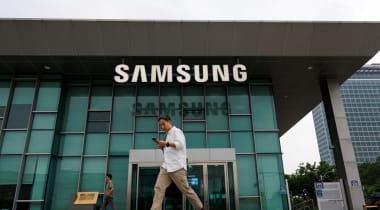
Union rally causes Samsung fab production to plummet by 58% during night shift as workers demand up to $400,000 bonuses — updated figures show over 40,000 people attended rally for better pay and bonuses

Union rally causes Samsung fab production to plummet by 58% during night shift as workers demand up to $400,000 bonuses — updated figures show over 40,000 people attended rally for better pay and bonuses

Samsung's production took a hit during a one-day strike by the labor union, with memory fab output dropping by 18% and contract chip foundry by 58.1% on the night shift. The union demands up to $400,000 bonuses, a 7% pay increase, and removal of the 50% bonus cap, while Samsung management offered a 10% operating profit bonus and 6.2% wage increase. The union plans an 18-day labor action if an agreement isn't reached, potentially costing Samsung over $20 billion. A general strike on May 21 involving 40,000 members could disrupt operations and impact the global memory chip supply.

Tom's Hardware

We use cookies

We use cookies to ensure you get the best experience on our website. For more information on how we use cookies, please see our cookie policy.