Back to home
Technology

Multiple generations of Intel's modern chips see price hikes up to 20% overseas — foreign markets are feeling the pinch on 12th, 13th, and 14th-gen chips

Source

Tom's Hardware

Published

TL;DR

AI Generated

Intel is reportedly increasing prices for its 13th and 14th Generation processors by up to 10% in the U.S., but international markets are experiencing hikes of up to 20%. The price increases also extend to the 12th-generation Alder Lake processors. In markets like Korea and Japan, prices for various Core i3 and i5 processors have risen significantly. These price adjustments may help boost Intel's profit margins, especially for mid-range SKUs that see high sales volumes. The company's strategy seems to focus on raising prices for processors produced on its in-house nodes while maintaining prices for Arrow Lake processors.

Read Full Article

Similar Articles

Intel details 18A-P process node, touts higher performance, lower power, and better thermals — 9% more performance, thermal conductivity improved by 50%

Intel details 18A-P process node, touts higher performance, lower power, and better thermals — 9% more performance, thermal conductivity improved by 50%

Intel is progressing with its 18A-P process node technology, boasting higher performance, lower power consumption, and improved thermals compared to its baseline 18A technology. The 18A-P process introduces new transistors, tighter process variability control, and enhanced thermals, potentially attracting interest from companies like Apple. This enhanced technology offers a 9% performance boost or an 18% power reduction compared to the base 18A process. Additionally, improvements in skew corner tightening, threshold voltage options, and metal stack resistance and capacitance contribute to better performance efficiency and yield. The 18A-P process also focuses on enhancing thermals, reliability, and voltage behavior critical for both client and data center applications.

Tom's Hardware
Newegg finally has a worthwhile Intel combo that includes memory, saving almost $240 — snag an Intel Core Ultra 7 270K Plus, ASRock Z890 motherboard, and 32GB of GSkill Trident Z5 DDR5 RAM for only $768.34

Newegg finally has a worthwhile Intel combo that includes memory, saving almost $240 — snag an Intel Core Ultra 7 270K Plus, ASRock Z890 motherboard, and 32GB of GSkill Trident Z5 DDR5 RAM for only $768.34

Newegg is offering a compelling combo deal including an Intel Core Ultra 7 270K Plus processor, ASRock Z890 Pro RS motherboard, and 32GB of G.Skill Trident Z5 RGB RAM for $768.34, saving buyers almost $240. The Intel Core Ultra 270K Plus processor, despite facing tough competition from AMD, offers excellent productivity performance at a lower price point of $328.34. The GSkill Trident Z5 RGB RAM, paired with the ASRock motherboard, provides good performance and overclocking potential. This combo deal on Newegg is a rare find and a solid option for those looking to upgrade their PC amidst high component prices.

Tom's Hardware
More details emerge about how Intel now earns more revenue from each wafer by looking to the edges — analyst reports say reduced yield variability across each wafer leads to more sellable CPUs

More details emerge about how Intel now earns more revenue from each wafer by looking to the edges — analyst reports say reduced yield variability across each wafer leads to more sellable CPUs

Intel has seen improved revenue per wafer by reducing yield variability across each wafer, resulting in more sellable CPUs. The company's focus on tightening yield distribution across the wafer edges has led to increased margins and productivity. By implementing edge-specific process correction methods, Intel can extract more high-quality and sellable dies from a single wafer. These improvements are node-independent and have been attributed to disciplined execution improvements under new manufacturing leadership. Intel's efforts have led to better output and demand for CPUs, with even lower-quality chips now being sold as viable products.

Tom's Hardware
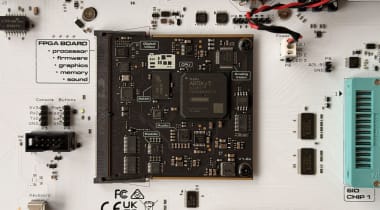
Commodore backs down over FPGA firmware lockdown — it won’t now try and block third-party firmware installs but will stand firm against bricked modded units

Commodore backs down over FPGA firmware lockdown — it won’t now try and block third-party firmware installs but will stand firm against bricked modded units

Commodore has reversed its decision to block third-party firmware installs on the C64 Ultimate computer, allowing users to experiment freely. However, the company will not provide support or replacements for modded units that become bricked. The initial plan to restrict non-Commodore FPGA firmware caused a divide among fans, leading to heated discussions on social media and forums. Commodore now emphasizes user freedom but warns that using community-installed firmware is at the owner's risk, with no free support or warranty service provided for damaged units.

Tom's Hardware

We use cookies

We use cookies to ensure you get the best experience on our website. For more information on how we use cookies, please see our cookie policy.