Back to home
Technology

Microsoft open-sources Bill Gates’ 6502 BASIC from 1978

Source

Ars Technica

Published

TL;DR

AI Generated

Microsoft has open-sourced the 1978 Microsoft BASIC for 6502 Version 1.1, which powered early personal computers like the Commodore PET, VIC-20, Commodore 64, and Apple II. The company shared 6,955 lines of assembly language code on GitHub under an MIT license, allowing for free use, modification, and distribution. Bill Gates and Rick Weiland were the original authors of this BASIC interpreter, which introduced many to programming in the late 1970s and early 1980s. This release provides insight into the early days of personal computing and programming for a generation of users.
Read Full Article

Similar Articles

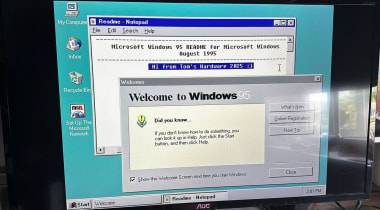
You can now run Linux on your ancient Windows 95 desktop with a new tool — very old Windows PCs, back to Intel 486, can cooperatively run very modern Linux kernels with WSL9x

You can now run Linux on your ancient Windows 95 desktop with a new tool — very old Windows PCs, back to Intel 486, can cooperatively run very modern Linux kernels with WSL9x

A new tool called WSL9x allows ancient Windows 95 desktops, even those with Intel 486 CPUs, to run modern Linux kernels cooperatively with Windows. The tool, shared by a computer tinkerer on Codeberg, enables users to run Windows and Linux apps side-by-side with a modern Linux kernel within early Windows versions. WSL9x consists of a patched Linux kernel, a VxD driver, and wsl.com, and does not require hardware virtualization. Users can enjoy the capabilities of both operating systems simultaneously without the need for reboots. In contrast, Linux is phasing out support for the 37-year-old Intel 486 CPU, with a patch expected to be merged into Linux 7.1, signaling the end of i486 kernel image builds.

Tom's Hardware
French government say it's ditching Windows for Linux — country accelerates plans to ditch US-based software in digital sovereignty push

French government say it's ditching Windows for Linux — country accelerates plans to ditch US-based software in digital sovereignty push

France is accelerating its digital sovereignty plans by announcing its exit from Windows in favor of Linux for workstations. This move aims to eliminate U.S.-based commercial interests from government computers. The plan includes migrating to sovereign solutions and adopting open-source alternatives for collaborative tools. French Ministers emphasize reducing reliance on technologies controlled by outside interests to regain control of digital destiny. The decision to move to Linux could influence other EU countries and organizations, potentially impacting software and services businesses.

Tom's Hardware
Enthusiast ‘lands’ on the moon using hardware from the 1980s — ZX Spectrum home computer with 3.5 MHz CPU and 48KB of memory power Kerbal space flight

Enthusiast ‘lands’ on the moon using hardware from the 1980s — ZX Spectrum home computer with 3.5 MHz CPU and 48KB of memory power Kerbal space flight

Space enthusiast and YouTuber Scott Manley used a ZX Spectrum, a home computer from the 1980s, to successfully "land" on the moon in the Kerbal Space Program simulator. The ZX Spectrum, with a 3.5 MHz CPU and 48KB of memory, controlled the virtual spacecraft in the simulation. Despite its limitations compared to modern computers, the ZX Spectrum's capabilities were highlighted in this feat. Manley had to creatively program the device to operate the virtual spacecraft and connect it to the simulator using a proprietary storage system with an RS232 Serial port. This achievement showcases the ingenuity of past engineers who landed on the moon with less powerful computers than what we have today.

Tom's Hardware
NVIDIA's AI-powered Audio2Face animation model is now open source for all developers

NVIDIA's AI-powered Audio2Face animation model is now open source for all developers

NVIDIA has made its AI-powered Audio2Face animation model open source for all developers. This tool allows users to animate a face based on audio input, creating realistic facial expressions. By releasing this model to the public, NVIDIA aims to foster innovation and creativity in the animation and AI communities. Developers can now access and utilize this technology to enhance their projects and applications.

TweakTown

We use cookies

We use cookies to ensure you get the best experience on our website. For more information on how we use cookies, please see our cookie policy.