Back to home
Technology

LPDDR: A Versatile Memory Powering The Next Wave Of Mobile, Edge & Endpoint Computing

Source

SemiEngineering

Published

TL;DR

AI Generated

The article discusses the evolution of memory technology, highlighting LPDDR as a key solution for mobile, edge, and endpoint platforms due to its balance of performance and power efficiency. LPDDR has advanced through generations, with LPDDR6 offering features like dual sub-channels and enhanced reliability for AI inference workloads. Compared to HBM and GDDR, LPDDR excels in energy efficiency and idle power savings, making it ideal for devices where battery life and thermal limits are crucial. LPDDR is increasingly integrated into smartphones, tablets, laptops, automotive systems, and AI accelerators, offering unique features like fine-grained concurrency and reliability enhancements. The article emphasizes the importance of LPDDR in the evolving landscape of mobile, automotive, and edge AI platforms.

Read Full Article

Similar Articles

SemiEngineering

Can Edge AI Keep Up?

Experts discuss the challenges of keeping edge AI architectures adaptable while maintaining power, performance, and area targets. The cadence for model updates varies by application, with some industries experiencing rapid changes while others remain more static. Heterogeneous architectures and robust software/compiler toolchains are crucial for balancing adaptability with efficiency. The discussion includes insights from industry leaders at Arm, Cadence, Expedera, Mixel, Quadric, Rambus, Siemens EDA, and Synopsys on the evolving landscape of AI model development and hardware design.

SemiEngineering
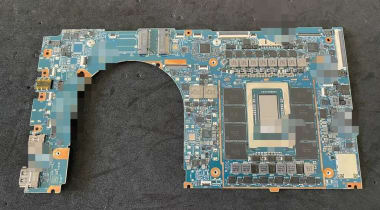
Alleged images of the long-awaited Nvidia N1/N1X SoC surface on laptop motherboard — board features 128 GB of LPDDR5X memory alongside 8+6+2 phase VRM

Alleged images of the long-awaited Nvidia N1/N1X SoC surface on laptop motherboard — board features 128 GB of LPDDR5X memory alongside 8+6+2 phase VRM

Alleged images of the long-awaited Nvidia N1/N1X SoC have surfaced on a laptop motherboard, showcasing 128 GB of LPDDR5X memory and an 8+6+2 phase VRM setup. The motherboard, listed on a Chinese reselling platform, is priced at around $1,400 and features SK hynix memory modules running at 8,533 MT/s. The N1 SoC, expected to compete with Apple Silicon, is rumored to include a 20-core Arm-based CPU and an RTX 5070-level GPU with 6,144 CUDA cores. Nvidia aims to launch the N1/N1X lineup at Computex 2026 after missing the recent GTC event, potentially reinvigorating the Windows-on-Arm initiative. The device housing the N1 SoC is speculated to be a 13-inch tablet or a 14-inch laptop, offering a glimpse into Nvidia's foray into consumer CPUs after years of development.

Tom's Hardware
Apple's MacBook Neo's 2027 model will reportedly include the A19 Pro chip and 50% more memory

Apple's MacBook Neo's 2027 model will reportedly include the A19 Pro chip and 50% more memory

Apple's MacBook Neo has exceeded expectations, leading to potential production challenges due to high demand. The current model uses leftover A18 Pro chips from the iPhone 16 Pro, resulting in limited availability. To meet demand, Apple may need to produce more A18 Pro chips, which are in high demand due to their 3nm N3E process. The company may need to increase prices or offer higher-priced models with more storage to offset production costs. Apple is already planning a 2027 model with the A19 Pro chip, featuring a 50% increase in memory to 12GB of LPDDR5X.

TweakTown
Scale AI: Engineering the Next Leap in LPDDR6 Low-Power Memory

Scale AI: Engineering the Next Leap in LPDDR6 Low-Power Memory

LPDDR6 is positioned as a next-generation low-power memory standard that improves performance at lower energy levels compared to LPDDR5 and LPDDR5X. The new standard aims to raise per-pin data rates beyond 10.6 Gbps while reducing active and standby power consumption. This advancement is crucial for AI systems that prioritize bandwidth efficiency, predictable latency, and platform reliability. The shift to LPDDR6 addresses the increasing demands on memory in AI and edge platforms where performance per watt is a key competitive factor. The article emphasizes the importance of modernizing validation methods to ensure long-term margin and interoperability at higher speeds, not just short-term functionality.

SemiEngineering

We use cookies

We use cookies to ensure you get the best experience on our website. For more information on how we use cookies, please see our cookie policy.