Back to home
Technology

Intel’s bitcoin-mining Blockscale chips return from the dead, being given away for free — 256,000 Intel Bonanza Mine ASICs donated by Jack Dorsey’s Block, will be distributed to DIYers and open-hardware projects

Source

Tom's Hardware

Published

TL;DR

AI Generated

Intel's bitcoin-mining Blockscale chips, previously abandoned, are making a comeback through a donation of 256,000 Intel Bonanza Mine ASICs by Jack Dorsey's Block, Inc. These chips, designed for efficient Bitcoin mining, will be distributed to DIYers and open-hardware projects by the nonprofit 256 Foundation. The chips were initially launched by Intel in 2022 with high power efficiency and hash rate capabilities. Recipients of the chips will use them for open-source hardware projects, potentially expanding their applications beyond Bitcoin mining to areas like home heating and energy capture. This move represents a shift towards open development in the mining hardware industry, challenging the dominance of closed ecosystems like Bitmain's.
Read Full Article

Similar Articles

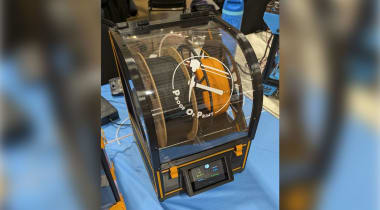
Inventor showcases 3D printer filament dryer that mines Bitcoins and dries filament with waste heat, capable of 6 TH/s at 140W — joins Bitcoin-mining 3D printer in hobbyist-focused miner lineup

Inventor showcases 3D printer filament dryer that mines Bitcoins and dries filament with waste heat, capable of 6 TH/s at 140W — joins Bitcoin-mining 3D printer in hobbyist-focused miner lineup

An inventor has created a filament dryer that not only dries filament for 3D printing but also mines Bitcoins, utilizing waste heat from the process. This new prototype is capable of 6 TH/s at 140W and is part of a lineup of hobbyist-focused mining devices. The filament dryer helps prevent common printing issues caused by moisture absorption and offers a proactive solution for maintaining filament quality. It is likely that this new device shares underlying technology with the inventor's previous 3D printer that also doubled as a Bitcoin miner, hinting at further scalability and innovation in this unique niche market.

Tom's Hardware
British cryptographer Adam Back is the secret creator of Bitcoin, claims new report — Back refutes investigation, says parallels to Satoshi are just a coincidence

British cryptographer Adam Back is the secret creator of Bitcoin, claims new report — Back refutes investigation, says parallels to Satoshi are just a coincidence

A recent NYT investigation suggests British cryptographer Adam Back may be the secret creator of Bitcoin, challenging the long-standing mystery of Satoshi Nakamoto's identity. Back denies these claims, attributing the parallels to mere coincidence. The investigation delves into Back's involvement in the Cypherpunk movement, his creation of Hashcash, and his alignment with Satoshi's vision of a decentralized system. Despite linguistic similarities and career parallels, Back maintains he is not Satoshi, citing lack of knowledge about wallet addresses at the time. The article concludes with a potential slip-up in a hotel interview that hints at Back being Satoshi, though he denies it.

Tom's Hardware
Alchip’s Leadership in ASIC Innovation: Advancing Toward 2nm Semiconductor Technology

Alchip’s Leadership in ASIC Innovation: Advancing Toward 2nm Semiconductor Technology

Alchip Technologies is making significant progress in developing advanced 2nm ASICs, positioning itself as a leader in semiconductor design for AI and HPC applications. The company's efforts focus on commercializing cutting-edge chip technologies for data centers, hyperscalers, and AI infrastructure providers. Alchip has created a dedicated 2nm design platform that supports advanced packaging and chiplet integration methods, enabling high-performance ASIC development. The transition to 2nm technology introduces nanosheet or GAA transistors, offering better performance and power efficiency for AI workloads and data centers. Alchip's successful 2nm test chip tape-out validates their design methodology and readiness for emerging packaging approaches, positioning them for future semiconductor generations.

SemiWiki
Bitcoin network has its first quarterly hashrate drop since 2020 — Iran conflict spurs Bitcoin mining operators to accelerate pivot to AI infrastructure

Bitcoin network has its first quarterly hashrate drop since 2020 — Iran conflict spurs Bitcoin mining operators to accelerate pivot to AI infrastructure

The Bitcoin network has experienced its first quarterly hashrate drop since 2020, with a 4% decrease in computational power in the first quarter of 2026. This decline is attributed to global events, including the Iran-U.S. conflict and the resulting increase in oil prices, impacting the cost of electricity for miners. As a result, many mining operators are transitioning from hosting Bitcoin miners to hosting AI applications due to profitability challenges. This shift may lead to a change in the mining landscape as operators pivot to AI infrastructure, utilizing GPUs from companies like Nvidia and AMD.

Tom's Hardware

We use cookies

We use cookies to ensure you get the best experience on our website. For more information on how we use cookies, please see our cookie policy.