Back to home
Technology

Intel could sell up to 49% of its foundry business to external investors, but a full IPO or spin-off is unlikely

Source

Tom's Hardware

Published

TL;DR

AI Generated

Intel is considering selling up to 49% of its foundry business to external investors, but a full IPO or spin-off is unlikely. The company's CFO mentioned that selling a stake below 51% could trigger issues with the U.S. government. Intel's ownership agreements with the government require it to maintain at least 51% control of its foundry unit for the next five years. The Semiconductor Co-Investment Program allows Intel to raise capital without violating ownership clauses. While an IPO is still possible, the partial ownership of key fabs by third parties may complicate the process and reduce potential valuation.

Read Full Article

Similar Articles

More details emerge about how Intel now earns more revenue from each wafer by looking to the edges — analyst reports say reduced yield variability across each wafer leads to more sellable CPUs

More details emerge about how Intel now earns more revenue from each wafer by looking to the edges — analyst reports say reduced yield variability across each wafer leads to more sellable CPUs

Intel has seen improved revenue per wafer by reducing yield variability across each wafer, resulting in more sellable CPUs. The company's focus on tightening yield distribution across the wafer edges has led to increased margins and productivity. By implementing edge-specific process correction methods, Intel can extract more high-quality and sellable dies from a single wafer. These improvements are node-independent and have been attributed to disciplined execution improvements under new manufacturing leadership. Intel's efforts have led to better output and demand for CPUs, with even lower-quality chips now being sold as viable products.

Tom's Hardware
Cerebras files for IPO — company remains unprofitable despite 20x revenue growth

Cerebras files for IPO — company remains unprofitable despite 20x revenue growth

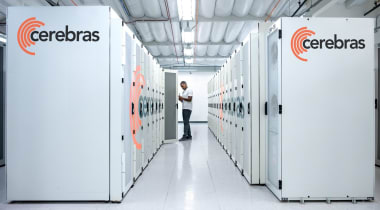
Cerebras, a wafer-scale AI processor supplier, has filed for an IPO despite remaining unprofitable, with most revenue coming from just two customers. The company positions itself as an AI infrastructure provider, offering full-stack solutions. While revenue has grown substantially, Cerebras faces risks due to its heavy reliance on a few large clients. Recent agreements with Amazon Web Services and OpenAI aim to diversify revenue streams. The company's IPO is expected to raise around $3 billion, reflecting its growth and AI infrastructure ambitions.

Tom's Hardware
Intel hires tenured Samsung exec to lead Foundry Services — signals company focus on winning business from potential Foundry suitors

Intel hires tenured Samsung exec to lead Foundry Services — signals company focus on winning business from potential Foundry suitors

Intel has appointed Shawn 'Seung Hoon' Han, a seasoned Samsung executive, as the new senior vice president and general manager of Foundry Services. Han's extensive experience at Samsung Foundry will bring valuable expertise to Intel's Foundry division, focusing on engaging with external customers. The move signifies Intel's strategic shift towards enhancing customer acquisition, trust, and long-term relationships in the competitive foundry market. Han's role will involve leading sales, customer relations, and securing external partnerships, emphasizing the importance of customer-centric strategies for Intel Foundry's success. His appointment underscores Intel's commitment to strengthening its position in the foundry business and converting technical interest into tangible business opportunities.

Tom's Hardware
SemiEngineering

The Smart Advantage: How Artificial Intelligence Is Transforming Inspection And Metrology In Semiconductor Manufacturing

Artificial Intelligence (AI) is revolutionizing semiconductor inspection and metrology by enhancing defect detection processes with automation, speed, and adaptability. AI-driven systems leverage Big Data to uncover patterns and anomalies that traditional methods may miss, leading to improved accuracy and efficiency. AI-integrated platforms like Nordson's SQ3000 Multi-Function System can detect microscopic flaws with unparalleled speed and efficiency, surpassing traditional methods. AI's real-time, in-line inspection capabilities enable rapid data processing without compromising production speed, while machine learning models adjust quickly to new production requirements. The advancement of Machine Learning (ML) in inspection systems is transforming defect detection by creating self-teaching AI systems that become smarter and more adaptable with each interaction.

SemiEngineering

We use cookies

We use cookies to ensure you get the best experience on our website. For more information on how we use cookies, please see our cookie policy.