Back to home
Technology

Intel Arrow Lake Refresh CPUs arrive with native DDR5-7200 CUDIMM support — 12.5% higher speeds than initial Arrow Lake chips

Source

Tom's Hardware

Published

TL;DR

AI Generated

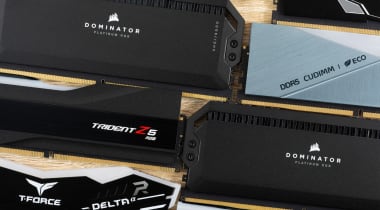
Intel is enhancing memory support with the upcoming Arrow Lake Refresh CPUs, offering native CUDIMM support up to DDR5-7200, a 12.5% speed boost over the initial Arrow Lake chips. While CUDIMM support is improved, standard DIMMs and SO-DIMMs remain at DDR5-5600 and DDR5-6400 respectively. Arrow Lake is the only mainstream lineup fully supporting CUDIMMs, unlike AMD's Ryzen 9000 series which operates them in bypass mode. The Arrow Lake Refresh's IMC may support higher CUDIMMs out of the box, but with DDR5 shortages, finding DDR5-7200 CUDIMM kits may be challenging. Intel's marketing push for Arrow Lake Refresh will likely emphasize this memory enhancement to compete with AMD's Ryzen CPUs.
Read Full Article

Similar Articles

Intel's upcoming Xeon 7 "Diamond Rapids" server CPUs reportedly delayed to 2027 — Next-gen Coral Rapids lineup lands 2028 but can be accelerated, according to new leak

Intel's upcoming Xeon 7 "Diamond Rapids" server CPUs reportedly delayed to 2027 — Next-gen Coral Rapids lineup lands 2028 but can be accelerated, according to new leak

Intel's Xeon 7 "Diamond Rapids" server CPUs have been delayed to 2027, with the 8-channel variant canceled in favor of focusing on 16-channel SKUs. The lineup will feature up to 256 cores initially, with a 512-core version to follow shortly after. Diamond Rapids will lack hyperthreading support, unlike the next-gen Coral Rapids lineup, which is expected to launch in mid-2028 with 8-channel variants. Intel may accelerate the rollout of Coral Rapids based on market demand. AMD's EPYC Venice CPUs are still on track for a 2026 release.

Tom's Hardware
Intel Core Ultra 7 270K Plus vs AMD Ryzen 7 7800X3D — Can Intel finally beat X3D?

Intel Core Ultra 7 270K Plus vs AMD Ryzen 7 7800X3D — Can Intel finally beat X3D?

Intel's Arrow Lake Refresh CPUs, the Core Ultra 7 270K Plus and Ryzen 7 7800X3D, are compared for gaming and productivity. The 270K Plus, with 24 cores and 24 threads, offers better gaming performance, but the 7800X3D leads in gaming benchmarks by 10.4%. In productivity tests, the 270K Plus excels with a 29% lead in single-threaded performance and a significant advantage in multi-threaded tasks. Intel's CPU also wins in overclocking capabilities, offering more performance-enhancing features. However, the 7800X3D is more power-efficient and costs less, making it a strong competitor.

Tom's Hardware
Intel Xeon 7 Diamond Rapids reportedly delayed to mid-2027, followed by Coral Rapids in 2028

Intel Xeon 7 Diamond Rapids reportedly delayed to mid-2027, followed by Coral Rapids in 2028

Intel's Xeon 7 Diamond Rapids has reportedly been delayed to mid-2027, with Coral Rapids expected in 2028 according to hardware enthusiast Jaykihn. The Xeon 6+ "Clearwater Forest" is set to launch in the first half of 2026, featuring energy-efficient E-cores based on the Darkmont architecture and Foveros 3D packaging. Intel's Granite Rapids will continue production as the 16-channel DMR faces delays, with the company focusing on high-end enthusiast and enterprise markets. The delay could impact Intel's DCAI earnings and profit margins, especially with AMD's upcoming "Venice" launch. Intel's return to SMT with Coral Rapids aims to succeed Diamond Rapids, with details on these CPUs yet to be revealed.

TweakTown
CPU requirements for AI workloads are multiplying, driving intensifying shortages and price hikes — Intel already shifting production from consumer chips to Xeon as inference workloads drive server CPU ratios back toward parity with GPUs

CPU requirements for AI workloads are multiplying, driving intensifying shortages and price hikes — Intel already shifting production from consumer chips to Xeon as inference workloads drive server CPU ratios back toward parity with GPUs

Intel is experiencing a surge in demand for server CPUs due to the increasing requirements for AI workloads, particularly in inference tasks. This shift has led to shortages and price hikes, with server CPU prices rising by up to 20% since March. The company is redirecting production from consumer chips to Xeon to meet the growing demand for data center chips. The ratio of CPUs to GPUs in data centers is expected to reach parity as AI workloads evolve, driving the need for more powerful CPUs. Intel anticipates further price increases in the second half of 2026 as demand continues to rise.

Tom's Hardware

We use cookies

We use cookies to ensure you get the best experience on our website. For more information on how we use cookies, please see our cookie policy.