Technology
How the AI revolution is triggering a hardware arms race and pushing up prices
Source
Tom's Hardware
Published
Source
Published

SpaceX's confidential $1.75 trillion IPO filing reveals plans to manufacture its own GPUs, investing billions in internal processor production due to a lack of long-term supply agreements with silicon suppliers. The company's intention to build GPUs, not specialized AI accelerators, is highlighted, with the naming convention still uncertain. While SpaceX's CEO confirmed plans for high-volume semiconductor manufacturing, the specifics of the GPUs remain unclear, raising questions about potential competition with existing AI GPU manufacturers like AMD and Nvidia. The S-1 form's confidential nature prevents verification of its content, leaving room for speculation on SpaceX's semiconductor endeavors.
Artificial Intelligence (AI) is revolutionizing semiconductor inspection and metrology by enhancing defect detection processes with automation, speed, and adaptability. AI-driven systems leverage Big Data to uncover patterns and anomalies that traditional methods may miss, leading to improved accuracy and efficiency. AI-integrated platforms like Nordson's SQ3000 Multi-Function System can detect microscopic flaws with unparalleled speed and efficiency, surpassing traditional methods. AI's real-time, in-line inspection capabilities enable rapid data processing without compromising production speed, while machine learning models adjust quickly to new production requirements. The advancement of Machine Learning (ML) in inspection systems is transforming defect detection by creating self-teaching AI systems that become smarter and more adaptable with each interaction.
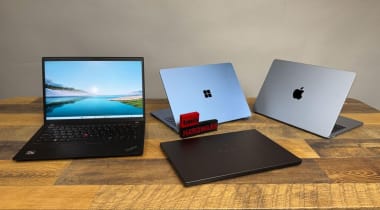
The article discusses the best laptops of 2026 for productivity, portability, and battery life. It highlights top picks like the MacBook Air with the M5 chip, the Dell XPS 14, the Lenovo Yoga 9i 2-in-1 Aura Edition, the HP OmniBook Ultra, the MacBook Neo, the Lenovo ThinkPad X1 Carbon (Gen 11), the Microsoft Surface Pro (11th Edition), the MacBook Pro (14-inch, M5), and the Razer Blade 18. Each laptop is evaluated based on its specifications, performance, design, and value, providing insights into the latest technology trends and offerings in the laptop market for different user needs and preferences.

Tests conducted by Specops revealed that expensive $30,000 AI GPUs like Nvidia's H200 and AMD's MI300X performed poorly compared to consumer graphics cards like Nvidia's RTX 5090 in password cracking. Despite the significant price difference, the RTX 5090 outperformed the other GPUs by 20% over the MI300X and 63.7% over the H200 on average. The RTX 5090 excelled due to its design with more INT32 cores, which are crucial for password cracking, while the AI GPUs prioritize different instructions for their machine learning tasks. This study underscores that consumer desktop GPUs remain the most efficient for password cracking tasks.
We use cookies to ensure you get the best experience on our website. For more information on how we use cookies, please see our cookie policy.