Technology
Grid-Scale Battery Stabilizes Scottish Power Supply
Source
IEEE Spectrum
Published
Source
Published

Researchers at EPFL in Switzerland have developed a nanoscale device that generates continuous electricity from evaporating water, aided by heat and sunlight. This technology, known as a hydrovoltaic device, can work with ordinary ion-containing water like tap water or seawater. The device consists of three layers that harness evaporation, heat, and sunlight to produce stable electrical output. While the power output is small compared to commercial solar panels, the device shows promise for battery-free sensors, wearable electronics, and IoT devices in environments with natural water, warmth, and sunlight. The design allows for independent optimization of each stage and potential scalability in the future.

The U.S. grid-scale battery manufacturing industry can now fully support the storage needs of wind and solar electricity generation, with battery storage expected to make up 28% of new U.S. power-plant capacity. By the end of 2025, U.S. factories had the capacity to produce about 70 GWh of finished grid storage systems annually, with projections to reach 145 GWh/year by the end of 2026. Despite challenges like limited domestic supplies of battery materials, the industry is advancing rapidly with battery recycling technologies and North American mining operations. Grid-scale storage systems are significantly enhancing the economics of renewable energy by storing excess power and ensuring a steady supply.
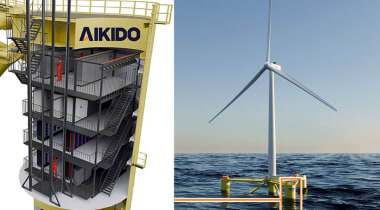
Startup Aikido is planning to launch a prototype in the North Sea that combines an offshore wind turbine with a data center housed underwater. The floating wind turbine platform will have three ballast tanks, each capable of hosting a 4-megawatt, liquid-cooled data hall. This innovative project aims to leverage renewable energy sources for sustainable data center operations in the future.
Google is striving to achieve its ambitious 2030 goal of running on carbon-free energy 24-7, despite facing challenges due to the rapid growth in AI. The company's total electricity demand has doubled since 2020, making it more difficult to reach its target. To bridge the gap, Google has been making deals in the energy sector, including projects involving carbon capture and storage at a natural-gas plant in Illinois and plans to reopen a nuclear power plant in Iowa. Critics have raised concerns about the carbon capture project, questioning the decision to build a new plant instead of retrofitting existing facilities.
We use cookies to ensure you get the best experience on our website. For more information on how we use cookies, please see our cookie policy.