Back to home
Technology

Future of cable-less PC builds revealed — single 50-pin connector supports up to 2,145 watts to power a CPU and GPU with BTF 3.0

Source

Tom's Hardware

Published

TL;DR

AI Generated

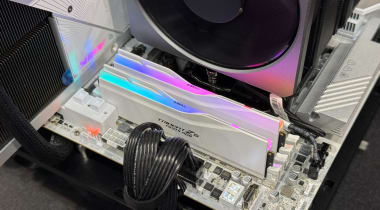
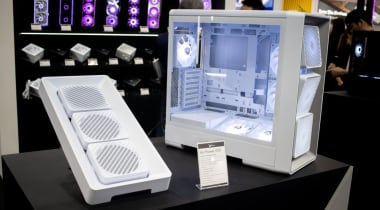
A new cable-less PC build standard, BTF 3.0, features a single 50-pin connector supporting up to 2,145 watts to power CPU and GPU. DIY-APE's innovative design aims to eliminate separate cables for components, enhancing accessibility and aesthetics. The standard includes a "gold-finger solution" for power delivery, consolidating connectors for GPU, CPU, EPS, and more. BTF 3.0 promotes clean, effortless PC building with additional features like short-tube water cooling and simplified front panel headers. While still a concept, DIY-APE showcased a prototype build demonstrating the potential of BTF 3.0 in collaboration with Colorful and Sego.
Read Full Article

Similar Articles

Corsair builds multi-function touchscreen LCD into a $400 case — Frame 4000D enclosure gets a modular Xeneon Edge upgrade

Corsair builds multi-function touchscreen LCD into a $400 case — Frame 4000D enclosure gets a modular Xeneon Edge upgrade

Corsair introduces the Frame 4000D LCD RS ARGB case with a Xeneon Edge touch display built in, offering a unique canvas for PC builders. The Xeneon Edge features a 2560x720 AHVA display that can be used for monitoring components, displaying information, or creating utility shortcuts. With five-point touch functionality, users can potentially use multi-tap gestures for system control. The setup, priced at $399.99, integrates with Corsair's iCUE software and offers customization options. Additionally, a mounting kit is available for the larger Frame 5000D Airflow case to add the Xeneon Edge display.

Tom's Hardware
Asus gives us the PCIe finger — teases new concept that boosts motherboard GPU slot power to 250W

Asus gives us the PCIe finger — teases new concept that boosts motherboard GPU slot power to 250W

Asus has teased a new concept design that could boost the power output of a motherboard GPU slot to 250W, a significant increase from the standard 75W limit of PCIe slots. The concept involves modifications to the PCIe front finger, allowing for a higher power delivery through enhanced 12V lines. This innovation could make cableless graphics cards more mainstream, particularly for entry-level and lower-mid-range GPUs. While the concept is promising, its adoption and implementation by board and AIB makers remain uncertain, as it involves modifications to the PCIe standard that may increase costs and complexity.

Tom's Hardware
Dr. L.C. Lu on TSMC Advanced Technology Design Solutions

Dr. L.C. Lu on TSMC Advanced Technology Design Solutions

Dr. L.C. Lu, a key figure at TSMC, focuses on design-technology co-optimization, packaging innovations, and AI-driven methodologies for next-gen semiconductor systems. TSMC emphasizes DTCO and DDCL innovations for scaling from N5 to A14 nodes, with NanoFlex and NanoFlex Pro architectures offering efficiency gains. N2P and N2U nodes incorporate advanced DTCO and power delivery optimizations, with hybrid dual-rail architectures achieving significant energy savings. TSMC collaborates with EDA partners for AI integration, enhancing productivity and design quality. Advanced packaging technologies like CoWoS and SoIC play a crucial role in enabling AI scaling, with memory bandwidth and interconnect performance scaling aggressively. TSMC addresses power delivery and thermal management challenges in AI systems through advanced solutions. TSMC's advancements in design methodologies and AI-driven automation promise improved productivity and scalability in chip-package co-design.

SemiWiki
MindsEye's sabotage mission is being slammed as dull and pointless

MindsEye's sabotage mission is being slammed as dull and pointless

Build A Rocket Boy accuses individuals of sabotaging MindsEye's launch, spending over €1 million on damaging efforts. The studio integrates the controversy into a new in-game mission, Blacklist, to showcase evidence of sabotage to players. However, reports describe the mission as lackluster and failing to deliver a compelling narrative. Critics attribute the launch issues to internal problems, such as management and design decisions, casting doubt on the sabotage claims. The saga continues as MindsEye's post-launch turmoil unfolds.

TweakTown

We use cookies

We use cookies to ensure you get the best experience on our website. For more information on how we use cookies, please see our cookie policy.