Back to home
Technology

Drone maker DJI appeals against court ruling over ‘Chinese Military Company’ designation — will return to court to ‘defend the integrity of our company’ as legal battle rages on

Source

Tom's Hardware

Published

TL;DR

AI Generated

DJI, a prominent drone maker, is appealing a U.S. District Court ruling designating it as a "Chinese Military Company," asserting it is not affiliated with the Chinese government or military. The legal battle stems from U.S. authorities' belief that DJI has ties to the Chinese Communist Party and military, which the company vehemently denies. DJI highlights that the court dismissed most allegations against it, emphasizing that its status and product applications are common in the industry. While DJI awaits a security audit to continue operating in the U.S., the date for the next court proceedings remains uncertain.

Read Full Article

Similar Articles

DARPA calls for proposals for autonomous underwater drones — gov't looking for a small, cheap autonomous sub that can be developed and built quickly

DARPA calls for proposals for autonomous underwater drones — gov't looking for a small, cheap autonomous sub that can be developed and built quickly

DARPA has issued a call for proposals to develop a small, affordable autonomous underwater drone that can be quickly built and deployed. The program, known as Deep Thoughts, aims to create flexible AUVs using readily available parts with a rapid development timeline. This initiative reflects the military's interest in expanding drone capabilities beyond aerial vehicles to the deep sea. The U.S. government seeks innovative approaches to building autonomous underwater systems to keep pace with evolving technologies and cost-effective solutions in the drone space.

Tom's Hardware
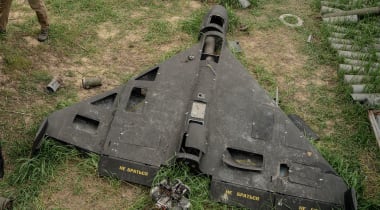
Russian-made Shahed drones are ‘disintegrating in the air before reaching their targets’ due to shoddy manufacturing, video shows — commentators call Russian clones of Iran's drones 'flying garbage'

Russian-made Shahed drones are ‘disintegrating in the air before reaching their targets’ due to shoddy manufacturing, video shows — commentators call Russian clones of Iran's drones 'flying garbage'

Russian-made Shahed drones are facing criticism for disintegrating in the air before reaching their targets due to poor manufacturing quality. Video footage from Ukrainian Sting interceptor drones reveals defects like missing body panels, stray wiring, and deformed wingtips on the drones. The drones are said to be produced in Russia's Alabuga Special Economic Zone with minimally trained workers using inferior Chinese parts. This decline in quality has led to a decrease in the hit rate of these drones in Ukraine, turning them into tools of attrition rather than precision.

Tom's Hardware
Iran reportedly bought an in-orbit Chinese satellite to target US military sites in the Middle East — purchase agreement included ongoing ground control services based in China

Iran reportedly bought an in-orbit Chinese satellite to target US military sites in the Middle East — purchase agreement included ongoing ground control services based in China

Iran's Islamic Revolutionary Guards Corps reportedly purchased a Chinese Earth-observation satellite in 2024, allowing them to capture high-resolution satellite imagery for military purposes. The satellite was acquired from a Chinese commercial aerospace company and included access to ground control services based in China. Despite the satellite's civilian nature, it was used to target US military sites in the Middle East, showcasing the dual-use application of such technology. The involvement of Chinese companies with ties to the military-industrial complex raises concerns about the blurred lines between civilian and military applications in the tech industry. The distributed nature of the satellite's services makes it challenging for potential attackers to disable it, highlighting the complexities of international tech collaborations in sensitive geopolitical contexts.

Tom's Hardware
MIT Technology Review

The Download: the state of AI, and protecting bears with drones

The article discusses the current state of AI as highlighted in Stanford’s 2026 AI Index, showcasing the rapid evolution of the technology and the divide in opinions between experts and the public on its impact. It also features a story about wildlife biologist Wesley Sarmento using drones as a tool to protect grizzly bears in Montana. Additionally, the piece includes a roundup of tech news stories, such as AI's bug-finding capabilities, OpenAI's plans, and the use of AI in mathematics.

MIT Technology Review

We use cookies

We use cookies to ensure you get the best experience on our website. For more information on how we use cookies, please see our cookie policy.