Back to home
Technology

Don't wait if you're planning to upgrade your RAM or SSD, Kingston rep warns — says 'prices will continue to go up,' NAND costs up 246%

Source

Tom's Hardware

Published

TL;DR

AI Generated

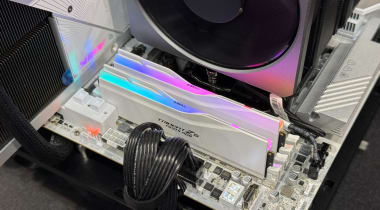
Kingston Datacenter SSD Business Manager Cameron Crandall predicts that NAND prices for RAM and SSD will continue to rise in 2026, with a 246% increase in NAND costs since 1Q25, 70% of which occurred in the last 60 days. Crandall advises consumers not to delay upgrading their systems as prices are expected to keep increasing. He mentions that the memory market is currently in an upswing, leading memory companies to hold back on expanding production. Despite Sapphire's forecast of DRAM prices stabilizing in the next six to eight months, Crandall believes the pricing cycle indicates ongoing increases.
Read Full Article

Similar Articles

Pirate RPG game is secretly looting your SSD lifespan — new Windrose patch promises smoother sailing and addresses excessive disk writing

Pirate RPG game is secretly looting your SSD lifespan — new Windrose patch promises smoother sailing and addresses excessive disk writing

The Windrose RPG game has been criticized for excessively writing to SSDs, potentially shortening their lifespan. The game's new patch aims to reduce disk usage significantly, addressing the issue of up to 108GB per hour being written to SSDs. Comparisons with other games like Enshrouded and Valheim show Windrose's disproportionate SSD resource consumption. The game's high storage demand is attributed to its save system design, which has been adjusted in the latest patch to improve write speeds by 60-75%. Players are advised to update to the latest version to mitigate potential SSD wear and tear.

Tom's Hardware
Zuckerberg's Meta will beam sunlight from space to power AI data centers, solar-collecting satellites will orbit 22,000 miles above Earth — firm reserves 1 Gigawatt of orbital solar energy and 100 Gigawatt-hours of long-duration storage

Zuckerberg's Meta will beam sunlight from space to power AI data centers, solar-collecting satellites will orbit 22,000 miles above Earth — firm reserves 1 Gigawatt of orbital solar energy and 100 Gigawatt-hours of long-duration storage

Meta, led by Zuckerberg, plans to power its AI data centers with sunlight beamed from space using solar-collecting satellites in geosynchronous orbit 22,000 miles above Earth. The company has reserved 1 Gigawatt of orbital solar energy and 100 Gigawatt-hours of long-duration storage to address the increasing energy demands of its AI infrastructure. This move is part of Meta's strategy to secure long-term energy supplies for its expanding AI operations, with a first orbital demonstration planned for 2028 and potential commercial delivery by 2030. The partnerships with Overview Energy and Noon Energy aim to tackle the challenges of intermittency and long-duration energy storage in renewable energy systems.

Tom's Hardware
The GeForce RTX 30-series upgrade matrix — does your Ampere GPU need an upgrade in 2026?

The GeForce RTX 30-series upgrade matrix — does your Ampere GPU need an upgrade in 2026?

Nvidia's RTX 30-series graphics cards are approaching their sixth birthdays, and while they continue to receive support, newer software features like DLSS Frame Generation are not available for Ampere GPUs. The limitations of these cards, particularly in terms of VRAM, may be felt when playing the latest games at high resolutions. The article provides upgrade recommendations for different Ampere cards based on performance improvements and features like DLSS 4.5 and MFG. It suggests considering factors like monitor resolution and refresh rate before deciding on a GPU upgrade. For cards like the RTX 3080, RTX 3070, and RTX 3060, the article recommends upgrading to newer models for better performance and VRAM capacity.

Tom's Hardware
Commodore backs down over FPGA firmware lockdown — it won’t now try and block third-party firmware installs but will stand firm against bricked modded units

Commodore backs down over FPGA firmware lockdown — it won’t now try and block third-party firmware installs but will stand firm against bricked modded units

Commodore has reversed its decision to block third-party firmware installs on the C64 Ultimate computer, allowing users to experiment freely. However, the company will not provide support or replacements for modded units that become bricked. The initial plan to restrict non-Commodore FPGA firmware caused a divide among fans, leading to heated discussions on social media and forums. Commodore now emphasizes user freedom but warns that using community-installed firmware is at the owner's risk, with no free support or warranty service provided for damaged units.

Tom's Hardware

We use cookies

We use cookies to ensure you get the best experience on our website. For more information on how we use cookies, please see our cookie policy.