Technology
Does Computing Face a Lean Future?
Source
IEEE Spectrum
Published
Source
Published

Apple is finalizing its transition to Apple Silicon by discontinuing support for Intel-based Macs in the upcoming macOS release. The last macOS version to support Intel-based Macs will be macOS 26 "Tahoe." Products like the 16-inch MacBook Pro 2019 and 27-inch iMac 2020 will not receive support for macOS 27 but will continue to get security updates for the next 3 years. Apple's move away from Intel marks a significant shift in its hardware strategy, with the M-series SoCs now powering its Mac lineup. Rosetta, a program aiding the transition to Apple Silicon, will be available for the next two major macOS releases to assist developers.
Silicon photonics is paving the way for more efficient data centers by potentially increasing bandwidth density and reducing power consumption, particularly driven by AI workloads. However, challenges such as process compatibility, thermal issues, and mechanical stress arise due to the use of various materials in photonic interconnects. Integrated electro-optical I/O modules are the desired outcome, but design and process complexities need to be addressed. The article delves into the technical aspects of silicon photonics, including the components involved, such as light sources, modulators, waveguides, and photodetectors, as well as the challenges of integrating optical and electronic components for efficient data transmission.

The article discusses the importance of integrating pre-silicon side-channel analysis into the standard verification process to reduce respins, support certification, and ensure silicon meets security requirements from the start. It highlights that security weaknesses related to side-channel leakage are often discovered too late in the chip lifecycle, leading to costly redesigns. The Inspector Pre-Silicon framework brings side-channel expertise into RTL and gate-level design, allowing engineers to identify and address leakage issues early in the design process. By incorporating pre-silicon side-channel analysis, teams can achieve a more secure first silicon with reduced risks and costs.
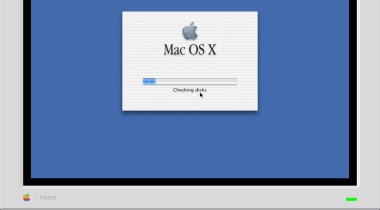
Apple's Mac OS X celebrates its 25th anniversary, having navigated three hardware architecture shifts from PowerPC to Intel x86 and now Apple Silicon. Despite initial challenges during its launch in 2001, the operating system has evolved with features like protected memory and preemptive multitasking. The transition to Intel architecture was smoother due to prior experience and the UNIX foundation of OS X. The latest macOS version, Tahoe, has faced criticism for gatekeeper restrictions on running unsigned apps.
We use cookies to ensure you get the best experience on our website. For more information on how we use cookies, please see our cookie policy.