Back to home
Technology

CPU upgrades aren't dead from the DDR5 apocalypse — here are in-place DDR4 upgrades you can still make

Source

Tom's Hardware

Published

TL;DR

AI Generated

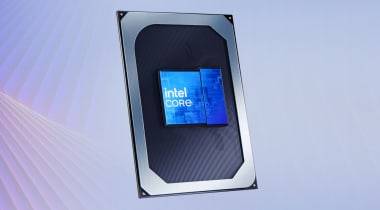
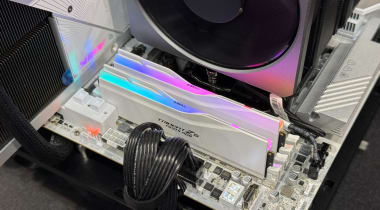
DRAM pricing is in an upheaval due to high demand from AI data centers, making DDR5 upgrades costly. However, DDR4 upgrades are still viable, especially with Intel's support for DDR4 in newer CPUs like Alder Lake and Raptor Lake. In-place upgrades on LGA1700 platforms, such as the Core i7-14700K, offer significant performance boosts without the need for DDR5. For AMD platforms, options like the Ryzen 9 5900XT and Ryzen 7 5700X provide value, but availability and pricing can be challenging. Upgrading within DDR4 limitations can still yield performance gains, making the best of the current tech landscape.
Read Full Article

Similar Articles

The GeForce RTX 30-series upgrade matrix — does your Ampere GPU need an upgrade in 2026?

The GeForce RTX 30-series upgrade matrix — does your Ampere GPU need an upgrade in 2026?

Nvidia's RTX 30-series graphics cards are approaching their sixth birthdays, and while they continue to receive support, newer software features like DLSS Frame Generation are not available for Ampere GPUs. The limitations of these cards, particularly in terms of VRAM, may be felt when playing the latest games at high resolutions. The article provides upgrade recommendations for different Ampere cards based on performance improvements and features like DLSS 4.5 and MFG. It suggests considering factors like monitor resolution and refresh rate before deciding on a GPU upgrade. For cards like the RTX 3080, RTX 3070, and RTX 3060, the article recommends upgrading to newer models for better performance and VRAM capacity.

Tom's Hardware
Intel reportedly says it boosted yields by selling what would normally be 'scrap' or 'low-expectation' CPUs — customers more willing to accept lesser chips due to overwhelming CPU demand

Intel reportedly says it boosted yields by selling what would normally be 'scrap' or 'low-expectation' CPUs — customers more willing to accept lesser chips due to overwhelming CPU demand

Intel has seen an unexpected increase in profit margins by selling CPUs that would typically be considered scrap or low-quality due to overwhelming demand for CPUs. The company's first-quarter earnings surpassed expectations, with revenue hitting $13.6 billion and gross margins reaching 41%. Intel has been able to sell chips that would normally be discarded as lower-tier SKUs at usable prices, contributing to the revenue boost. The high demand for CPUs, particularly for AI-driven infrastructure, has led customers to purchase even lower-quality chips, providing Intel with additional revenue.

Tom's Hardware
Intel's upcoming Xeon 7 "Diamond Rapids" server CPUs reportedly delayed to 2027 — Next-gen Coral Rapids lineup lands 2028 but can be accelerated, according to new leak

Intel's upcoming Xeon 7 "Diamond Rapids" server CPUs reportedly delayed to 2027 — Next-gen Coral Rapids lineup lands 2028 but can be accelerated, according to new leak

Intel's Xeon 7 "Diamond Rapids" server CPUs have been delayed to 2027, with the 8-channel variant canceled in favor of focusing on 16-channel SKUs. The lineup will feature up to 256 cores initially, with a 512-core version to follow shortly after. Diamond Rapids will lack hyperthreading support, unlike the next-gen Coral Rapids lineup, which is expected to launch in mid-2028 with 8-channel variants. Intel may accelerate the rollout of Coral Rapids based on market demand. AMD's EPYC Venice CPUs are still on track for a 2026 release.

Tom's Hardware
Intel Core Ultra 7 270K Plus vs AMD Ryzen 7 7800X3D — Can Intel finally beat X3D?

Intel Core Ultra 7 270K Plus vs AMD Ryzen 7 7800X3D — Can Intel finally beat X3D?

Intel's Arrow Lake Refresh CPUs, the Core Ultra 7 270K Plus and Ryzen 7 7800X3D, are compared for gaming and productivity. The 270K Plus, with 24 cores and 24 threads, offers better gaming performance, but the 7800X3D leads in gaming benchmarks by 10.4%. In productivity tests, the 270K Plus excels with a 29% lead in single-threaded performance and a significant advantage in multi-threaded tasks. Intel's CPU also wins in overclocking capabilities, offering more performance-enhancing features. However, the 7800X3D is more power-efficient and costs less, making it a strong competitor.

Tom's Hardware

We use cookies

We use cookies to ensure you get the best experience on our website. For more information on how we use cookies, please see our cookie policy.