Back to home
Technology

Computer History Museum unveils comically large-scale rendition of the 1986 Apple Macintosh Plus — 'Big Mac' celebrates 50th Apple anniversary towering all-in-one's keyboard looks disproportionately huge today

Source

Tom's Hardware

Published

TL;DR

AI Generated

The Computer History Museum has revealed a large-scale rendition of the 1986 Apple Macintosh Plus, dubbed "Big Mac," to celebrate Apple's 50th anniversary. The oversized replica features a disproportionately large keyboard, reflecting the design trends of the time. The museum acquired this massive Macintosh Plus, likely created for exhibition purposes, showcasing the iconic machine from the past. While technical details are scarce, the focus is on the novelty of the keyboard, appealing to enthusiasts interested in ASMR. The Macintosh Plus, known for its 1MB RAM and 800KB floppy drive, was a significant machine in its era, catering to graphic artists with its GUI-driven software library.

Read Full Article

Similar Articles

Slimline Commodore 64C Ultimate Edition computers go up for pre-order — firm reintroduces the C64’s sleeker 1986-1994 styling across the range

Slimline Commodore 64C Ultimate Edition computers go up for pre-order — firm reintroduces the C64’s sleeker 1986-1994 styling across the range

Commodore is reintroducing the C64C Ultimate Edition computers, featuring the sleeker 1986-1994 design, available for pre-order starting at $299. The new C64C models will be made using original injection molds and tooling from the 1980s. These machines will offer the same high-performance recreation of the original Commodore 64 using FPGA technology. Additionally, different editions like BASIC Beige, Starlight, and Founder's Edition will be available for pre-order, with shipping expected to begin in late 2026. Commodore hints at more retro tech initiatives to come in 2026.

Tom's Hardware
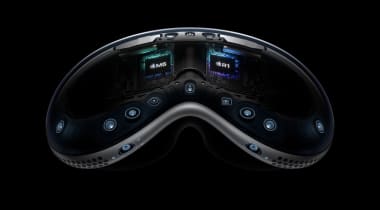
Apple 'has given up' on Vision Pro, report claims — costly price and weight behind purported failure, but the company continues to hire into its Vision Production Group

Apple 'has given up' on Vision Pro, report claims — costly price and weight behind purported failure, but the company continues to hire into its Vision Production Group

Apple appears to have faced challenges with its Vision Pro product, with reports suggesting the company has all but abandoned it due to high cost and weight issues. Despite efforts to improve the device with a faster M5 chip and redesigned features, sales did not meet expectations. There are conflicting reports about the future of the Vision Pro, with some claiming Apple has reassigned the team to other projects while job postings hint at ongoing development. The uncertainty surrounding the Vision Pro has led to speculation that Apple may be focusing on developing lighter, more advanced smart glasses instead.

Tom's Hardware
Legendary ZSNES Nintendo emulator rewritten from scratch with GPU-acceleration, no vibe coding — new Super ZSNES has ‘far more accurate CPU and audio cores than the original’

Legendary ZSNES Nintendo emulator rewritten from scratch with GPU-acceleration, no vibe coding — new Super ZSNES has ‘far more accurate CPU and audio cores than the original’

The legendary ZSNES Nintendo emulator has been completely rewritten with GPU acceleration, resulting in the new Super ZSNES. This reboot, created by zsKnight and Demo, offers more accurate CPU and audio cores than the original version. The emulator now utilizes a GPU-powered PPU core and features a Super Enhancement Engine for improved performance. Despite being in its early stages with bugs to be fixed, Super ZSNES is available for Windows, Mac, Linux, and Android, with an iOS release on the way.

Tom's Hardware
Enthusiast fixes 30-year issue with S3 graphics card — hacking the VBIOS fixes black levels by scalpelling out the Virge DX’s ‘pedestal bit’

Enthusiast fixes 30-year issue with S3 graphics card — hacking the VBIOS fixes black levels by scalpelling out the Virge DX’s ‘pedestal bit’

A retro hardware enthusiast successfully fixed a 30-year-old issue with S3 graphics cards by hacking the VBIOS to address the 'pedestal bit' problem that caused washed-out black levels. By adjusting the hexadecimal value in the VBIOS code, the darkest blacks were restored to their proper color, eliminating the undesirable gray appearance. The enthusiast used debugging tools to locate and modify the pedestal bit, then dumped the VBIOS to a file, made the necessary tweaks, and flashed it back to the hardware. The fix resulted in a deep black background upon booting, confirming the successful elimination of the pedestal bit issue. This solution can potentially be applied to other S3 Virge DX models, offering a resolution to a long-standing problem in graphics card technology.

Tom's Hardware

We use cookies

We use cookies to ensure you get the best experience on our website. For more information on how we use cookies, please see our cookie policy.