Back to home
Technology

Chinese crypto-mining manufacturers order next-gen 2nm GAA chips from Samsung Foundry

Source

TweakTown

Published

TL;DR

AI Generated

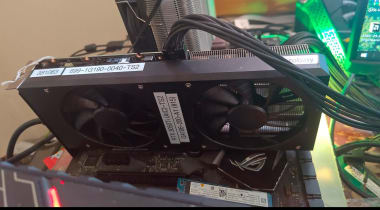
Chinese crypto-mining manufacturers have placed orders for next-generation 2nm GAA chips from Samsung Foundry. These chips are expected to offer improved performance and energy efficiency, making them ideal for cryptocurrency mining operations. Samsung Foundry's advanced chip technology is likely to enhance the mining capabilities of these manufacturers, potentially leading to increased mining efficiency and profitability. The use of cutting-edge 2nm chips signifies a significant advancement in the crypto-mining industry, highlighting the ongoing technological evolution in this sector.

Read Full Article

Similar Articles

Dr. L.C. Lu on TSMC Advanced Technology Design Solutions

Dr. L.C. Lu on TSMC Advanced Technology Design Solutions

Dr. L.C. Lu, a key figure at TSMC, focuses on design-technology co-optimization, packaging innovations, and AI-driven methodologies for next-gen semiconductor systems. TSMC emphasizes DTCO and DDCL innovations for scaling from N5 to A14 nodes, with NanoFlex and NanoFlex Pro architectures offering efficiency gains. N2P and N2U nodes incorporate advanced DTCO and power delivery optimizations, with hybrid dual-rail architectures achieving significant energy savings. TSMC collaborates with EDA partners for AI integration, enhancing productivity and design quality. Advanced packaging technologies like CoWoS and SoIC play a crucial role in enabling AI scaling, with memory bandwidth and interconnect performance scaling aggressively. TSMC addresses power delivery and thermal management challenges in AI systems through advanced solutions. TSMC's advancements in design methodologies and AI-driven automation promise improved productivity and scalability in chip-package co-design.

SemiWiki
Intel details 18A-P process node, touts higher performance, lower power, and better thermals — 9% more performance, thermal conductivity improved by 50%

Intel details 18A-P process node, touts higher performance, lower power, and better thermals — 9% more performance, thermal conductivity improved by 50%

Intel is progressing with its 18A-P process node technology, boasting higher performance, lower power consumption, and improved thermals compared to its baseline 18A technology. The 18A-P process introduces new transistors, tighter process variability control, and enhanced thermals, potentially attracting interest from companies like Apple. This enhanced technology offers a 9% performance boost or an 18% power reduction compared to the base 18A process. Additionally, improvements in skew corner tightening, threshold voltage options, and metal stack resistance and capacitance contribute to better performance efficiency and yield. The 18A-P process also focuses on enhancing thermals, reliability, and voltage behavior critical for both client and data center applications.

Tom's Hardware
Linux exploit instantly grants administrator access on most distributions since 2017 — cryptography optimization snafu grants root privileges to local users

Linux exploit instantly grants administrator access on most distributions since 2017 — cryptography optimization snafu grants root privileges to local users

A recent Linux exploit, CVE-2026-31431, allows local unprivileged users to gain root access instantly on most Linux distributions since 2017. The exploit affects popular distros like Ubuntu, RHEL, Suse, and Amazon Linux, as well as Windows' WSL2. The vulnerability, discovered by Xint Code researchers, involves a cryptography optimization flaw that grants administrator privileges through a devious attack on the AF_ALG socket. While a patch has been released, some distributions may still be vulnerable, requiring mitigation methods like disabling AF_ALG sockets. The exploit occurs in memory without leaving detectable traces on disk, making it challenging to detect with security software.

Tom's Hardware
Tennessee bans crypto ATMs that have become 'payment portal of choice for scammers' — second state to restrict machines after Indiana

Tennessee bans crypto ATMs that have become 'payment portal of choice for scammers' — second state to restrict machines after Indiana

Tennessee has joined Indiana in banning cryptocurrency ATMs due to their association with scams and fraud, with Minnesota considering similar legislation. The FBI has warned of significant losses due to fraud involving these machines. Despite not being inherently fraudulent, cybercriminals exploit crypto ATMs to steal funds from victims who mistakenly believe they offer the same protections as banks. Law enforcement actions against operators like Bitcoin Depot and Athena Bitcoin highlight the growing concerns around crypto ATM scams, leading to increased regulatory measures across states to protect consumers.

Tom's Hardware

We use cookies

We use cookies to ensure you get the best experience on our website. For more information on how we use cookies, please see our cookie policy.