Back to home
Technology

China's banned memory-maker CXMT unveils surprising new chipmaking capabilities despite crushing US export restrictions — DDR5-8000 and LPDDR5X-10667 displayed

Source

Tom's Hardware

Published

TL;DR

AI Generated

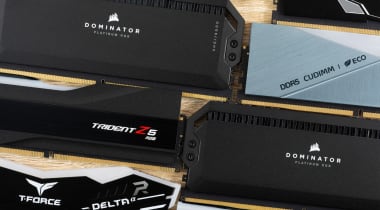
Despite facing U.S. export restrictions, China's memory-maker CXMT has revealed its latest achievements by unveiling DDR5-8000 and LPDDR5X-10667 memory devices for PCs and mobile devices. The company did not disclose its fabrication process but managed to produce advanced DRAMs without leading-edge tools. The DDR5 chips offer high data transfer rates and capacities, allowing for various module configurations. The launch of these high-performance memory chips showcases CXMT's ability to advance its products annually despite sanctions, contributing to China's semiconductor self-sufficiency goals.
Read Full Article

Similar Articles

Samsung and SK hynix warn AI-driven memory shortages could last until 2027 and beyond, as HBM demand explodes — customers already reserving supply years ahead, while the wider DRAM market begins to tighten

Samsung and SK hynix warn AI-driven memory shortages could last until 2027 and beyond, as HBM demand explodes — customers already reserving supply years ahead, while the wider DRAM market begins to tighten

Samsung and SK hynix are warning of AI-driven memory shortages potentially lasting until 2027 and beyond, with HBM demand surging. The companies are struggling to meet demand as customers reserve supply years in advance, impacting the broader DRAM market. The shortages are fueled by the need for high-speed memory in AI infrastructure, particularly HBM, which is challenging to manufacture. Despite efforts to develop alternative memory technologies, the demand for existing memory remains overwhelming, prompting companies to invest in expanding production capacity. The memory crunch is part of a larger trend of resource shortages in the tech industry due to the rapid growth of AI infrastructure.

Tom's Hardware
US stops exports of tools to China’s number two chip maker — Hua Hong and Huali Microelectronics reportedly on the cusp of starting a 7-nm fab in Shanghai

US stops exports of tools to China’s number two chip maker — Hua Hong and Huali Microelectronics reportedly on the cusp of starting a 7-nm fab in Shanghai

The US Department of Commerce has instructed toolmakers to cease exports to Hua Hong, China's second-largest chipmaker, which is gearing up to establish a 7-nm production line in Shanghai. This move is part of the US strategy to impede China's semiconductor self-sufficiency efforts. Companies like TSMC and ASML have also faced restrictions in providing advanced services to Chinese tech firms. The ban on exports could strain US-China relations, impacting both Chinese companies' progress and potential losses for American toolmakers.

Tom's Hardware
Taiwan's stock market surpasses the UK's despite having less than a quarter of the UK's economy — AI boom propels Taiwan forward, TSMC alone accounts for more than 40% of Taiwan's total market value

Taiwan's stock market surpasses the UK's despite having less than a quarter of the UK's economy — AI boom propels Taiwan forward, TSMC alone accounts for more than 40% of Taiwan's total market value

Taiwan's stock market has surpassed the UK's in value, driven by the global demand for AI chips. TSMC alone accounts for over 40% of Taiwan's total market value, with a market cap of around $1.98 trillion. Taiwan's Financial Supervisory Commission has raised the single-stock investment cap for local equity funds, benefiting companies like TSMC. TSMC reported record earnings and plans to expand to meet AI demand. South Korea's market is also thriving, with Samsung and SK hynix leading the charge in the semiconductor industry.

Tom's Hardware
Intel posts very strong Q1 2026 earnings as the AI boom starts to focus on CPUs

Intel posts very strong Q1 2026 earnings as the AI boom starts to focus on CPUs

Intel's Q1 2026 earnings exceeded expectations, with $13.58 billion in revenue, up 7.2% year over year. The data center and AI divisions contributed significantly to this success, generating $5.1 billion in revenue. Intel's foundry business is gaining momentum, with $5.4 billion in revenue, positioning itself as a strong competitor to TSMC. Recent partnerships with Tesla and Google, along with new hardware releases, have further boosted Intel's performance. The increasing demand for AI-focused CPUs is driving growth for companies like Intel, prompting them to raise chip prices and forecast Q2 revenue of $13.8 to $14.8 billion.

TweakTown

We use cookies

We use cookies to ensure you get the best experience on our website. For more information on how we use cookies, please see our cookie policy.