Back to home
Technology

Bill Gates’ 48-year-old Microsoft 6502 BASIC goes open source

Source

Tom's Hardware

Published

TL;DR

AI Generated

Microsoft has made Bill Gates' 48-year-old 'BASIC for 6502 Microprocessor - Version 1.1' code open source on Github under the MIT license. This release is significant as derivatives of this BASIC were used in iconic computers like the Commodore 64. The code, originally written for the Altair 8800 in 1975, was ported to the MOS 6502 Microprocessor in 1976. The release includes 6,955 lines of assembly language code and supports systems like Apple II and Commodore PET. This move follows Microsoft's earlier release of GW-BASIC and is seen as historically significant in the personal computer era.

Read Full Article

Similar Articles

Slimline Commodore 64C Ultimate Edition computers go up for pre-order — firm reintroduces the C64’s sleeker 1986-1994 styling across the range

Slimline Commodore 64C Ultimate Edition computers go up for pre-order — firm reintroduces the C64’s sleeker 1986-1994 styling across the range

Commodore is reintroducing the C64C Ultimate Edition computers, featuring the sleeker 1986-1994 design, available for pre-order starting at $299. The new C64C models will be made using original injection molds and tooling from the 1980s. These machines will offer the same high-performance recreation of the original Commodore 64 using FPGA technology. Additionally, different editions like BASIC Beige, Starlight, and Founder's Edition will be available for pre-order, with shipping expected to begin in late 2026. Commodore hints at more retro tech initiatives to come in 2026.

Tom's Hardware
Ubuntu's AI roadmap revealed, universal AI 'kill switch' and forced AI integration are not part of the plan — cloud tracking, local inference, and agentic system tools take center stage

Ubuntu's AI roadmap revealed, universal AI 'kill switch' and forced AI integration are not part of the plan — cloud tracking, local inference, and agentic system tools take center stage

Canonical's VP of Engineering, Jon Seager, outlined Ubuntu's AI roadmap, emphasizing responsible adoption, local AI inference, and open-source tooling. The plan includes removable Snap packages for AI capabilities, allowing users to disable them easily. Canonical aims to focus on AI adoption within the company, cautious deployment, local AI infrastructure, context-aware features, AI-assisted tools, and agentic automation workflows. The roadmap also addresses concerns about privacy, user control, and forced AI integration, with the first AI features in Ubuntu 26.10 being opt-in and local inference as the default. Canonical aims to introduce AI where it enhances functionality like accessibility, automation, and troubleshooting tools.

Tom's Hardware
Legendary ZSNES Nintendo emulator rewritten from scratch with GPU-acceleration, no vibe coding — new Super ZSNES has ‘far more accurate CPU and audio cores than the original’

Legendary ZSNES Nintendo emulator rewritten from scratch with GPU-acceleration, no vibe coding — new Super ZSNES has ‘far more accurate CPU and audio cores than the original’

The legendary ZSNES Nintendo emulator has been completely rewritten with GPU acceleration, resulting in the new Super ZSNES. This reboot, created by zsKnight and Demo, offers more accurate CPU and audio cores than the original version. The emulator now utilizes a GPU-powered PPU core and features a Super Enhancement Engine for improved performance. Despite being in its early stages with bugs to be fixed, Super ZSNES is available for Windows, Mac, Linux, and Android, with an iOS release on the way.

Tom's Hardware
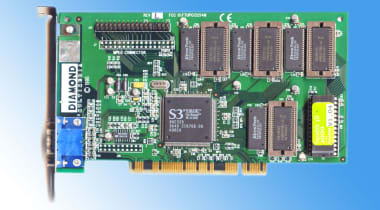
Enthusiast fixes 30-year issue with S3 graphics card — hacking the VBIOS fixes black levels by scalpelling out the Virge DX’s ‘pedestal bit’

Enthusiast fixes 30-year issue with S3 graphics card — hacking the VBIOS fixes black levels by scalpelling out the Virge DX’s ‘pedestal bit’

A retro hardware enthusiast successfully fixed a 30-year-old issue with S3 graphics cards by hacking the VBIOS to address the 'pedestal bit' problem that caused washed-out black levels. By adjusting the hexadecimal value in the VBIOS code, the darkest blacks were restored to their proper color, eliminating the undesirable gray appearance. The enthusiast used debugging tools to locate and modify the pedestal bit, then dumped the VBIOS to a file, made the necessary tweaks, and flashed it back to the hardware. The fix resulted in a deep black background upon booting, confirming the successful elimination of the pedestal bit issue. This solution can potentially be applied to other S3 Virge DX models, offering a resolution to a long-standing problem in graphics card technology.

Tom's Hardware

We use cookies

We use cookies to ensure you get the best experience on our website. For more information on how we use cookies, please see our cookie policy.