Back to home
Technology

AMD Zen 6 and Intel Nova Lake CPUs reportedly arriving late, delayed to CES 2027 — next-gen chips rocked by industry turmoil

Source

Tom's Hardware

Published

TL;DR

AI Generated

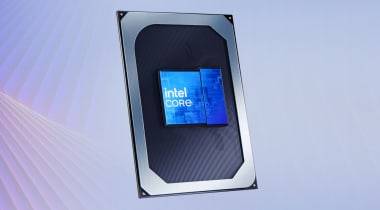
Both AMD and Intel are reportedly facing delays in the launch of their next-gen CPUs, with AMD's Zen 6 and Intel's Nova Lake CPUs now expected to arrive in 2027. The manufacturing crisis in the industry may have contributed to these delays, pushing back the release dates beyond initial projections. While there were prior indications of Zen 6 launching in 2026, new information suggests a 2027 release for the Ryzen 10000 "Olympic Ridge" family. Intel's Nova Lake CPUs are also rumored to be delayed, with a potential staggered release starting in Q4 2026 and continuing into CES 2027. These delays come amidst industry turmoil, with rising prices for components like RAM, SSDs, and GPUs impacting the tech landscape.
Read Full Article

Similar Articles

Commodore backs down over FPGA firmware lockdown — it won’t now try and block third-party firmware installs but will stand firm against bricked modded units

Commodore backs down over FPGA firmware lockdown — it won’t now try and block third-party firmware installs but will stand firm against bricked modded units

Commodore has reversed its decision to block third-party firmware installs on the C64 Ultimate computer, allowing users to experiment freely. However, the company will not provide support or replacements for modded units that become bricked. The initial plan to restrict non-Commodore FPGA firmware caused a divide among fans, leading to heated discussions on social media and forums. Commodore now emphasizes user freedom but warns that using community-installed firmware is at the owner's risk, with no free support or warranty service provided for damaged units.

Tom's Hardware
CEO Interview with Xianxin Guo of Lumai

CEO Interview with Xianxin Guo of Lumai

Xianxin Guo, CEO of Lumai, discusses the company's optical computing technology for AI and data center acceleration, aiming to address power efficiency and scalability limitations of traditional silicon-based approaches. Lumai's hybrid optical-electronic design enhances compute efficiency by leveraging light for key operations, reducing energy consumption and breaking through AI system bottlenecks. The technology is well-suited for high-throughput AI inference workloads in data centers, offering a more cost-effective and scalable solution. By focusing on optical compute, Lumai differentiates itself from competitors and aims to redefine AI compute efficiency for long-term scalability and performance gains. The company engages with customers through collaborative discussions and partnership-driven approaches to integrate optical computing seamlessly into existing AI infrastructure.

SemiWiki
Steam Controller leaked review points to $99 MSRP — more expensive than PS5 and Xbox controllers and Nintendo Joy-Cons

Steam Controller leaked review points to $99 MSRP — more expensive than PS5 and Xbox controllers and Nintendo Joy-Cons

A leaked review of the Steam Controller revealed a $99 price tag, making it more expensive than controllers for PS5, Xbox, and Nintendo. The controller features dual trackpads, which the reviewer highlighted as a standout feature. Valve announced the Steam Controller alongside other hardware in late 2025, but due to the chip crisis, the release has been delayed to the first half of 2026. Despite its higher price, the Steam Controller's unique features, like dual touchpads, make it a compelling option for PC gaming. Valve has yet to announce an official release date for its new hardware lineup.

Tom's Hardware
Intel's upcoming Xeon 7 "Diamond Rapids" server CPUs reportedly delayed to 2027 — Next-gen Coral Rapids lineup lands 2028 but can be accelerated, according to new leak

Intel's upcoming Xeon 7 "Diamond Rapids" server CPUs reportedly delayed to 2027 — Next-gen Coral Rapids lineup lands 2028 but can be accelerated, according to new leak

Intel's Xeon 7 "Diamond Rapids" server CPUs have been delayed to 2027, with the 8-channel variant canceled in favor of focusing on 16-channel SKUs. The lineup will feature up to 256 cores initially, with a 512-core version to follow shortly after. Diamond Rapids will lack hyperthreading support, unlike the next-gen Coral Rapids lineup, which is expected to launch in mid-2028 with 8-channel variants. Intel may accelerate the rollout of Coral Rapids based on market demand. AMD's EPYC Venice CPUs are still on track for a 2026 release.

Tom's Hardware

We use cookies

We use cookies to ensure you get the best experience on our website. For more information on how we use cookies, please see our cookie policy.